For twelve years, nobody in Baghdad could touch Jurf al-Sakhar. Not the federal police, not the army, and certainly not the prime minister's office. Located roughly 40 miles southwest of Iraq's capital in Babil province, this agricultural subdistrict functioned as an untouchable state within a state run by Kataib Hezbollah, the most powerful Iran-backed militia in Iraq.
Then Prime Minister Ali al-Zaidi ordered the group out.
When Kataib Hezbollah responded by warning Iraqi government forces against entering its stronghold near Baghdad, most observers braced for street-to-street combat. The group vowed to confront any state deployment. Yet days later, armored vehicles and federal police rolled into the town without a single major firefight. If you only read the initial headlines about militia threats, you missed the real story. This wasn't a sudden victory for Iraqi sovereignty or a heroic retreat by an armed faction. It was a high-stakes standoff triggered by a massive oil-smuggling exposé, brokered behind closed doors by Tehran's top general, and resolved through a compromise that leaves huge questions about who actually runs the ground.
What Triggered the Standoff Near Baghdad
You can't understand why Kataib Hezbollah threatened Iraqi forces without looking at the money. Governments in Baghdad have complained about rogue militias for years, mostly to little effect. What changed in November 2026 was hard intelligence hitting the prime minister's desk.
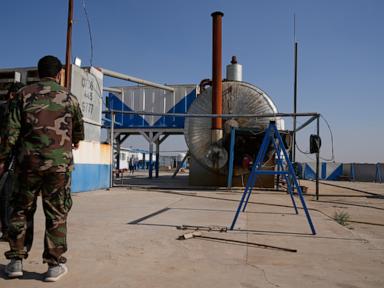
On November 9, an Iraqi intelligence report blew the lid off an industrial-scale oil theft operation running straight out of Jurf al-Sakhar since at least 2021. Investigators found that smugglers had punctured a major pipeline, hidden pumping gear inside steel hangars to dodge aerial surveillance, and built a makeshift refinery right inside the restricted zone. The operation generated hundreds of millions of dollars for the group over five years.
Al-Zaidi, a businessman who took office in May 2026 promising to end corruption and unify Iraq's fractured security forces, couldn't ignore that kind of cash bleed. On November 14, he fired nine senior security and oil officials in Babil province, including the provincial police chief, the local Popular Mobilization Forces commander, and the director of the Oil Pipelines Company. Then he issued an ultimatum giving Kataib Hezbollah until Friday, November 20, to clear out.
Kataib Hezbollah denied the smuggling allegations and drew a hard line. Commanders refused to abandon their turf and warned that any attempt by Iraqi forces to enter Jurf al-Sakhar would be met with force.
Why Jurf al-Sakhar Matters So Much to Iran and Baghdad
To see why both sides were willing to risk a clash over one subdistrict, you have to look at a map. Jurf al-Sakhar—which provincial authorities renamed Jurf al-Nasr after driving out the Islamic State in 2014—sits at a critical geographic crossroads.
- Proximity to the capital: Sitting less than 40 miles southwest of Baghdad, whoever holds the town controls a primary southern approach to the seat of government.
- Access to Karbala: The area bridges central Iraq and the holy Shiite city of Karbala, making it vital for controlling transit corridors during major religious pilgrimages.
- Military infrastructure: Long before 2014, Saddam Hussein used the area for a massive military-industrial complex. Over the past decade, Kataib Hezbollah turned those old facilities and dense palm groves into closed bases, weapons depots, and workshops for assembling rockets and drones.
- A buffer zone: For twelve years, the militia barred roughly tens of thousands of displaced Sunni residents from returning home, effectively creating a sealed military enclave where neither Iraqi ministries nor international observers could look inside.
During the ongoing regional conflict between the United States, Israel, and Iran, Jurf al-Sakhar also became a prime target. U.S. forces have repeatedly struck pro-Iran cells operating from the town after rocket and drone attacks targeted American personnel. By moving state troops into the area, al-Zaidi wasn't just chasing stolen oil revenue. He was trying to prove to Washington that Baghdad could police its own territory and eliminate launchpads that kept dragging Iraq into a wider regional war.
How Tehran Stepped In to Stop a Shooting War
When a militia designated as a terrorist organization by Washington threatens to shoot at its own country's army, things usually go sideways fast. Iraqi army units went on high alert, and Baghdad braced for an armed confrontation that could have fractured the ruling Shiite political coalition from within.
That's when Iran intervened directly.
Esmail Qaani, commander of the Islamic Revolutionary Guard Corps Quds Force, flew into Baghdad right before the deadline. Qaani runs Tehran's regional network of allied armed groups, and he understood something hardline commanders on the ground didn't—an open war between Kataib Hezbollah and the Iraqi state would be a disaster for Iran. With Tehran already locked in a bruising confrontation with the U.S. and Israel, losing political cover in Baghdad was a risk Qaani refused to take.
In closed-door meetings involving Qaani, Prime Minister al-Zaidi, Kataib Hezbollah leader Abu Hussein al-Hamidawi, and Badr Organization chief Hadi al-Amiri, a face-saving deal came together late on Thursday, November 19.
The terms were classic Iraqi political compromise. Kataib Hezbollah agreed to stand down and let federal police, army units, and Energy Police enter Jurf al-Sakhar on Friday morning. In exchange, Baghdad dropped plans for an immediate assault and gave the group a one-month window to carry out a phased redeployment rather than a humiliating overnight eviction.
Did Baghdad Actually Win Control or Just Stage a Photo Op
When tanks and federal police rolled past portraits of Iranian leaders at the entrance of Jurf al-Sakhar on November 20, al-Zaidi declared it the start of a nationwide campaign to bring all weapons under state control. On paper, it looked like a massive breakthrough.
Look closer at the security arrangements, though, and the picture gets messy fast.
The Fine Print of the Deployment
Baghdad created a new joint security command under the federal police to oversee Jurf al-Sakhar. Alongside regular army and Energy Police units securing the pipelines, the command includes brigades from the Popular Mobilization Forces. Here is the catch—the PMF is an umbrella network of state-sanctioned paramilitaries that includes Kataib Hezbollah itself. Analysts at the Foundation for Defense of Democracies pointed out that units integrated into the new command, such as the 72nd Brigade, have long operated alongside Kataib Hezbollah in the exact same sector.
Relocation Instead of Disarmament
Giving a militia thirty days to pack up doesn't disarm anyone. Within days of the agreement, Iraqi media and think tanks including the Institute for the Study of War reported that Kataib Hezbollah was already transferring large quantities of military hardware and establishing fresh positions in western Iraq. As Iraqi strategic affairs expert Ahmed al-Sharif noted, pulling fighters out of one town simply lets them relocate to another strategic corridor.
The Displaced Residents Test
The real test of sovereignty isn't whether police can drive down a main road for television cameras. It's whether normal citizens can live there. Over a decade after ISIS was pushed out, Jurf al-Sakhar's infrastructure lies in ruins, and its original residents remain barred from returning. Until families move back in and civilian administrators replace checkpoint commanders, state control remains partial at best.
What Happens Next Across Iraq
Al-Zaidi isn't stopping at Babil province. Immediately after entering Jurf al-Sakhar, his government expanded the anti-smuggling campaign nationwide—uncovering tapped pipelines in Al Luhais, seizing modified fuel tankers in Kirkuk, jailing smugglers, and ordering federal forces to take over informal border crossings and oil routes leading into Iraqi Kurdistan. U.S. President Donald Trump publicly backed the prime minister's campaign to assert federal control over Iraq's oil.
Still, anyone who thinks Iraq's militia problem just got solved isn't paying attention to history. Five years ago, when a previous prime minister tried to rein in rogue factions, armed drones hit his Baghdad residence in an assassination attempt. Al-Zaidi himself admitted in August that taking weapons out of militia hands could cost him his life.
If you're tracking how this crisis unfolds over the coming weeks, watch three specific indicators rather than official press releases:
- The mid-December deadline: When Qaani's one-month transition window expires, check whether PMF brigades loyal to Kataib Hezbollah actually vacate the inner bases of Jurf al-Sakhar or simply swap uniforms.
- Western Iraq movements: Monitor reports of weapons transfers toward Anbar and the Syrian border, which will show whether Tehran is repositioning its Iraqi proxies to prepare for renewed strikes in the wider regional conflict.
- Civilian return schedules: Watch for concrete reconstruction budgets and return dates for displaced families from Babil. Without civilian repopulation, Jurf al-Sakhar remains a military garrison waiting for its old owners to walk back in.