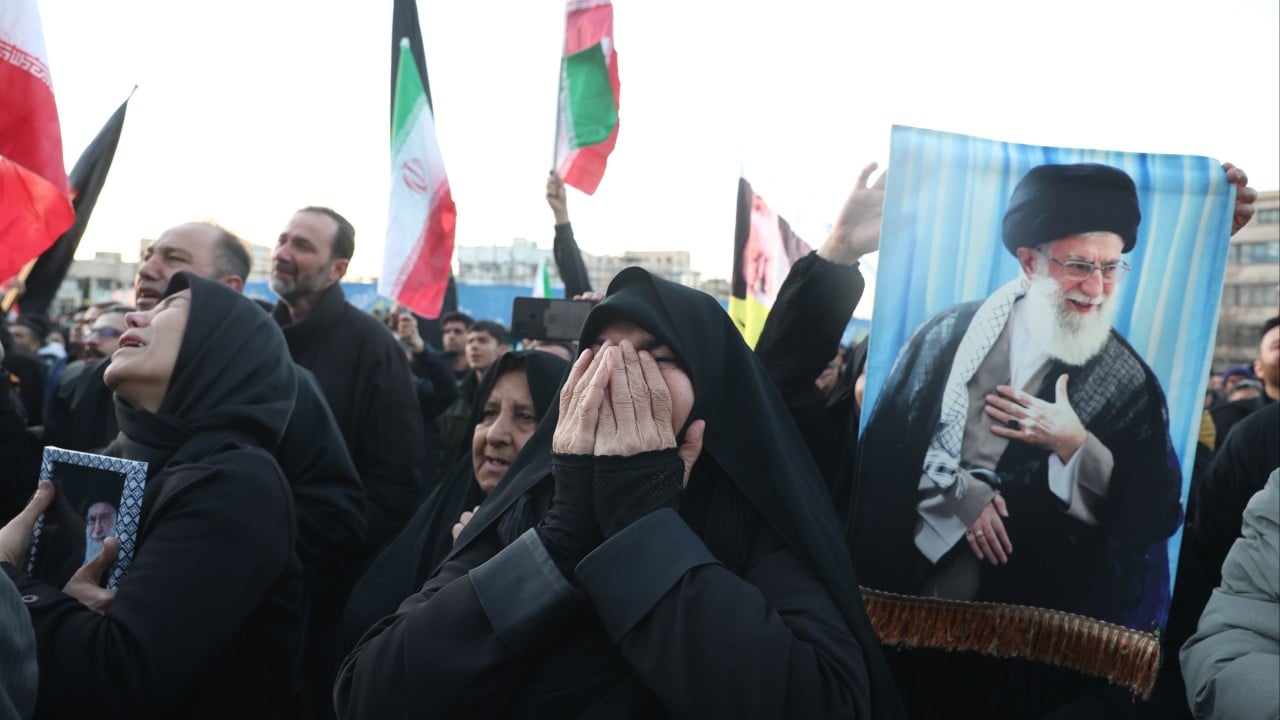
The headlines are screaming about a "new era" for Iran. Western analysts are currently dusting off their 1979 playbooks, frantically speculating on whether the "moderates" or the "hardliners" will seize the throne now that Ali Khamenei is dead. They are asking the wrong questions. They are looking at a 20th-century geopolitical map to solve a 21st-century architectural problem.
Stop waiting for a Persian Spring. Stop looking for a Gorbachev in a turban.
The death of an 86-year-old man in Tehran is a biological event, not a political transformation. If you think the disappearance of a single figurehead collapses a multi-billion dollar paramilitary conglomerate, you don't understand how modern power is codified. Iran isn't a monarchy; it's a closed-loop operating system.
The Mirage of the Power Vacuum
The "lazy consensus" suggests that Khamenei’s death creates a vacuum that will lead to civil war or a democratic pivot. This is a fundamental misunderstanding of the Islamic Revolutionary Guard Corps (IRGC).
I’ve watched Western intelligence agencies misread these transitions for decades. They look for "charismatic authority," a term Max Weber used to describe leaders whose power comes from their personal appeal. Khamenei hasn’t been a charismatic leader for twenty years. He has been the Chief Executive Officer of a deep-state holding company.
The IRGC doesn't just hold the guns; they hold the spreadsheets. They control the telecommunications, the construction firms, the ports, and the black-market oil exports. To them, the Supreme Leader is a legal necessity—a constitutional "root directory"—not a sovereign king. They don't need a visionary; they need a rubber stamp that maintains the sanctity of their tax-exempt status.
Why Succession is an API Call, Not a Revolution
In the coming days, the Assembly of Experts will meet. You will hear names like Mojtaba Khamenei or Alireza Arafi. The media will treat this like a papal conclave. It’s actually more like a corporate board meeting choosing a replacement for a retired founder.
The criteria for the next leader aren't "piety" or "revolutionary zeal." The criteria are interoperability.
The next Supreme Leader must be:
- Weak enough to not threaten the IRGC’s economic autonomy.
- Senior enough to keep the traditional clerical establishment from revolting.
- Predictable enough to maintain the "Axis of Resistance" supply lines to proxies in Lebanon, Yemen, and Iraq.
If the Assembly picks a "moderate," it’s a tactical feint to lure the West back to the negotiating table for sanctions relief. If they pick a "hardliner," it’s a consolidation of the status quo. Either way, the underlying software of the Islamic Republic remains unpatched.
The Myth of the "Moderate" Savior
Western diplomats have a pathological obsession with finding "moderates." It’s a form of mirror-imaging where we assume every foreign official secretly wants to be a Davos-attending neoliberal.
Let’s be clear: There are no moderates in the upper echelons of the Iranian state. There are only those who want to manage the collapse of the Rial through diplomacy and those who want to manage it through domestic repression. Both groups agree on the survival of the Velayat-e Faqih (Guardianship of the Jurist).
I've seen analysts argue that a change at the top will "foster" (to use a term I despise) a new dialogue on human rights. It won't. The repression apparatus—the Basij and the morality police—is decentralized. It doesn't need a daily order from the Supreme Leader to arrest a protester. It runs on an automated logic of self-preservation.
The Technology of Oppression is Post-Khamenei
While the world watches the funeral processions, the real story is happening in the data centers. Iran has spent the last decade building the National Information Network (NIN)—a domestic internet that allows the state to kill external connectivity while keeping internal banking and electricity running.
This is the "Halal Internet." It’s a masterpiece of digital authoritarianism. Khamenei didn't build this; Chinese engineers and sanctioned Russian hardware did. The death of the leader doesn't shut down the servers. In fact, expect the digital crackdown to intensify. The "Security-First" faction will use the transition period as an excuse to implement "emergency" biometric tracking and even stricter filtering.
If you want to know who is winning the succession battle, don't look at who is leading the prayers. Look at who controls the kill-switch for the fiber-optic gateways.
The Economic Reality No One Mentions
The Iranian economy is a dual-track system.
- Track A: The visible economy, crippled by inflation and sanctions, where the average citizen struggles to buy eggs.
- Track B: The shadow economy, run by the Bonyads (charitable foundations) and the IRGC, which handles roughly 30% to 50% of the GDP.
Khamenei’s death does not redistribute this wealth. It just triggers a reshuffling of the "grey market" licenses. Imagine a scenario where the new Supreme Leader tries to claw back some of this wealth to stabilize the Rial. He would be dead within a week. The IRGC is the state; the Supreme Leader is the mask the state wears to talk to God.
Dealing With the "People Also Ask" Delusions
"Will Iran become a democracy now?"
No. Democracy requires an institutional skeleton that has been systematically dissolved in Iran. There are no independent unions, no free press, and no political parties that aren't vetted by the Guardian Council. Transitions from autocracy usually lead to military juntas, not parliaments. Iran is already a military junta in clerical robes.
"Does this mean the end of the nuclear program?"
The nuclear program is Iran’s "regime insurance." No leader, regardless of their beard length, will walk away from the one asset that prevents a Western-led regime change. The program is more likely to accelerate as the new leader seeks to project strength during a period of perceived vulnerability.
"Should the West intervene?"
Intervention is the "game-changer" (another hideous term) that the IRGC actually wants. Nothing unites a fractured population like a foreign invader. The most disruptive thing the West can do is stay out of the way and let the internal contradictions of a 17th-century theology running on a 21st-century surveillance state eat itself from the inside out.
The Brutal Truth
The obsession with Khamenei’s death is a form of "Great Man" history that obscures the structural reality. We like to think that if we cut off the head, the body dies. But the Islamic Republic is a hydra. And the heads aren't even the point—the blood is the money, and the money is still flowing.
The regime isn't waiting for a new leader to tell them what to do. They are waiting for the cameras to turn away so they can finalize the transfer of assets to the next generation of "Revolutionary" billionaires.
If you’re looking for a revolution, stop looking at the funeral. Look at the exchange rate of the Toman and the latency of the domestic internet. That is where the regime lives and dies.
The King is dead. The System is exactly the same. Keep your eyes on the fiber-optic cables, not the coffin.