Take a dictator at his word and you deserve the geopolitical ambush waiting around the corner.
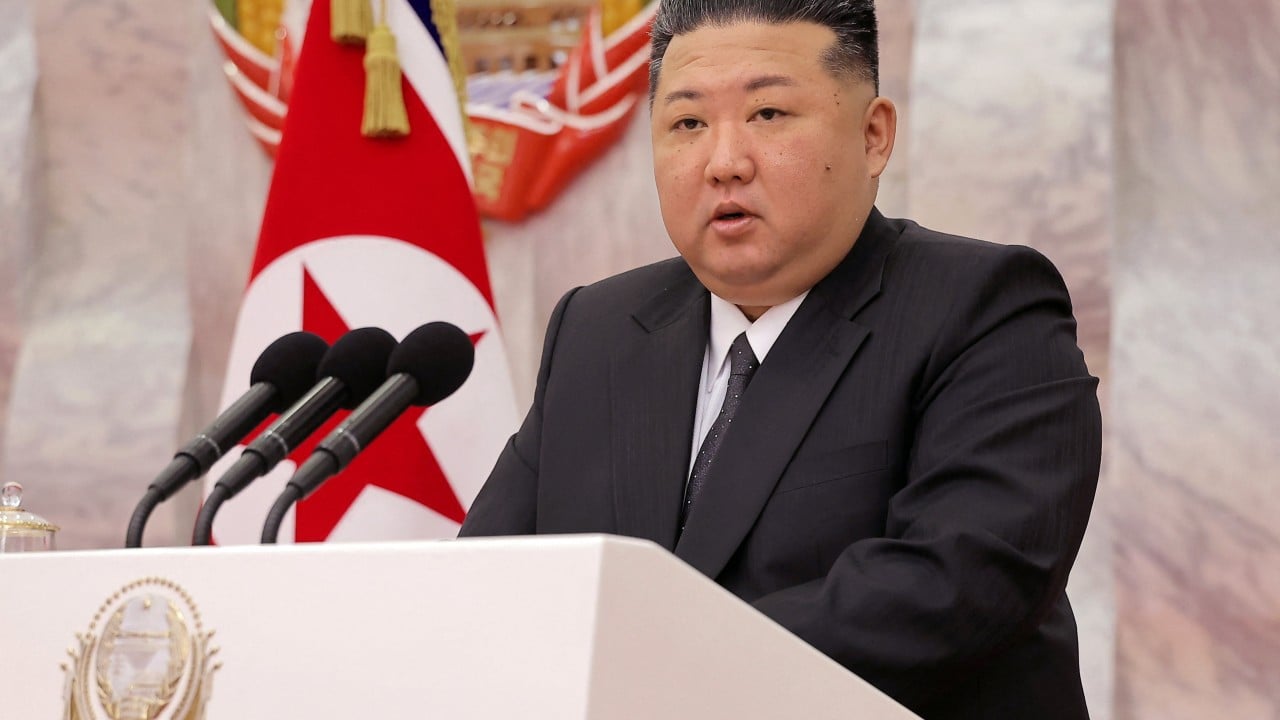
When Kim Jong Un stands before a microphone and insists North Korea builds nuclear weapons strictly for self-defense rather than regional supremacy, half the foreign policy establishment nods along like polite dinner guests. Mainstream headlines dutifully transcribe the quote. Pundits frame it as a rational plea for regime survival. They treat a heavily armed autocrat like a misunderstood homeowner installing a deadbolt on his front door.
That consensus is not just lazy. It is dangerously naive.
Buying the "purely defensive" narrative requires ignoring decades of military doctrine, misreading basic international relations theory, and misunderstanding what nuclear weapons actually do once a state acquires enough of them. Security and supremacy are not opposite poles on a compass. In nuclear strategy, the former rapidly mutates into the latter.
The False Binary of Deterrence
Most commentary on the Korean Peninsula relies on a comfortable myth. The myth goes like this: Pyongyang watched what happened to Saddam Hussein in Iraq and Muammar Gaddafi in Libya after they gave up their weapons programs, concluded that nuclear warheads are the only reliable life insurance policy for the Kim dynasty, and simply wants to be left alone.
Start with the kernel of truth. Regime survival sits at the top of Kim's hierarchy of needs. Nobody serious disputes that. The problem lies in what happens next. Analysts stop thinking right at the moment deterrence is achieved.
In classic international relations theory, political scientist John Herz identified the security dilemma. One state takes steps to increase its own security, and neighboring states inevitably interpret those moves as offensive threats, prompting a spiral of escalation. Even more pointedly, offensive realists like John Mearsheimer argue that great and regional powers never settle for "enough" security. Because intentions are impossible to verify and permanent, states maximize relative power until they achieve regional hegemony.
Kim Jong Un does not live in a vacuum where a handful of crude bombs guarantees peace forever. A minimum deterrent—say, ten or twenty warheads—only deters an all-out invasion. It does not deter conventional skirmishes, cyber counterattacks, crippling sanctions, or internal subversion. To shield his regime from lower-level pressures, Kim needs escalation dominance.
Escalation dominance is not a defensive posture. It is the ability to win at every rung of the conflict ladder, forcing your adversary to back down because any upward step leads to catastrophic destruction for them. Once you possess a survivable second-strike capability that can reach Seoul, Tokyo, and Washington simultaneously, "security" looks identical to regional coercion.
Why Defensive Weapons Never Stay Defensive
I have watched defense analysts and diplomatic teams waste years trying to draft "security guarantees" for Pyongyang, operating under the delusion that if we just soothe Kim's paranoia, the missile tests will stop. Every single time, those negotiations crash into the same brick wall. Pyongyang pockets the concessions, keeps the fissile material, and expands the arsenal.
Look at the hardware North Korea actually builds. A country interested strictly in deterring a ground invasion needs tactical defensive systems, hardened artillery, and perhaps a modest, concealed retaliatory force. It does not burn billions of dollars in scarce hard currency developing multiple independently targetable reentry vehicles, hypersonic glide vehicles, nuclear-powered ballistic missile submarines, and solid-fuel intercontinental ballistic missiles capable of hitting the American East Coast.
Let us define these terms clearly so the strategic reality hits home.
- Minimum Deterrence: Maintaining just enough nuclear firepower to inflict unacceptable damage on an aggressor after absorbing a first strike. Think China's posture during the Cold War.
- Nuclear Warfighting Posture: Fielding diverse, tactical, and strategic nuclear weapons designed to be used early in a conflict to achieve battlefield objectives and fracture enemy alliances.
North Korea officially abandoned minimum deterrence years ago. In 2022, Pyongyang passed a formal law governing its nuclear forces. That doctrine explicitly permits preemptive nuclear strikes if the leadership perceives an imminent attack—not just a nuclear attack, any threat to the state's command and control. Furthermore, North Korea has spent the last several years fielding tactical nuclear weapons aimed directly at South Korean airfields, ports, and command centers.
Imagine a scenario where a conventional border clash erupts in the Yellow Sea. Under a purely defensive posture, nuclear weapons remain locked in bunkers as a weapon of last resort. Under North Korea's current doctrine, Kim threatens immediate tactical nuclear strikes on South Korean bases while holding Los Angeles and New York hostage with strategic ICBMs to prevent Washington from intervening.
Call that "security" if you want. On the ground, it functions as nuclear blackmail.
The Decoupling Trap Nobody Wants to Admit
The real prize in East Asia is not territory. It is the American alliance network.
For over seventy years, peace in Northeast Asia rested on extended deterrence—the promise that the United States would treat an attack on South Korea or Japan as an attack on itself, up to and including nuclear retaliation. Kim Jong Un's entire strategic project targets the credibility of that promise.
Military strategists call this decoupling. If Pyongyang can credibly threaten to incinerate Seattle or Chicago, will an American president really trade an American city to save Busan or Osaka?
Every missile test over the Sea of Japan forces policymakers in Seoul and Tokyo to ask that exact question. You do not need to invade South Korea to achieve supremacy over the peninsula. You only need to convince South Korea that the United States will blink when push comes to shove. Once confidence in the American nuclear umbrella cracks, the geopolitical board tilts permanently in Pyongyang's favor.
Seoul faces an agonizing choice. Either accommodate North Korean demands—halting joint military exercises, lifting sanctions, accepting Pyongyang's nuclear status, and eventually pushing American troops off the peninsula—or build its own nuclear arsenal. Both outcomes shatter the regional order Washington built after 1945.
Kim knows this. When he tells the world he only wants security, he is feeding a talking point directly to dovish commentators in Washington and Seoul who argue that allied military drills "provoke" him. He is weaponizing Western empathy to dismantle the very alliances keeping him in check.
Dismantling the Worst Questions About North Korea
Public debate around Pyongyang is choked with terrible questions built on broken premises. Let us clear away the debris.
Can we convince Kim to denuclearize with better security assurances?
No. Stop asking this. Denuclearization as a near-term diplomatic goal is dead, buried under concrete at the Punggye-ri test site. Asking Kim to trade his warheads for a peace treaty is asking him to swap physical, unilateral power for a piece of paper signed by a superpower whose foreign policy shifts every four years. Even if a treaty were signed tomorrow, Pyongyang cannot verify that the United States will never change its mind. Therefore, the weapons stay. Any diplomatic framework built on complete, verifiable denuclearization before normalizing relations is a fantasy designed to let politicians look busy while achieving nothing.
Isn't North Korea just acting like any other nuclear power?
Not even close. Established nuclear powers treat their arsenals as tools of extreme restraint, wrapped in layers of arms control treaties, hotlines, and strict negative security assurances against non-nuclear states. North Korea refuses all transparency, rejects arms control talks, proliferates missile technology to rogue actors, and routinely threatens preemptive nuclear annihilation over routine joint military exercises. Treating Pyongyang as a normal nuclear state ignores the destabilizing reality of a personalist dictatorship where one man controls the launch codes without institutional guardrails.
Would lifting sanctions make North Korea less aggressive?
Sanctions did not create North Korea's nuclear ambitions, and lifting them will not cure them. Pyongyang started its nuclear program decades before modern United Nations sanctions existed. While sanctions inflict real economic pain and slow down procurement networks, easing them without strict, irreversible constraints simply hands the regime fresh capital to pour straight back into missile production. History shows that economic relief in Pyongyang funds weapons labs, not agricultural reform.
The Uncomfortable Downside of Hardline Realism
Honesty requires admitting the flaws in my own argument. Recognizing that Kim seeks regional dominance rather than simple safety does not magically hand Washington an easy military solution.
The hardest truth is that preventive war on the Korean Peninsula remains catastrophic. Even without nuclear weapons, thousands of North Korean artillery tubes sit within range of the Greater Seoul Metropolitan Area, home to roughly twenty-five million people. A military strike aimed at disarming Pyongyang risks triggering an immediate bloodbath in the South and a wider war involving China.
Furthermore, treating North Korea solely as an implacable aggressor can create a self-fulfilling prophecy. If Washington and Seoul refuse every off-ramp and continuously signal regime change, they validate Kim's darkest propaganda at home and give him zero incentive to show restraint during moments of crisis. Containment requires nerves of steel, astronomical defense spending, and living with permanent nuclear risk—none of which are pleasant or cheap.
What Strategists Must Do Instead
If accepting Kim's "defensive" framing is suicidal and launching a preventive war is unthinkable, strategy has to move into the hard, unglamorous middle ground. Policymakers need to drop the polite fiction of denuclearization talks and focus ruthlessly on deterrence and denial.
- Lock down extended deterrence with hardware, not speeches. Joint statements reassuring Seoul mean nothing compared to visible, survivable capability. Deploying strategic assets regularly, integrating South Korean conventional planning with American nuclear planning, and hardening regional bases against preemptive strikes denies Kim the quick knockout blow his doctrine relies on.
- Shift from rollback to risk reduction. Stop demanding complete disarmament as a precondition for talking. Open crisis communication channels aimed strictly at preventing accidental escalation, establishing red lines around fissile material exports, and capping warhead production. Treat it like Cold War arms management, not a peace conference.
- Starve the proliferation network. Instead of sweeping, easily evaded broad sanctions, target the specific financial intermediaries, illicit shipping networks, and foreign tech suppliers feeding North Korea's solid-fuel and guidance programs. Slowing down qualitative upgrades matters far more than punishing ordinary North Korean workers.
- Win the information war inside the North. Totalitarian control depends on an airtight monopoly over reality. Flooding the border with outside media, USB drives, and uncensored broadcasts attacks the regime at its actual point of vulnerability—not its missile silos, which are hardened against bunker busters, but its domestic legitimacy, which crumbles the moment citizens see how the rest of the world lives.
The Verdict on Kim's Word
Words in geopolitics are tools, not confessions. When a ruler who starves his own population to fund intercontinental ballistic missiles tells you he only cares about peace and security, he is not sharing his diary. He is executing an information operation.
Kim Jong Un understands that democracies love comforting stories. We want to believe that every conflict is just a misunderstanding waiting for the right mediator, and that every dictator is merely a cornered animal who will calm down once he feels safe.
He is not cornered. He is building leverage to rewrite the balance of power in Asia, one missile test at a time. Stop listening to what he says he wants, and start preparing for what his arsenal actually allows him to take.