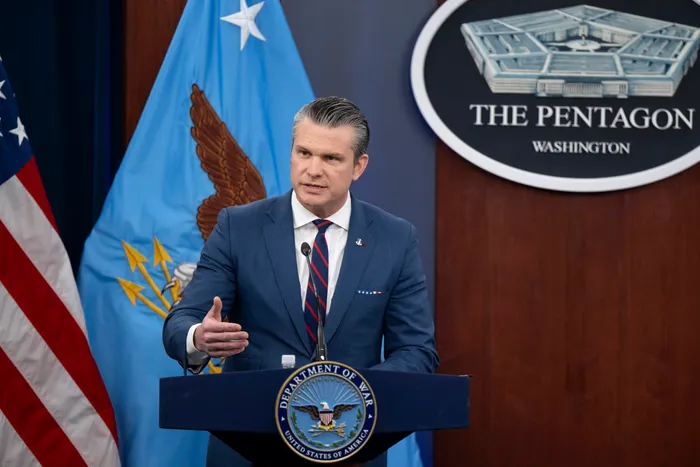
The strategic logic of modern coercive diplomacy rests on the credible threat of high-intensity infrastructure degradation. When Pete Hegseth, or any defense strategist, references targeted strikes against energy and power grids, they are not merely discussing tactical destruction; they are articulating a doctrine of systemic paralysis. This approach views a nation-state as a complex network of interconnected nodes where the destruction of specific "chokepoint" assets yields exponential cascading failures across the domestic economy and military readiness.
The Architecture of Iranian Power Vulnerability
Iran’s domestic stability and regional power projection depend on a centralized, aging, and increasingly brittle energy architecture. To understand the impact of targeted kinetic strikes, one must analyze the three structural pillars that sustain the Islamic Republic’s operational capacity.
1. The Hydrocarbon Export Bottleneck
Iran's economy functions as a heat engine fueled by oil and gas exports. The Kharg Island terminal handles roughly 90% of Iran’s crude exports. From a strategic modeling perspective, Kharg represents a single point of failure. A concentrated strike here does not just reduce revenue; it creates an immediate inventory overhang. Because Iran lacks sufficient long-term storage capacity, the inability to export forces the shut-in of upstream wells. Restarting these wells often involves significant technical hurdles and capital expenditure, leading to long-term production degradation even after hostilities cease.
2. The Integrated National Power Grid
The Iranian electrical grid is the connective tissue for both civilian life and military industrialization. Unlike decentralized modern grids, Iran relies on large, thermal power plants located near major urban centers and industrial zones. Kinetic targeting of the "Bushehr" or "Neka" plants creates immediate regional blackouts. However, the secondary effect is the more devastating variable: the loss of the SCADA (Supervisory Control and Data Acquisition) systems and transformer substations. High-voltage transformers are long-lead items. In a global market, replacing a custom-built 500kV transformer can take 12 to 24 months. By neutralizing these nodes, a campaign shifts from a temporary disruption to a multi-year economic depression.
3. Dual-Use Industrial Complexes
Infrastructure targets are rarely purely civilian. The steel, petrochemical, and manufacturing sectors are the primary consumers of the natural gas grid. During winter months, Iran already faces domestic gas shortages, forcing the government to choose between heating homes and keeping factories open. Strategic strikes on gas processing plants—specifically those in the South Pars field—force an immediate collapse of industrial output. This creates a feedback loop: without domestic industrial output, the military cannot replenish conventional munitions or maintain hardware, effectively putting a "burn rate" on their existing stockpiles.
The Logic of Disproportionality in Modern Warfare
Standard military theory often focuses on "symmetrical response," but the strategy of targeting energy infrastructure is inherently asymmetrical. It seeks to impose a cost function that far exceeds the value of the munitions used.
- Cost of Munition: $1 million to $2 million per cruise missile.
- Cost of Target: Hundreds of millions in physical assets; billions in lost economic productivity.
- Psychological Friction: The transition from a functioning modern society to one without consistent refrigeration, water pumping (which requires electricity), and communication creates a domestic political pressure that few authoritarian regimes can sustain indefinitely.
This strategy assumes that the "center of gravity" of the Iranian state is not its standing army, but its ability to provide basic services to a restive population. When the lights go out and the pumps stop, the internal security apparatus must pivot from external defense to internal suppression, diluting its effectiveness on the regional stage.
Escalation Dominance and the Threshold of Response
The effectiveness of threatening infrastructure depends entirely on "Escalation Dominance"—the ability to increase the stakes of a conflict to a level where the opponent cannot match the intensity without risking total collapse.
Iran’s primary counter-leverage is the "Scorpion’s Tail" strategy: the ability to disrupt the Strait of Hormuz or launch drone swarms at GCC (Gulf Cooperation Council) energy assets. For the Hegseth-style threat to be a viable deterrent rather than a catalyst for disaster, the United States must demonstrate the capability to intercept these responses. This creates a technical bottleneck: the density of Integrated Air and Missile Defense (IAMD) systems in the region must be sufficient to achieve a "near-zero" leakage rate for incoming Iranian projectiles.
If the U.S. can successfully neutralize Iran's retaliatory options, the threat of infrastructure destruction becomes an absolute lever. If the defense is porous, the kinetic strike on Iran’s grid triggers a global energy price shock that could undermine Western political will.
The Mechanics of Kinetic Degradation
When strategists discuss "bombs on infrastructure," they are specifically referring to the destruction of non-redundant components.
- Generation vs. Distribution: Destroying a turbine hall is spectacular but often redundant. Destroying the switchyard and the bespoke transformers is more efficient. A turbine can be bypassed; a specialized high-voltage switchyard cannot.
- The Gas Pressure Paradox: Iran’s gas pipeline network requires constant compression. Targeting compressor stations—highly technical facilities with limited spare parts—effectively "deadlines" the entire pipeline. Even if the gas field is intact, the fuel cannot reach the power plants or the cities.
- Refinery Fractionalization: Targeted strikes on catalytic cracking units within refineries halt the production of gasoline and diesel. While Iran has moved toward self-sufficiency in refining, its units are complex and rely on older Western or newer Chinese components that are difficult to source under wartime sanctions.
Strategic Risks of the "Grid-Down" Doctrine
There is a fundamental risk in the total degradation of a state's infrastructure: the "Failed State Trap." Strategic logic dictates that you leave an opponent with something to lose. If the infrastructure is completely erased, the regime has no incentive to return to the negotiating table because the "cost of compliance" no longer offers a path to restoration.
Furthermore, the environmental externalities of striking petrochemical and energy hubs cannot be ignored. The destruction of the Abadan refinery or South Pars terminals would likely result in catastrophic ecological damage to the Persian Gulf, affecting the desalination plants that provide water to the entire Arabian Peninsula. This turns a bilateral conflict into a regional humanitarian crisis, potentially alienating allies who are otherwise supportive of containing Iranian influence.
The Forecast of Capability over Intent
The shift in rhetoric toward infrastructure-centric targeting signals a move away from "regime change" via ground invasion toward "state paralysis" via standoff precision fires. This is a recognition of the limits of American boots-on-the-ground deployments and the increasing efficacy of precision-guided munitions (PGMs) and cyber-kinetic integration.
The strategic play is the pre-emptive placement of "virtual targets." By publicly identifying these infrastructure nodes, the U.S. is performing a psychological mapping of Iran's vulnerabilities. The goal is to force the Iranian leadership to calculate the "Recovery Time Objective" (RTO). If the RTO for their national power grid is measured in decades, the rational actor—even one driven by ideology—must reconsider the cost of regional escalation.
The deployment of this doctrine requires the immediate fortification of regional missile defense and the pre-positioning of naval assets capable of high-volume Tomahawk launches. Any rhetoric regarding "bombs on infrastructure" is hollow without the simultaneous surge in carrier strike group presence and the activation of global energy reserve protocols to mitigate the inevitable market volatility. The deterrent is not the bomb itself, but the undeniable math of the subsequent economic collapse.