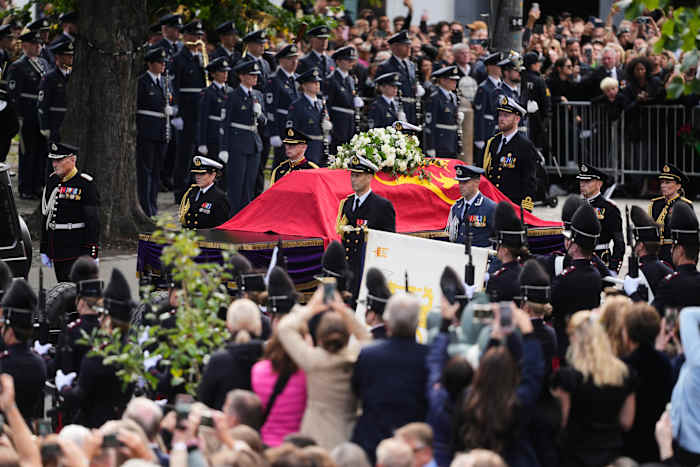
Tens of thousands of people lined the streets of Oslo to watch an artillery carriage carry the red-draped casket of King Harald V toward the city's Lutheran cathedral. When Europe's oldest reigning monarch passed away at the age of 89, he left behind a nation deeply conflicted about the future of its crown.
You didn't just lose a figurehead when Harald died on August 28; you lost a man who spent thirty-five years acting as the emotional anchor for over five million people. While other European monarchs bailed out through abdication, Harald stayed on the throne until his final breath, refusing to quit even as his health deteriorated.
The Reality of Modern Monarchy in Oslo
Crowds flooded Palace Square in the days leading up to the service, leaving mounds of white flowers, handwritten notes, and flickering candles. At one point, mourners waited up to seven hours just to file past his coffin during the lying in state at the royal chapel. They called him the grandfather of the nation for a reason.
Harald understood how to talk to regular citizens without sounding rehearsed. Back in 2016, a speech where he championed multiculturalism, LGBTQ+ rights, and mental health went viral globally because it sounded human. He famously noted that Norwegians include "girls who love girls, boys who love boys, and boys and girls who love each other." That kind of direct cultural alignment is rare among royals.
Yet, his final years weren't entirely smooth sailing. Support for the crown actually dipped before surging past seventy percent in recent polls right after his passing. Scandals involving extended family members tested public patience. Harald managed to weather those storms simply because his personal approval rating remained bulletproof.
Inside the State Funeral
The guest list at Oslo Cathedral read like a who's who of global royalty and political power. Britain's Prince William flew in to represent the House of Windsor, while monarchs from Sweden, Denmark, Spain, the Netherlands, Belgium, and Jordan took their seats alongside Ukrainian President Volodymyr Zelensky.
Security was staggering. Around 3,500 soldiers and 3,000 police officers locked down the capital. Strict airspace restrictions forced civilian aircraft to alter routes across eastern Norway while a 21-gun salute echoed off the fjords.
As the service began, the entire country fell silent for a full minute. Presiding Bishop Olav Fykse Tveit led the liturgy, while crown princes and prime ministers delivered solemn tributes. Following the church ceremony, four F-35 fighter jets roared overhead in a precise "missing man" formation as the casket moved toward the crypt at Akershus Fortress. He was laid to rest next to his parents and grandparents inside a specially designed sarcophagus.
What Happens to the Throne Now
King Haakon VIII took his oath before the Storting parliament immediately following his father's passing. Stepping into the shoes of a universally beloved king is arguably the hardest job in modern European politics. Haakon inherits a monarchy that is culturally relevant, but fragile.
If you're watching the Scandinavian constitutional landscape, pay close attention to how the younger generation handles public scrutiny. The institution relies entirely on personal goodwill now that Harald's decades-long reservoir of trust has been sealed in stone at Akershus Fortress. Norway's crown survived the transition on paper, but keeping the magic alive without Harald at the helm will take serious political agility.