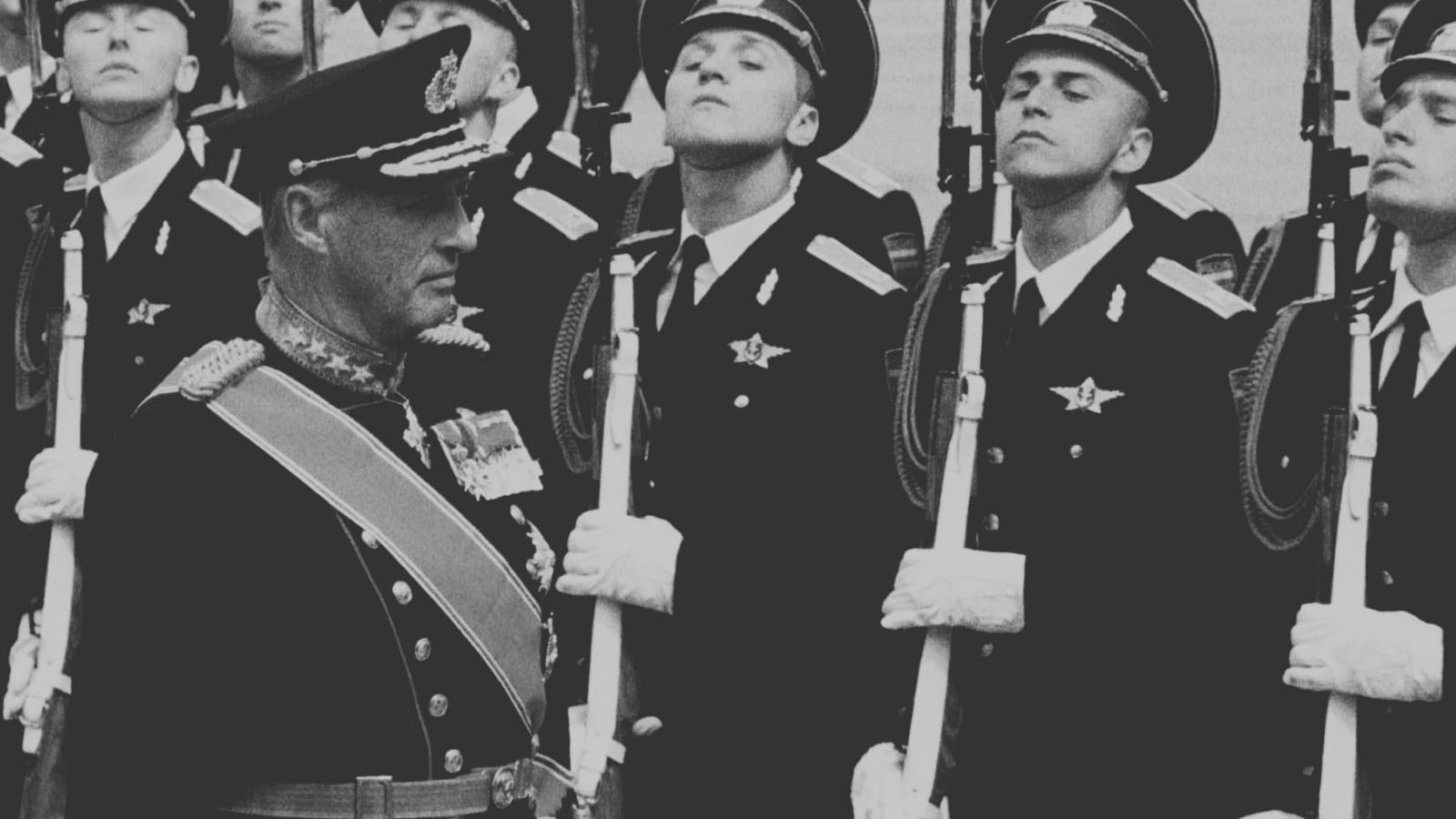
King Harald V of Norway died at the age of 89, leaving behind a 35-year legacy that completely redefined what a modern European monarchy should look like. His son, Crown Prince Haakon, has automatically ascended to the throne as King Haakon VIII. The transition happened immediately following Harald's passing at Oslo University Hospital.
If you've been following European royalty, you know Harald wasn't your average traditional monarch. He was a sailor, an Olympic athlete, and a survivor of wartime exile. More importantly, he managed to anchor a rapidly changing nation through decades of cultural shifts and national tragedies. Now, his son steps into the role during a surprisingly turbulent chapter for the royal family.
The End of an Era in Oslo
Harald’s reign began in January 1991 following the death of his father, King Olav V. Right out of the gate, Harald chose a path of accessibility. He famously fought for nine years to marry Sonja Haraldsen, a commoner, setting a precedent that changed the royal family forever. That personal battle taught him how to relate to ordinary citizens.
Throughout his time on the throne, he earned the affectionate nickname of "hele Norges bestefar"—the grandfather of all Norway. That warmth was tested severely in 2011 when right-wing extremist Anders Behring Breivik murdered 77 people. Harald stepped up as a moral compass for a grieving country, delivering speeches that focused heavily on unity, democracy, and human dignity.
His 2016 speech about inclusion remains legendary. He publicly celebrated that Norwegians come from northern and southern regions, rural valleys and urban centers, and different religious backgrounds and sexual orientations. He didn't have real political power—Norway's parliament handles governance—but his cultural influence carried immense weight.
What Changes Under King Haakon VIII
King Haakon VIII takes over at 53 years old. Unlike monarchies that hold grand, cinematic coronations, Norway stopped holding crown-placing ceremonies over a century ago. Haakon's accession is swift, constitutional, and quiet, though a formal oath before the Storting (parliament) will follow. He has chosen his grandfather's famous motto: "Alt for Norge" (All for Norway).
You might wonder if the institution itself is secure. Support for the Norwegian crown has seen dips in recent polling, sliding from over 80 percent down into the high 60s. Haakon also inherits a household recovering from severe PR hits. His wife, Crown Princess Mette-Marit, faced fierce criticism over past contacts with Jeffrey Epstein, and her son from a previous relationship recently faced high-profile legal battles and a prison sentence.
Despite these family headaches, Haakon is widely viewed as pragmatic and deeply prepared. He served as regent during his father's frequent hospitalizations in recent years, dealing with everything from Harald's bladder cancer treatment in 2003 to his 2024 pacemaker surgery.
The Road Ahead for the House of Glücksburg
As Norway enters an official period of national mourning with flags at half-mast, the spotlight shifts entirely to Haakon and the next generation. His eldest daughter, 20-year-old Princess Ingrid Alexandra, is now the direct heir to the throne. She represents a historic shift as the country's future first reigning queen in modern history.
Harald flatly refused to abdicate, insisting until his final months that his constitutional oath was a lifetime commitment. He worked until his body simply gave out. Haakon now has to prove that a scaled-back, modernized monarchy can stay relevant while weathering personal scandals that his father worked so hard to balance out with sheer personal charm.
Expect the transition to remain legally seamless even as public debates about the future value of a hereditary crown pick up steam across Scandinavia. Watch how the new king handles his first major test of public trust.