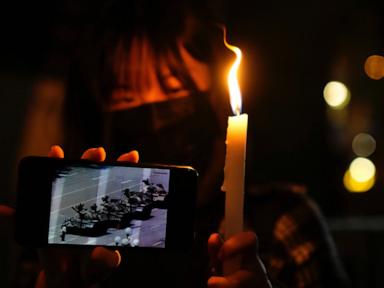
Wax cools quickly in the humid air of a Hong Kong summer. For thirty years, that cooling wax told a story of collective defiance. Every fourth of June, tens of thousands of people gathered in Victoria Park. They carried white candles. They sang songs that authorities would later pretend never existed. They gathered to remember the blood spilled on cobblestones far to the north in 1989, keeping a candle burning for a history that the powerful wanted sealed in darkness.
Then the candles went out. Read more on a connected topic: this related article.
Consider what happens when a city’s memory is declared a criminal offense. The transformation does not happen overnight with marching boots or blaring sirens. It creeps in through administrative edicts, health mandates that outlive their utility, and finally, through the quiet doors of a courtroom where three government-vetted judges sit in judgment over an era.
Lee Cheuk-yan and Chow Hang-tung know this courtroom well. As former leaders of the now-disbanded Hong Kong Alliance in Support of Patriotic Democratic Movements of China, they spent their lives organizing those massive annual vigils. Now, they stand accused of inciting subversion under a sweeping national security law imposed directly from Beijing. The charge carries a potential ten-year prison sentence. Their crime, according to the state, was simple: they dared to demand an end to one-party rule. Additional analysis by NBC News highlights comparable perspectives on the subject.
Imagine sitting in that dock. You look out over a room where the legal traditions of the British colonial era still whisper from the wood-paneled walls, yet the rules of the game have been entirely rewritten from the top down. The prosecution insists the case is not political. They argue that calling for political reform is an unlawful attempt to overthrow the central government. The defense, led largely by Chow herself before the bench, counters with a stark warning: if a court cannot distinguish between a democratic aspiration and a criminal conspiracy, the judiciary ceases to be a shield and becomes a weapon.
This is the invisible stakes of the trial unfolding before the public eye. It is not merely about two individuals or the remnants of a dissolved civil society group. It is about the soul of a territory that was promised fifty years of autonomy under the banner of one country, two systems. When the legal mechanisms of the mainland are seamlessly grafted onto a city built on financial freedom and common law, the boundary blurs.
The park itself tells the story. Where candlelight once flickered, carnivals organized by pro-Beijing groups now occupy the grounds. Tourists eat street food and children play games on asphalt that once echoed with freedom songs. History is paved over, neatly whitewashed, and replaced with synthetic joy.
Yet memory has a stubborn habit of surviving in the margins. It lives in encrypted chats, in whispered conversations over dim sum, and in the quiet resolve of people who refuse to forget why the candles were lit in the first place.
The verdict handed down by the court is more than a legal milestone. It is a litmus test for a judicial system caught between two worlds. It measures the exact distance between what a city once was and what it is rapidly becoming under the weight of a new political reality.
The courtroom doors close. The judges deliberate. Outside, the rain washes clean the streets of a city that is learning, step by painful step, how heavy it is to carry the weight of an outlawed past.
Hong Kong Court Hears Final Arguments in Tiananmen Square Vigil Case
This footage provides a direct look at the courtroom atmosphere and the final arguments surrounding the prominent activists standing trial for their role in the historical vigils.