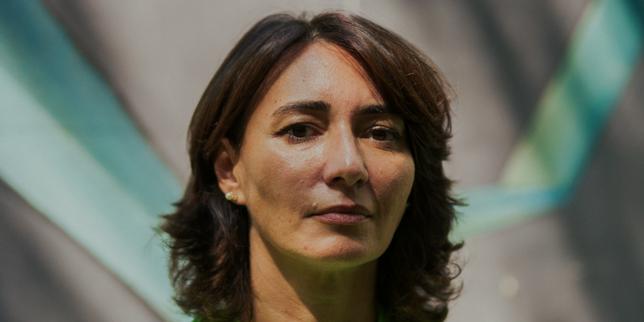
The tea in the paper cup had gone cold hours ago, but Maia kept her fingers wrapped around it anyway. The warmth was a memory she clung to. Outside the third-floor window, the streetlights of Tbilisi hummed through a heavy mist, casting long, bruised shadows against the concrete. Down below, the city looked deceptively quiet. A stray dog trotted past a shuttered kiosk. A solitary car sped by, its tires hissing against the damp asphalt.
Nothing moved. Yet everything was shifting.
Maia adjusted the strap of her canvas bag, checking the zipper for the third time. Inside sat a battered notebook, a spare phone battery, and a packet of throat lozenges. Standard equipment for a civilian operating on borrowed time.
"They won't come at night," a voice whispered from the corner of the small, cluttered room.
It was Giorgi, editing a video on a laptop with a cracked screen. His eyes were red-rimmed, glowing in the harsh blue light of the monitor. He hadn't slept properly in a week. None of them had.
"They come whenever they decide the air is too loud," Maia replied, her voice flat, drained of panic.
She wasn't being dramatic. She was being precise. In the Georgia of today, the space between ordinary life and total criminalization has narrowed to the width of a razor blade. Civil society, once a vibrant, chaotic ecosystem of watchdogs, independent journalists, and human rights defenders, is gasping for breath. It is a slow-motion dismantling. No dramatic midnight raids with battering rams at first. Just bureaucratic strangulation. Freezing bank accounts. Labeling independent watchdogs as foreign agents. Smearing integrity on state television until neighbors look at neighbors through narrowed eyes.
And now, the final phase: individual erasure.
Consider what happens when the watchdogs are locked in cages. Who counts the votes? Who tracks the money? Who speaks for the beaten teenager in the back of an unmarked van?
When the last independent voices are silenced, the dark grows very heavy indeed.
I remember when the streets used to ring with hope. That was years ago, back when the European flags fluttered from every balcony in Rustaveli Avenue, blue and gold against the ancient stone. People believed the arc of the moral universe bent toward democracy automatically. We were naive. We thought freedom was a destination you reached, not a permanent state of high alert.
History teaches us a brutal lesson. Authoritarianism rarely arrives with a sudden explosion. It creeps in through legislation. It wears a suit and ties a neat tie. It uses legalistic jargon to justify the crushing of dissent. By the time you realize your rights have been revoked, the courtrooms belong to the prosecutors and the streets belong to the batons.
Maia knows this history in her bones. She has spent twelve years tracking government corruption, tracing millions of lari from shady public tenders into the pockets of untouchable bureaucrats. Her investigations led to resignations, audits, and rare moments of public accountability.
Those victories feel like centuries ago.
Today, Maia faces criminal charges manufactured out of thin air. The accusation? Conspiracy against the state. The proof? A grant from a European democracy foundation used to train young journalists on how to verify facts. In the new vocabulary of the ruling party, truth is treason and transparency is espionage.
"I am ready," she told me earlier, staring at her packed bag. "I have been ready since they passed the transparency law. You cannot do this work without accepting the cost. But knowing the cost does not make the bill any easier to pay."
She is not alone in her exhaustion. Across Tbilisi, hundreds of NGO workers, activists, and lawyers are living in a state of suspended animation. They go to offices that might be raided tomorrow. They answer emails that are almost certainly intercepted. They look at their children and wonder if they will be around to help them with their homework next month.
The psychological toll is the weapon. You do not need to arrest every dissident if you can make every dissident feel arrested. The paranoia becomes its own prison wall. Friends stop calling back. Relatives whisper warnings at family dinners, begging them to stay quiet, to delete their social media, to find a normal job in marketing or retail.
Normal. That is the trap.
Because if everyone chooses normal, abnormal becomes the law of the land.
Giorgi hit save on his video editor. The export bar crawled across the screen at a agonizingly slow pace. Ninety-eight percent. Ninety-ine. Done. He uploaded the file to a decentralized server hosted outside the country. It was a twenty-minute documentary exposing police brutality during the latest protests. It would be viewed by tens of thousands before the government cyber-units managed to block it.
Twenty minutes of light before the blackout.
"Is it enough?" Giorgi asked, leaning back and rubbing his neck.
Maia looked at the screen, then out the window at the misty Tbilisi night.
"It has to be," she said.
The tragedy unfolding in the Caucasus is not just a local crisis. It is a stress test for the modern world. It demonstrates how easily an elected government can hollow out democracy from the inside out, using the tools of the state against its own citizens while maintaining a hollow facade of legitimacy for international observers.
When civil society becomes a target, the entire architecture of freedom trembles.
Maia picked up her cold cup of tea, realized there was nothing left to drink, and set it down. She stood up, stretched her back, and walked over to the desk. There was more work to do. A new decree had just been published on the ministry website, buried under pages of impenetrable bureaucratic doublespeak. Hidden inside was a new clause expanding the powers of surveillance agencies.
She needed to read it. She needed to break it down. She needed to publish it before dawn.
The street outside remained silent. The mist grew thicker, swallowing the streetlights one by one. But inside the room, the screen glowed bright, and the keyboard began to click.


