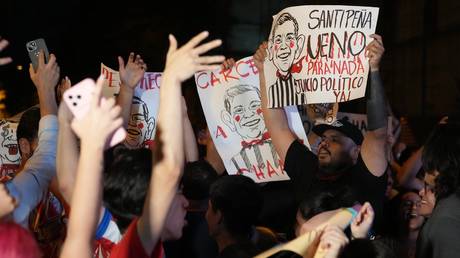
When a major financial institution collapses in Latin America, the fallout rarely stays confined to central bank boardrooms or stock exchange tickers. Within hours of frozen ATMs and locked branch doors, frustration spills onto the pavement, transforming routine banking failures into violent street clashes. While viral videos capture the tear gas, burning tires, and shattered glass outside shuttered bank headquarters, they miss the underlying structural triggers. These riots are not spontaneous outbursts of irrational panic; they are the predictable result of weak deposit insurance, rampant currency inflation, and a deeply ingrained public memory of state-sanctioned wealth confiscation.
To understand why a bank collapse in the region triggers immediate civil unrest rather than orderly legal claims, you have to look at the mechanics of household survival. In North America or Western Europe, a bank failure is an administrative inconvenience. Regulators step in on a Friday evening, transfer the ledger to a solvent institution, and depositors access their cash by Monday morning through federally backed insurance schemes. Across much of Latin America, that safety net is either grossly underfunded, capped at negligible amounts, or routinely bypassed by emergency government decrees. When the doors lock, lifeblood evaporates.
The Anatomy of a Sudden Liquidity Freeze
Banks do not keep 100 percent of customer deposits sitting in physical vaults. Under fractional-reserve banking, institutions lend out the vast majority of the capital they take in, keeping only a thin buffer to cover daily withdrawals. This system relies entirely on collective trust. As long as depositors believe their money is safe, they leave it in the system, and the bank remains solvent on paper.
The moment rumors of insolvency surface—often sparked by an exposed fraud, a sudden sovereign debt downgrade, or a sharp currency devaluation—that trust shatters. Sophisticated institutional investors and politically connected insiders are always the first to move. They wire funds offshore days or weeks before the public catches wind of trouble. By the time ordinary workers, pensioners, and small business owners line up at the branches, the liquid cash is already gone.
Regulators then face an impossible choice. To prevent total systemic contagion, they impose a deposit freeze, severely restricting how much cash citizens can withdraw per day or week. In theory, this buys time to audit the books and arrange a bailout. In practice, it acts as gasoline on a dry brush fire.
Why Cash Still Rules the Informal Economy
Mainstream financial analysts often view these street protests through a purely macroeconomic lens, discussing capital adequacy ratios and non-performing loans. That perspective ignores how millions of people actually live on the ground.
Across Latin America, a massive percentage of the workforce operates within the informal economy. Street vendors, construction laborers, independent mechanics, and domestic workers do not rely on credit lines or digital escrow accounts. They operate on daily physical cash flow. When a bank freezes accounts, a small shop owner cannot pay suppliers on Tuesday morning. A contractor cannot pay day laborers on Friday afternoon.
Within forty-eight hours of a banking suspension, supply chains in working-class neighborhoods grind to a halt. Grocery prices spike as merchants demand physical bills they can hold in their hands rather than digital transfers from compromised institutions. The people banging on the steel shutters of a failed bank are not protesting abstract monetary policy. They are trying to buy food and pay rent before their savings lose half their purchasing power.
The Ghosts of Confiscations Past
To grasp the sheer ferocity of the street clashes seen in recent viral footage, you must account for generational trauma. Latin American savers suffer from long memories, and for good reason.
Consider the historical precedents that shape public psychology across the hemisphere:
- Argentina's Corralito (2001): Facing a catastrophic debt default, the Argentine government froze bank accounts for a year and forcibly converted dollar-denominated savings into devalued pesos. Middle-class families saw their life savings wiped out overnight, sparking deadly riots that toppled a presidency.
- Ecuador's Banking Holiday (1999): Following rampant corruption and reckless lending by private bankers, the state froze deposits across the country, hyperinflation exploded, and millions were driven into poverty or forced to emigrate.
- Venezuela's Serial Interventions: Repeated bank nationalizations, strict currency controls, and hyperinflation taught citizens that money left inside domestic financial institutions is permanently at risk of state seizure or total erosion.
Because of this history, citizens do not trust official assurances from finance ministers. When a central bank governor goes on television to urge calm and promise that deposits are safe, the public hears the exact opposite. They interpret official reassurance as a signal to get their money out immediately, accelerating the very bank run the government is trying to stop.
Regulatory Blind Spots and Crony Lending
A bank rarely collapses overnight without years of quiet rot behind the scenes. When investigative audits eventually peel back the layers of a failed Latin American lender, the same toxic patterns emerge with depressing regularity.
The most common culprit is related-party lending. In markets dominated by powerful family conglomerates, banks often function as personal piggy banks for their majority shareholders. Executive boards funnel hundreds of millions of dollars into shell companies, speculative real estate ventures, or failing sister enterprises owned by the bank's directors. These loans are routinely issued without proper collateral and rolled over indefinitely so they never appear as defaults on quarterly balance sheets.
Superintendencies of banking—the state agencies tasked with policing these institutions—frequently lack the political independence or technical resources to intervene early. Regulatory capture is widespread. High-ranking officials often rotate between top positions at private banks and senior roles at the central bank, creating an environment where warning signs are ignored until the capital hole becomes too massive to hide.
The Sovereign-Bank Doom Loop
Even banks that avoid outright fraud are vulnerable to the sovereign-bank nexus. In many developing economies, commercial banks are heavily pressured or incentivized to buy huge quantities of their own government's debt. On paper, sovereign bonds are treated as risk-free assets.
When the government runs unsustainable fiscal deficits and its creditworthiness collapses, the value of those bonds plummets. Suddenly, every commercial bank holding that debt suffers massive unrealized losses on its balance sheet. The state cannot bail out the banks because the state itself is broke, and the banks cannot lend to the real economy because their capital is tied up in sinking government paper. When one mid-sized lender finally cracks under this pressure, the public realizes the entire sector is exposed to the exact same poison.
How Social Media Accelerates the Panic
Twenty years ago, a bank run unfolded at the speed of print newspapers, radio broadcasts, and physical queues forming outside downtown branches. Today, modern telecommunications have compressed a multi-week crisis into a single afternoon.
Encrypted messaging apps like WhatsApp and Telegram act as hyper-efficient rumor mills. A single voice note claiming a specific bank is out of cash—whether true or fabricated by short-sellers and political rivals—can reach millions of phones in minutes. Users forward blurry photos of armored trucks leaving a branch or executives carrying boxes out of an office building.
Digital banking apps, designed for convenience, simultaneously strip away the natural friction that used to slow down panics. Customers no longer need to wait until 9:00 AM to stand in line; they can attempt to drain their accounts from their smartphones at midnight. When the bank's servers crash under the sudden surge of transfer requests, the resulting error messages on millions of screens serve as definitive proof to users that their money has vanished. By dawn, the crowds are already gathering in the streets.
The Limits of State Intervention
Once the tear gas clears and riot police secure the perimeter around shattered bank branches, governments are left with a narrow set of terrible options. None of them offer a clean exit.
If the central bank prints money to bail out the failed institution and make depositors whole, it injects massive liquidity into a fragile economy. That fresh currency immediately chases scarce goods and foreign dollars, igniting inflation that taxes the entire population—including the poorest citizens who never even had a bank account.
Alternatively, if the authorities let the bank fail and force bondholders and large depositors to absorb the losses through a bail-in, credit freezes across the country. Businesses lose their working capital, unemployment surges, and foreign investors flee the market for years.
In a hypothetical scenario where a mid-sized regional lender collapses due to unhedged foreign currency liabilities, a central bank might attempt a targeted liquidation, guaranteeing small retail accounts while wiping out institutional shareholders. Even in that best-case execution, the bureaucratic verification process takes months. For a family living paycheck to paycheck, waiting six months for an insurance payout is indistinguishable from total confiscation.
Security Forces on the Front Lines of Financial Failure
The presence of heavily armed riot police outside financial institutions reveals the ultimate breakdown of institutional trust. When citizens lose faith in the legal system to protect their property rights, physical confrontation becomes the only remaining lever of influence.
Protesters target bank branches and government ministries because they know political leaders fear street instability far more than they fear regulatory censure. History across the region demonstrates a cynical truth: quiet depositors who hire lawyers and file claims in commercial courts often wait decades to recover pennies on the dollar. Angry crowds that block major highways and paralyze capital cities frequently force governments to cobble together emergency compensation funds within days.
Until banking regulators enforce strict capital buffers, sever the cozy ties between political elites and private lenders, and fund credible deposit insurance mechanisms backed by hard assets rather than empty promises, the cycle will repeat. Every liquidity freeze will be met with skepticism, every official reassurance will be treated as a lie, and every major bank failure will be settled in the streets.