The headlines are predictable. Prime Minister Mikati heads to Washington. The media buzzes about "direct talks" and "diplomatic breakthroughs" after Israeli pressure. It sounds like progress. It looks like a solution. It is actually a performance of a performance.
The mainstream narrative suggests that these high-level meetings in D.C. are the engine of Middle Eastern stability. They aren't. They are the cemetery where hard truths go to be buried under layers of polite protocol. When a Lebanese leader flies to the United States, he isn't going to negotiate terms; he is going to seek a stay of execution for a political system that has been dead for a decade.
The Myth of the Direct Talk Breakthrough
Every major news outlet treats "direct talks" as the holy grail of regional peace. This is a fundamental misunderstanding of how the Levant functions.
Direct talks between Lebanon and Israel—or even the proximity talks favored by the State Department—assume two sovereign states are meeting at a table with the power to enforce whatever they sign. That isn't the reality in Beirut. The Lebanese government does not hold a monopoly on force. It doesn't even hold a monopoly on its own foreign policy.
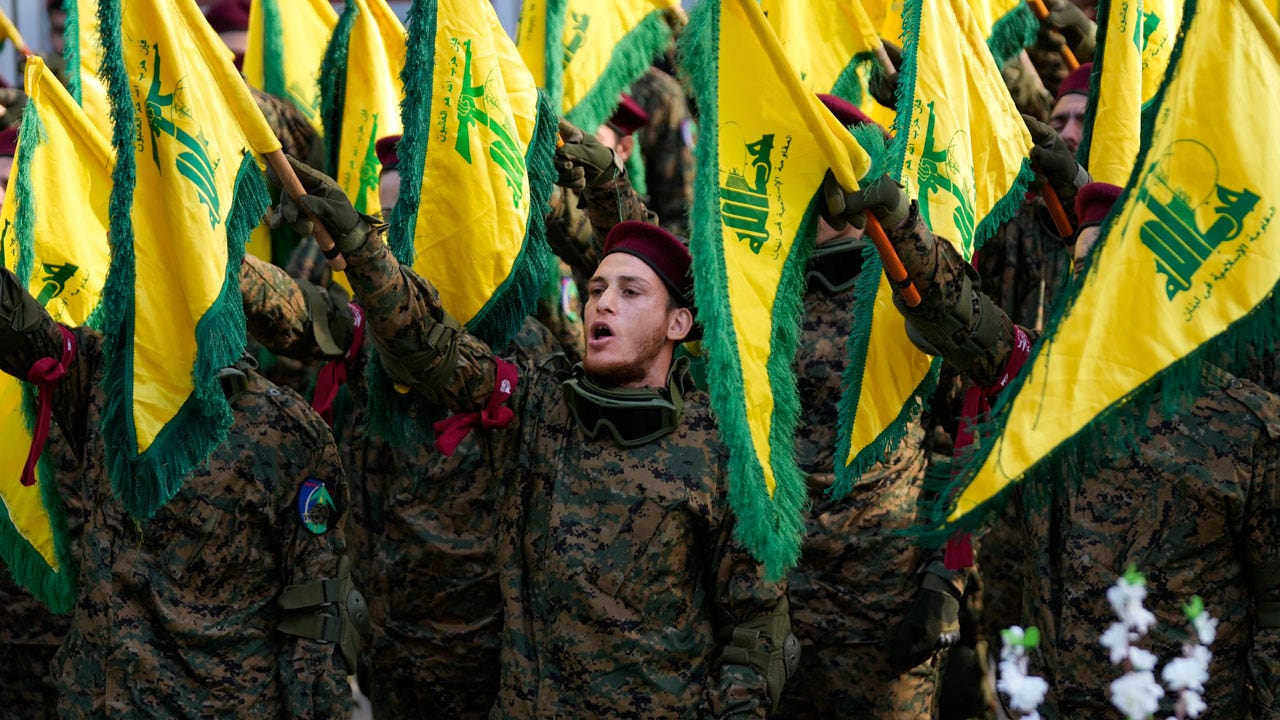
When the PM sits in the Oval Office or at Foggy Bottom, he is representing a shell. The real power centers in Lebanon are not on that flight to D.C. They are in the southern suburbs and the border villages. Any deal struck in Washington that doesn't have the explicit, back-channel blessing of the armed factions on the ground is just a piece of paper designed to satisfy Western donors. We’ve seen millions of dollars in aid and countless hours of "capacity building" wasted because diplomats refuse to acknowledge that the person they are talking to isn't the person in charge.
Washington Is the Wrong Venue
Why do we keep doing this? Because Washington loves a process. A visit is a metric. A meeting is a "deliverable."
If you want to understand the failure of modern diplomacy, look at the obsession with the venue. By dragging Lebanese officials to the U.S., the West creates an environment of artificial compliance. In D.C., the rhetoric is about "international law," "Resolution 1701," and "border integrity." The moment those officials land back at Rafic Hariri International Airport, the language shifts back to "resistance," "sectarian balance," and "survival."
The "lazy consensus" is that more American involvement leads to more stability. I’ve watched this play out for twenty years: American involvement often just raises the stakes of the local power struggle. It turns a border dispute into a proxy battle for global prestige. If the goal is actually a quiet border, the solution won't be found in a photo op on Pennsylvania Avenue. It will be found in the gritty, unglamorous work of local de-confliction that involves the very people the State Department usually refuses to name in public.
The Economic Leverage Fallacy
The competitor reports usually mention Lebanon’s crumbling economy as a reason for these talks. The logic goes: Lebanon is broke, the U.S. has the money, therefore the U.S. can dictate terms.
This is a massive tactical error.
The ruling class in Lebanon has proven they are perfectly willing to let their country burn to the ground to maintain their grip on power. You cannot "incentivize" a leadership that views its own population as collateral damage. The threat of withholding IMF funds or World Bank support doesn't move the needle for men who have their assets in offshore accounts and their security guaranteed by private militias.
Using economic aid as a carrot for diplomatic concessions assumes the target cares about the economy. They don't. They care about survival. The U.S. keeps trying to play chess with people who are playing a survival horror game.
Stop Asking if the Talks Will Succeed
The question "Will the PM’s visit lead to peace?" is the wrong question. It’s a category error.
The real question is: "Who benefits from the illusion of talks?"
- The Lebanese Government: They get to look relevant and "pro-Western" for a week, which keeps the credit lines from being cut off entirely.
- The Israeli Government: They get to show their domestic audience they are "exhausting all diplomatic channels" before taking more drastic kinetic action.
- The U.S. Administration: They get to claim they are "managing the crisis" during an election cycle where another Middle Eastern war would be a political disaster.
Everyone wins except the people living on the border. For them, these talks are a dangerous distraction. They create a false sense of security that evaporates the moment the first drone crosses the line.
The Hard Truth About Sovereignty
We need to define our terms better. Sovereignty isn't a flag and a seat at the UN. It is the ability to say "No" to armed non-state actors and "Yes" to international obligations. By treating the Lebanese PM as the sole point of contact for border security, the international community is LARPing (Live Action Role Playing) as if Lebanon is a Westphalian state.
It isn't. It is a collection of fiefdoms.
If we were being brutally honest, we would admit that these visits are actually about management, not resolution. We are managing the decline, managing the friction, and managing the optics. The "breakthroughs" reported by CNN and others are usually just temporary agreements to keep the volume turned down to a 4 instead of a 10.
A Radical Shift in Perspective
Instead of cheering for more "direct talks," we should be demanding an end to the diplomatic theater.
Imagine a scenario where the U.S. stopped hosting these meaningless summits. What if, instead of inviting the PM to D.C., the message was: "Don't come back until you actually control your side of the Blue Line."
It sounds harsh. It is. But the current "supportive" approach is actually a form of enabling. We are subsidizing a status quo that is fundamentally unstable. We are providing the "professional" veneer that allows the real power brokers to hide behind the facade of a civilian government.
The downside of this contrarian approach is obvious: it risks a total collapse of the formal state. But we have to ask ourselves—is a "state" that exists only to facilitate high-level meetings in Washington actually worth saving at the cost of long-term regional stability?
The Intelligence Gap
The people who think these talks are a "game-changer" (to use a term I despise) are usually looking at maps and policy papers. They aren't looking at the tunnels. They aren't looking at the supply chains that bypass the state entirely.
Real diplomacy in the Levant happens in the dark. It happens through intermediaries in Muscat, Doha, or Paris. It doesn't happen in a brightly lit room in the West Wing with a stenographer present. The fact that this visit is being publicized so heavily is the clearest sign that it is not where the actual decisions are being made.
When you see a report about a "significant push" for talks, read it as a "significant push" for a distraction. The real movement is happening elsewhere, or more likely, it isn't happening at all.
Stop buying the narrative that a plane ticket to Washington equals a step toward peace. It usually just means the hotel industry in D.C. is having a good week. The border remains as volatile as ever, the power structures remain as entrenched as ever, and the "direct talks" remain a fantasy for people who want to believe that the world still works the way it did in 1995.
It doesn't.
The status quo isn't being challenged by these meetings; it is being reinforced by them. Every handshake in D.C. is a confirmation that the charade will continue. If you want to fix the problem, stop watching the stage and start looking at the people moving the scenery.
The visit isn't the story. The visit is the mask.