The retail media is collectively losing its mind over a pop-up pub.
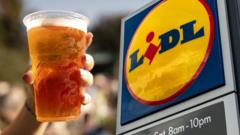
When Lidl announced a temporary pub initiative, mainstream business commentators immediately fell back on their favorite tired narratives. They called it a "brand-building exercise." They prattled on about "community engagement" and "experiential marketing." They claimed the discount grocer was desperately trying to buy cultural relevance from a cynical younger demographic.
They missed the point entirely.
Lidl does not care about saving the British high street, nor do they want to become your local publican. This is not a quirky marketing stunt. It is a calculated, aggressive front-running of supply chain economics and private-label normalization. It is a direct assault on the bloated margins of established consumer packaged goods (CPG) giants and traditional pub chains.
The mainstream analysis is asking the wrong question. They are asking why a supermarket wants to pour pints. The real question is: why are traditional brands still letting supermarkets prove that name-brand loyalty is a tax on the gullible?
The Illusion of Experience: Why "Experiential Marketing" is a Lie
Let’s dismantle the lazy consensus. Every trade publication loves to parrot the idea that modern consumers demand "experiences" over products. They argue that by setting up a pub, Lidl is trying to create emotional synergy with shoppers.
That is pure nonsense. I have spent years analyzing retail supply chains and watching legacy brands dump millions into experiential pop-ups that yield zero long-term customer acquisition. If a consumer wants a premium pub experience, they go to a boutique independent establishment. They do not go to a discount supermarket's activation to feel pampered.
Lidl’s strategy is far colder, sharper, and more effective. It is a live-action, high-margin product demonstration masquerading as a leisure activity.
The Cost-Quality Arbitrage
The entire premise of the discount supermarket model relies on breaking the psychological link between high price and high quality. For decades, legacy supermarkets and major beverage conglomerates convinced the public that a quality product required a premium price tag.
Lidl uses a concept known as blind value perception. By stripping away the grocery aisle context—the fluorescent lighting, the cardboard display boxes, the rushed shopping carts—and placing their private-label alcohol inside a traditional pub setting, they eliminate the "discount" stigma.
Imagine a scenario where a consumer is served a crisp, award-winning private-label clean lager in a premium glass at a fraction of the cost of a Heineken or a Stella Artois. The consumer isn't experiencing "brand warmth." They are experiencing cognitive dissonance. They realize they have been overpaying for marketing fluff for twenty years.
Once that realization clicks, the consumer doesn’t just buy a pint; they change their entire grocery shopping behavior.
Dismantling the Premiumization Myth
For the last decade, the alcohol and retail sectors have been obsessed with "premiumization"—the idea that consumers are drinking less but drinking better, more expensive liquids. Legacy brands used this trend to justify skyrocketing shelf prices.
Lidl's pub play exposes premiumization as an artificial construct propped up by marketing budgets.
Traditional Brand Model:
[Cheap Liquid] + [Massive Marketing Budget] + [Distributor Margin] = £6 Premium Pint

Lidl Vertically Integrated Model:
[Quality Liquid via Contract Brewing] + [Zero Middlemen] = £2 Superior Pint
By bypassing the traditional multi-tier distribution system, Lidl demonstrates that they can source, transport, and pour liquid that matches or beats the quality of major breweries while maintaining profitable margins at a radical price point. They are showing the consumer the raw mathematics of modern retail.
Why the Big Brands are Terrified
If you want to know who is actually losing sleep over this, look at the major consumer goods companies and the legacy pub conglomerates like Diageo, InBev, and Mitchells & Butlers.
For a long time, traditional pub chains operated under the assumption that supermarkets were a separate ecosystem. You bought cheap beer at the grocery store to drink at home, and you paid a premium to go out for a social experience. The two worlds rarely collided directly on a execution level.
Lidl just crossed the demilitarized zone.
The Threat of Private-Label Normalization
The real threat to the market is the aggressive normalization of private-label goods. In the UK and European markets, private-label penetration is already incredibly high, but alcohol has remained one of the final bastions of brand loyalty. People who willingly buy store-brand flour or chopped tomatoes still hesitate to bring a store-brand bottle of spirits or a pack of discount lager to a dinner party.
The pub setup is a systematic de-risking of the private-label brand.
- Direct Validation: It provides immediate social proof. If a venue is packed and everyone is drinking the same private-label stout, the social shame of buying discount booze evaporates.
- The Taste Fallacy: It proves that in blind taste tests, the consumer rarely prefers the heavily advertised brand.
- Margin Crushing: It forces legacy brands to lower their wholesale prices to compete on supermarket shelves, squeezing their margins while Lidl reaps the rewards of its own exclusive supply lines.
The Dark Side of the Strategy: Where Lidl Risks Failure
A true insider acknowledges the vulnerabilities. This strategy is not without significant risk, and it could easily backfire if executed with a lack of operational discipline.
Running a logistics-heavy retail distribution center is entirely different from managing hospitality operations. The hospitality industry is notorious for hidden costs: labor turnover, strict local licensing laws, waste management, and volatile peak-hour foot traffic.
If Lidl attempts to scale this concept beyond a few marketing-centric pop-ups into permanent fixtures, they risk diluting their core operational efficiency. Every hour a regional manager spends worrying about pub cellar maintenance or local noise complaints is an hour stolen from optimizing the hyper-efficient grocery grid that keeps their prices low in the first place.
The moment the pub stops being a lean weapon of psychological warfare and becomes a bureaucratic drain, the model breaks.
The Actionable Truth for Competitors
If you are a competitor watching this unfold, stop trying to copy the format. Do not rush to open your own gimmicky pop-up bar. That is reactive, derivative thinking.
Instead, understand the underlying mechanics of what Lidl is doing and counter it directly:
- Stop Hiding Behind Packaging: If your product relies on a fancy label to justify a 40% price premium over private-label alternatives, you are already dead. Fix the liquid, lower the fluff, and justify the margin through actual ingredient superiority.
- Expose the Logistics: If you are a traditional pub chain, lean heavily into what a supermarket cannot replicate—local heritage, genuine community roots, and complex, cellared cask ales that require artisanal maintenance.
- Weaponize Your Own Data: Traditional grocers have vast troyes of loyalty card data. Use it to predict shifting consumer tastes before discount players can spin up contract brewing contracts to match them.
The era of passive retailing is over. Lidl isn't opening a pub to invite you to a party. They are opening a pub to show you how easily they can take your lunch money while making your customers applaud.
Stop analyzing the optics of the storefront. Start fixing the rot in your supply chain.