The hum of a refrigerator is the sound of civilization. You never notice it until it stops.
In the middle of a Ukrainian winter, or even during the damp, bone-chilling shoulder seasons when the wind sweeps off the Dnieper River, that sudden, suffocating silence is not merely an inconvenience. It is a countdown. Without electricity, the water pumps in high-rise apartment buildings fail within minutes. Without water, the centralized heating pipes begin to cool, dropping degree by degree until the frost creeps across the inside of double-paned windows.
Imagine—and let us be clear that this is a composite portrait drawn from the daily realities of millions in cities like Kharkiv, Odesa, and Kryvyi Rih—a woman named Olena sitting at her kitchen table in the dark. Her phone battery sits at four percent. On the glowing, dimmed screen, she reads a headline from thousands of miles away. A diplomatic breakthrough has been declared. Donald Trump has announced an energy ceasefire, a pause on the relentless bombardment of power grids and substations. For a fraction of a second, Olena exhales. Her shoulders drop. Maybe tonight, the radiators will stay warm. Maybe tonight, she can boil water for tea without listening for the high-pitched whine of an incoming Shahed drone.
Then the glass in her window frame rattles.
The sky outside flashes a violent, unnatural orange, followed seconds later by the low, chest-rattling thud of an explosion miles away at a regional transformer station. The emergency battery backup under her desk clicks twice and dies.
Silence.
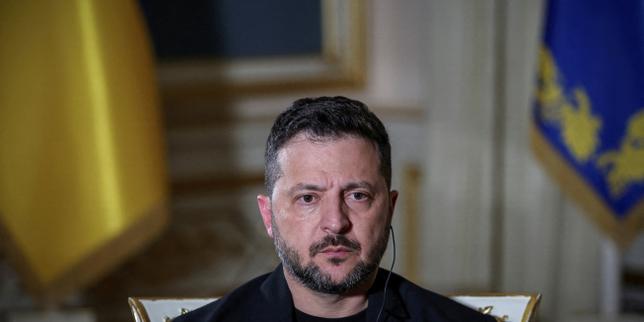
This is the precise, agonizing gap between diplomatic theater and kinetic reality. While news tickers across Washington, Paris, and Brussels flashed updates about a purported agreement to spare energy infrastructure, Ukrainian President Volodymyr Zelensky stepped before the cameras with a stark, sobering contradiction. Russian forces, he stated flatly, had launched fresh strikes against Ukrainian energy facilities immediately after the ceasefire announcement was made public.
The Architecture of a Broken Promise
To understand why a headline about a "ceasefire" can coexist with burning substations, you have to strip away the polite vocabulary of international diplomacy and look at the cold mechanics of modern warfare.
When a political leader announces a partial truce—specifically an energy ceasefire—the public naturally pictures a handshake, a signed document, and an immediate cessation of hostilities. In reality, high-stakes geopolitical negotiations rarely move at the speed of a ballistic missile. When Donald Trump announced that an agreement had been reached to halt strikes on energy infrastructure, the statement landed like a thunderclap across global media. Markets twitched. Pundits dissected the phrasing. Optimists saw the first fragile stepping stone toward ending a grueling war of attrition.
Yet on the ground in Ukraine, the air raid sirens did not stop wailing.
Volodymyr Zelensky’s response was neither theatrical nor overly complex; it was an accounting of physical damage. Following the announcement, Russian drones and missiles once again targeted the veins and arteries of Ukraine’s power grid. For Kyiv, this was not an anomaly. It was a familiar, deeply ingrained pattern of behavior. Throughout the conflict, announced pauses, humanitarian corridors, and localized truces have repeatedly collided with the brutal momentum of Russian military operations.
Why does this happen? There are two possibilities, and neither offers much comfort to the people freezing in the dark.
The first is deliberate deception—using the optics of peace to buy time, confuse adversaries, and sow division among Western allies who are eager for an off-ramp. If Moscow appears willing to negotiate in Washington while continuing to bomb in Donetsk or Poltava, it forces Ukraine into an impossible rhetorical trap. If Kyiv complains that the truce is being violated, skeptics accuse Zelensky of obstructing peace. If Kyiv stays silent, its cities burn under the cover of a phantom ceasefire.
The second possibility is equally unsettling: the sheer inertia of a massive war machine. Strike packages involving dozens of unmanned aerial vehicles and cruise missiles are planned days or weeks in advance. Intelligence is gathered, flight paths are programmed around air defense gaps, and launch crews are given orders. Even if a political directive is issued at the highest levels, translating a sudden diplomatic announcement into an immediate stand-down across thousands of miles of front lines requires a level of command discipline that is often absent in wartime.
Regardless of whether the cause is calculated malice or bureaucratic friction, the result at the end of the power line is identical. A transformer explodes. A substation burns. A hospital switches to diesel generators.
Why the Power Grid Is the Ultimate Battlefield
If you have never lived through a systematic campaign against a nation’s electrical grid, it is easy to view power plants as secondary targets—less visceral than tanks clashing in muddy fields or infantry fighting street by street. That is a profound misunderstanding of how modern societies survive.
Think of a national power grid not as a collection of buildings, but as a circulatory system. Generation plants—nuclear, thermal, hydroelectric—are the heart. High-voltage transmission lines are the main arteries. Substations and autotransformers are the delicate capillary networks that step down lethal currents into the gentle voltage that powers a pediatric incubator or a neighborhood bakery.
You do not need to destroy the heart to kill the body; you only need to sever the arteries.
Over the course of the war, Russia’s military strategy evolved from trying to capture territory outright to making life inside unconquered territory biologically unlivable. By targeting high-voltage substations, Moscow realized it could weaponize winter itself. An autotransformer is not something you can order from a catalog and install over a weekend. These are massive, custom-engineered machines weighing hundreds of tons, filled with specialized insulating oil, taking months or even years to manufacture. When a missile strikes one, it does not just knock out power for an afternoon; it creates a structural scar that takes an army of engineers working in sub-zero temperatures months to bypass.
This is why an "energy ceasefire" carries such immense emotional and strategic weight. For Ukraine, protecting the grid is not about keeping the streetlights on; it is about preventing a catastrophic humanitarian collapse that could trigger a new wave of millions of refugees fleeing toward Central Europe. For Russia, energy infrastructure is leverage—a dial it can turn up or down to inflict maximum psychological pain on the civilian population whenever diplomatic pressure mounts.
When Zelensky publicly called out the strikes that followed Trump’s announcement, he was sending an unmistakable message to Washington and European capitals: Look at the telemetry, not the press releases. Words on a podium cannot insulate a copper wire from shrapnel.
The Invisible Stakes of Trust
Step back from the maps and the megawatts for a moment, and consider the psychological toll of false hope.
War requires a specific kind of emotional armor. Civilians in frontline and near-frontline cities survive by calibrating their expectations to the lowest possible setting. They learn to sleep through the distant thud of air defense batteries. They keep bathtubs filled with water, flashlights taped to doorframes, and portable power stations charged whenever the grid flickers back to life for three hours at a time. They build routines around chaos because predictability, even grim predictability, is manageable.
A premature announcement of peace shatters that armor.
When global leaders proclaim that a truce has been struck, people let their guard down. They delay buying extra fuel for their generators. They allow themselves to believe that the worst has passed. And when the explosions resume hours later, the psychological whiplash is devastating. It breeds a toxic cynicism—not just toward the enemy launching the missiles, but toward the allies who promised that a deal had been made.
I remember speaking with an electrical engineer from central Ukraine months ago, a man whose hands were permanently stained with grease and whose eyes carried the hollow, gray fatigue of someone who hadn't slept a full night since 2022. He explained the rhythm of his work with a quiet, matter-of-fact fatalism. His crew would spend seventy-two hours straight splicing ruptured cables in freezing rain, restoring power to a district of fifty thousand people. They would pack up their trucks, drive back to their depot, and before they could even take off their wet boots, the sirens would sound again. An hour later, the exact same substation would be back on fire.
"You don't get angry anymore," he told me. "Anger wastes calories. You just wait for the fire to go out so you can measure what's left."
Now imagine that same engineer hearing on the radio that the world's most powerful leaders have agreed to stop the attacks on his substations—only to watch the horizon light up once more before his shift even ends. That is the hidden cost of unverified diplomacy. It spends the currency of trust before the goods are ever delivered.
The Illusion of the Easy Off-Ramp
Why do political leaders rush to announce breakthroughs before the mechanisms of enforcement exist? Because modern politics rewards the headline, while diplomacy requires the footnote.
In an era dominated by twenty-four-hour news cycles and social media feeds, the declaration of a ceasefire is treated as an achievement in itself. It projects strength, decisiveness, and deal-making prowess. For Donald Trump, framing himself as the sole figure capable of bringing Moscow and Kyiv to the table is central to his geopolitical identity. Announcing an energy truce fits neatly into a narrative of rapid, top-down conflict resolution—the idea that stubborn wars persist only because previous leaders lacked the will to pick up the phone and make a deal.
History, however, is littered with the wreckage of premature truces.
From the Minsk agreements of 2014 and 2015—which supposedly halted heavy fighting in eastern Ukraine while artillery duels continued daily—to countless broken ceasefires in the Balkans and the Middle East, the lesson is painfully consistent: a ceasefire without verification and consequence is merely a pause for reloading.
If an energy ceasefire is to mean anything at all, it cannot rely on good faith. Good faith died in the rubble of Mariupol and Bakhmut. A real, functioning moratorium on energy strikes requires precise, unambiguous answers to grueling technical questions:
- What constitutes an energy facility? Does it include only nuclear and thermal power plants, or does it cover the distribution substations, gas compressor stations, and oil refineries that power military logistics?
- Who monitors compliance? Without neutral observers or shared satellite telemetry, both sides will inevitably accuse the other of firing first, turning the truce into an endless propaganda duel.
- What is the penalty for violation? If Russia strikes a power plant an hour after a ceasefire is announced, and the only response from the mediators is a shrug or a call for "both sides to show restraint," then the agreement is dead on arrival.
Zelensky’s immediate pushback after the strikes was a calculated refusal to play along with an illusion. By documenting the attacks and presenting them directly to the international community, Kyiv made it clear that it will not accept a "paper peace" that leaves its cities vulnerable while restricting its own ability to retaliate against Russian oil and energy infrastructure—one of the few asymmetric advantages Ukraine has successfully developed using long-range drones.
The Long Night Ahead
Look closely at the contradiction playing out right now between the diplomatic corridors of Washington and the darkened streets of Ukraine. It reveals the fundamental fault line of our current geopolitical moment.
On one side is a political culture desperate for closure, eager to declare victory over chaos through sheer force of personality and bold pronouncements. On the other is a brutal, grinding reality where steel, explosives, and thermodynamics care nothing for press conferences.
When a missile hits a transformer, physics takes over. Superheated oil ignites. Copper windings melt. Circuit breakers trip across hundreds of miles of interconnected grid, plunging entire provinces into darkness in less than a second. No speech can reverse that chain reaction. Only months of backbreaking labor, billions of dollars in replacement parts, and robust air defenses can keep the lights burning.
Back in that quiet apartment, Olena does not care about diplomatic nuances, negotiating leverage, or electoral talking points. She cares about whether the water in her pipes will freeze before morning. She listens to the wind rattling the windowpane, pulls a heavy wool blanket tighter around her shoulders, and reaches into the dark for her flashlight.
Somewhere out in the night, sirens begin to wail again.