Every ten years, a quiet war breaks out in Colorado. It does not involve weapons or open shouting matches in the streets. Instead, the weapons of choice are colored highlighters, massive computer databases, and maps. Neighbors who share a driveway suddenly find themselves living in completely different political universes.
Consider a hypothetical voter named Elena. She lives in a small, brick bungalow just outside Denver. For years, she walked down her street to vote at the local elementary school, feeling a quiet sense of connection to the people in her immediate neighborhood. They shared the same cracked sidewalks, the same rising property taxes, and the same local traffic headaches. Then, the lines shifted. A bipartisan commission sat in a windowless room and redrew the congressional districts. With the stroke of a digital pen, Elena was grouped not with her neighbors across the street, but with communities miles away, tucked into the foothills of the mountains. Her vote changed its meaning overnight.
This is the invisible machinery of American democracy. We tend to focus on the candidates, the fiery debates, and the multi-million-dollar ad campaigns. But the real power rests in the boundaries themselves. Whoever controls the maps controls the future.
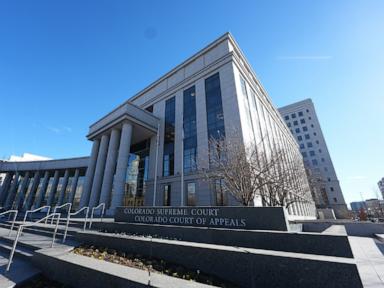
Recently, a massive battle over who gets to hold that digital pen reached the highest court in Colorado. A group of advocates wanted to change the rules of the game entirely, bypassing the established system to introduce new ballot initiatives aimed at altering how those congressional districts are carved up. They gathered signatures, drafted language, and mounted a legal campaign.
Then, the gavel fell. The Colorado Supreme Court stepped in and rejected the proposed ballot initiatives. With a swift legal decision, the status quo held firm. The high-stakes effort to alter the state’s redistricting process was effectively dead on arrival.
To understand why this matters, we have to look at how Colorado ended up with its current system in the first place. For decades, the process of drawing political maps was a brutal, partisan knife fight. The party in power would attempt to pack as many opposing voters into a single district as possible, diluting their influence across the rest of the state. Alternatively, they would crack a community apart, scattering its voters across multiple districts so their voices could never coalesce into a majority. It was a mathematical exercise in silencing people.
Voters grew exhausted. The cynicism was palpable. In response, Colorado citizens did something rare: they voted to take the power away from politicians. In 2018, voters overwhelmingly approved Amendments Y and Z. These measures created independent, twelve-member citizen commissions—split evenly among Democrats, Republicans, and unaffiliated voters—to draw the state’s congressional and legislative maps.
The goal was simple. Take the politics out of the politics.
For a moment, it seemed like a truce had been called. But power is a restless thing. It does not like to be contained by citizen commissions or independent panels. The recent, rejected ballot initiatives represented an attempt by outside groups to reshape those newly minted rules, trying to alter the criteria or the mechanisms used to define community boundaries.
The court's rejection was not just a legal technicality; it was a door slamming shut on a brewing revolution. The justices looked at the proposals and decided they did not meet the strict legal requirements necessary to move forward to the ballot. In Colorado, ballot initiatives must adhere to a single-subject rule to prevent voters from being confused by complex, multi-layered policy changes masked as simple adjustments.
Imagine trying to buy a house, but buried deep within the standard contract is a clause that says you also agree to adopt three stray cats and paint your neighbor's roof. The single-subject rule exists to prevent that exact kind of legislative bait-and-switch. The court determined that the proposed initiatives attempted to do too much at once, violating the constitutional guardrails designed to keep the initiative process transparent.
What happens next is a return to a tense, watchful peace. The independent commission model remains the law of the land in Colorado.
But the underlying anxiety has not disappeared. The human cost of these legal battles is measured in a creeping sense of alienation. When citizens look at a political map and see their towns chopped up into jagged, unrecognizable shapes, they stop believing that the system represents them. They see a grid designed by algorithms rather than a community built by human hands.
For now, the lines on the Colorado map will stay exactly where they are. The court has spoken. The advocates have retreated to rewrite their strategies. Elena will continue to vote in her newly assigned district, wondering if the people representing her in Washington truly understand the view from her front porch. The quiet war is over for this election cycle, but as long as lines determine power, someone will always be trying to redraw them.