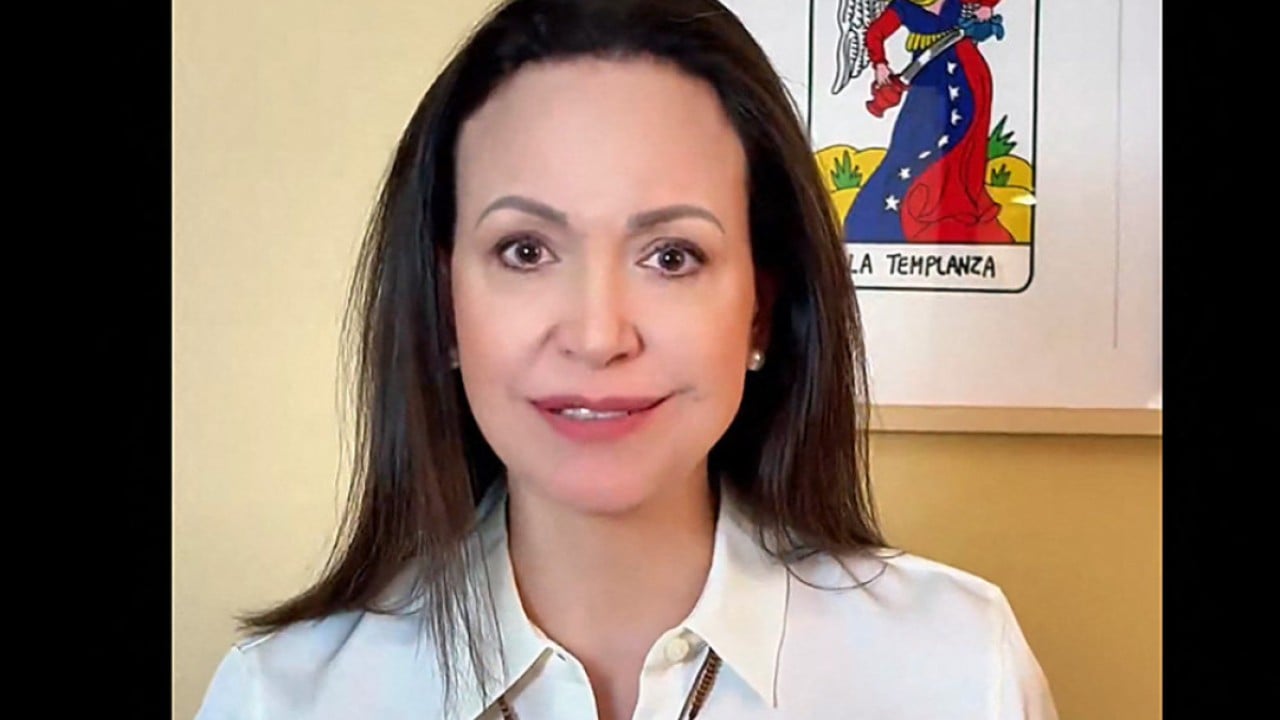
The air in a suitcase always smells the same. It is a mix of stale fabric, laundry detergent from a city that isn’t yours, and the metallic tang of a life packed into sixty pounds of luggage. For Maria Corina Machado, that suitcase has been a constant companion, even when she wasn't moving. Since the disputed elections of July 2024, the woman who became the face of Venezuelan defiance has lived in the shadows. She is a ghost in her own capital, moving between safe houses, speaking to the world through grainy video feeds and the crackle of encrypted messaging apps.
But ghosts eventually tire of the dark.
Word has begun to filter through the humid streets of Caracas and the diaspora hubs of Madrid and Miami. Machado is coming back. Not just back to the public eye, but back to the physical reality of the struggle she ignited. It is a gamble of such staggering proportions that it feels less like a political maneuver and more like a Greek tragedy reaching its final act. To understand why a woman would step out of the safety of hiding and into the crosshairs of a regime that has already imprisoned her closest allies, you have to understand the specific, agonizing weight of Venezuelan hope.
The Weight of a Ballot
Hope is a dangerous thing in a country where the currency is measured in kilos rather than value. For years, the opposition was a fractured mirror, reflecting a dozen different egos and strategies that never quite aligned. Then came Machado. She didn't offer the polished, compromise-heavy rhetoric of the old guard. She spoke about "Hasta el final"—until the end.
Think of a middle-aged father in the Petare slum. Let's call him Carlos. Carlos hasn't seen his daughter in five years because she is cleaning houses in Bogotá to send back the thirty dollars a month that keeps him from starving. For Carlos, Machado wasn't just a candidate; she was a proxy for his daughter’s return. When the official results claimed Nicolás Maduro had won another six-year term, the silence that fell over neighborhoods like Petare wasn't one of acceptance. It was the silence of a held breath.
The regime holds the palace, the guns, and the courts. Machado holds the receipts. Literally. By mobilizing thousands of volunteer witnesses to scan and upload the actas—the physical tally sheets from voting machines—the opposition created a digital fortress of proof. It showed Edmundo González Urrutia, the soft-spoken diplomat who stepped in when Machado was barred from running, winning by a landslide.
Data is cold. It is columns and rows. But in Venezuela, those spreadsheets are treated like sacred relics. They are the proof that the people exist, that their choices happened, and that the reality projected on state television is a fever dream.
The Geometry of Exile
Security is a mathematical equation where the variables are constantly shifting. For months, Machado has been the "internal exile." While González Urrutia was forced to flee to Spain under threat of arrest, Machado stayed. Her presence in the country, even while hidden, acted as a battery for the resistance. If she leaves, the light goes out. If she stays hidden forever, the battery drains.
The decision to return to the streets in the coming weeks is a recognition that momentum has a shelf life. The international community has a short attention span. Sanctions lose their sting. Headlines about stolen elections are replaced by new wars, new scandals, and the relentless churn of the 24-hour news cycle.
Machado knows that her survival depends on being seen. It is the ultimate paradox of the dissident: the more public you are, the harder it is for you to disappear quietly. If the regime arrests her in a dark room, she is a prisoner. If they arrest her in front of a hundred thousand people, she is a martyr. The latter is a price the Maduro government has, so far, been hesitant to pay, fearing it would be the spark that turns a cold protest into a hot revolution.
The Invisible Stakes
We often talk about geopolitics as if it were a game of chess played by giants. We discuss oil reserves, migration patterns, and regional stability. These things matter. The United States and the European Union look at Venezuela and see a refugee crisis that is straining the borders of the Western Hemisphere. They see a pivot point for Russian and Chinese influence in the Americas.
But the invisible stakes are smaller and more intimate.
The real stake is the psychological health of a generation. Venezuela is a country of the young who have left and the old who have stayed behind to guard empty houses. Every time Machado speaks, she is addressing those empty houses. She is telling the grandmother in Valencia that her grandchildren might actually come home for Christmas next year. That is a heavy burden to carry. It is a promise that, if unfulfilled, leads to a despair so profound it can break a national spirit for decades.
The regime knows this. Their strategy is not just repression; it is exhaustion. They want to make the cost of hope so high that people eventually choose the numbness of survival instead. They want the suitcase to stay packed. They want the video feeds to stay grainy.
The Streets of Caracas
Caracas is a city of incredible beauty and jarring violence. It is nestled in a valley beneath the Avila mountain, a green giant that watches over the chaos. When Machado returns to those streets, she will be walking into a city that has been transformed by fear. There are more checkpoints now. There are "Sapaos"—informants—on every corner. The "Operación Tun Tun" (Operation Knock-Knock) saw security forces going door-to-door to arrest anyone suspected of dissent.
Imagine the courage it takes to step out of a car and onto a podium in that environment. It isn't the courage of someone who isn't afraid. It is the courage of someone who has weighed their life against a cause and found the cause heavier.
Metaphorically, Venezuela is a house where the lights have been turned off, and the inhabitants are trying to find the exit by touch alone. Machado is trying to strike a match. The flame is small. The wind is blowing hard from the direction of the Miraflores Palace. But for a few seconds, the match illuminates the room. It shows people where they are. It shows them they are not alone.
The Looming Confrontation
The "coming weeks" are not just a date on a calendar; they are a collision course. The regime has intensified its rhetoric, labeling Machado a terrorist and a tool of foreign interests. They have tightened the noose around the remaining figures of the opposition.
There is a version of this story that ends in a prison cell in Helicoide, the notorious spiral-shaped prison that has become a symbol of state torture. There is another version where the sheer gravity of her presence forces a crack in the military’s loyalty. The military is the final arbiter. The generals have grown wealthy under the current system, but the rank-and-file soldiers have families who are just as hungry as the people in Petare.
Machado is betting that the soldiers will look at her—a mother, a fellow Venezuelan, a woman who stayed when she could have left—and see their own sisters and mothers. It is a bet on the human heart against the machinery of the state.
The Echo of the Suitcase
As the date approaches, the tension in the air is tactile. You can feel it in the way people talk in the bakeries, or rather, the way they don't talk. They use gestures. A raised eyebrow. A tilted head toward the TV. They are waiting.
What happens when she steps out? Maybe nothing changes immediately. Maybe the regime simply ignores her, hoping she will fade away. Or maybe the streets fill up again, not with the anger of a riot, but with the quiet, terrifying resolve of people who have nothing left to lose.
The suitcases are still sitting in bedrooms across the country. Some are packed for flight, ready to join the eight million who have already left. Others are being dusted off, waiting for the day they can be unpacked for good.
Machado’s return is the signal for which of those things will happen. She is no longer just a politician. She has become the human embodiment of a question that has haunted Venezuela for twenty-five years: Is this the end, or just another chapter in a book of sorrows?
The mountain of Avila stands silent, watching the valley. Below, in the humid heat, a woman prepares to step out of the shadows. She knows the risks. She knows the smell of the suitcase. And she knows that in the history of her country, the most powerful thing you can do is simply show up when they told you that you no longer exist.
She is showing up. The rest of the world is just watching the clock.
The next time a door opens in Caracas, it won't be a knock from the secret police. It will be the sound of a woman walking toward a microphone, her voice steady, her eyes on the horizon, carrying the weight of a million unsaid prayers in a country that is tired of being a ghost.


