The coffee grows cold on the zinc counter of a small diner in Norfolk, Virginia. Outside, the gray Atlantic churns against the concrete pilings, indifferent to the lives tethered to its tides. Inside, a young sailor stares at her phone, her thumb tracing the smooth glass over and over, scrolling past headlines that read like dry accounting ledgers: US sending third carrier, 10k more troops to Middle East as Iran tensions persist.
Numbers. Percentages. Troop allocations. Strategic assets.
To the bureaucrats in Washington and the analysts on cable news, these are pieces on a vast, frictionless board. But to the sailor, those numbers represent a sea bag zipped shut in the dark of 3:00 AM. They represent a hurried embrace on a rain-slicked pier, a child’s confusion turning into silent withdrawal, and the quiet, heavy realization that the world is tilting on its axis once again.
We talk about foreign policy as if it were weather—something that happens to us, monitored by distant radars and predicted by meteorologists of statecraft. We forget that it is made of flesh. It is built by people who bleed, wait, worry, and wonder if they will see the dogwood trees bloom next spring.
Consider what happens next when the orders drop.
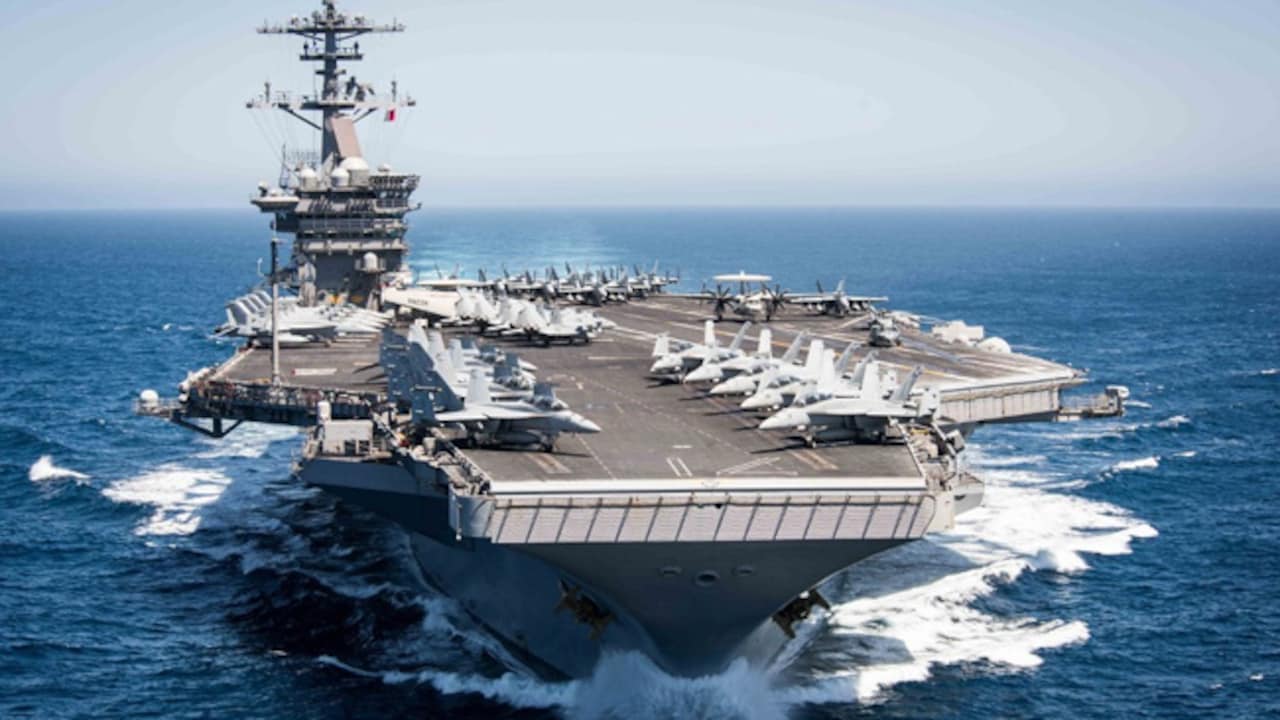
The deployment announcements are never sudden to those inside the fence line, even if they arrive like thunderclaps to the public. They begin with whispers in the scullery, encrypted alerts pinging on secured servers, and the slow, methodical spooling up of heavy machinery designed for one purpose: projection of absolute force. The decision to dispatch a third carrier strike group alongside another ten thousand troops to the CENTCOM area of operations is not merely a tactical adjustment. It is a massive, groaning pivot of industrial-scale momentum.
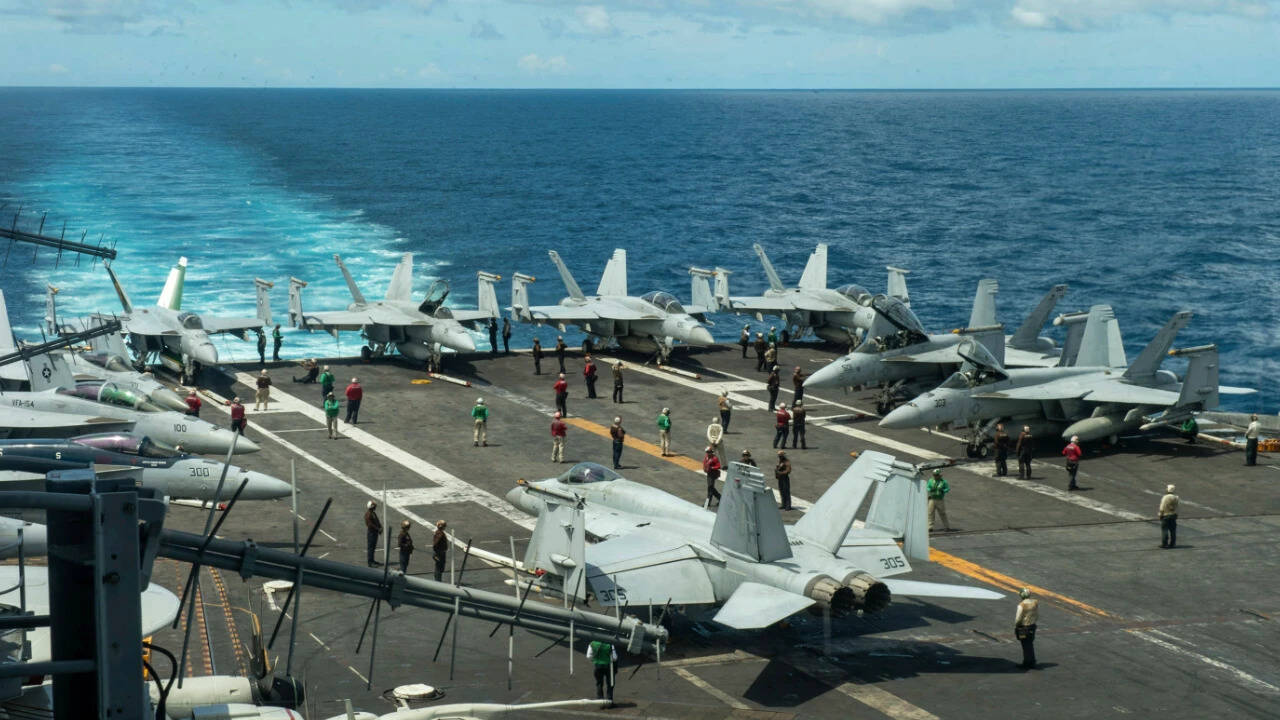
Think of an aircraft carrier not as a ship, but as a floating city of five thousand souls—a self-contained ecosystem of reactor technicians, aviators, cooks, and ordnance handlers, all hurtling through the dark waters of the Arabian Sea or the Eastern Mediterranean. When you add a third such behemoth to a region already teetering on a knife-edge, you are not just shifting hardware. You are concentrating an unprecedented density of destructive power into a geography that is already running a fever.
Why now? Why this escalation?
To understand the current deployment, we have to look past the immediate flashpoints—the drone interceptions, the proxy strikes, the shipping lanes choked with paranoia—and recognize the grammar of deterrence. In the lexicon of modern military strategy, deterrence is a psychological duel played with multi-billion-dollar pawns. The underlying calculation is stark: if you build a wall so high, so bristling with steel and fire, the adversary will look at the cost of crossing it and turn back.
Yet deterrence has a dark twin: escalation dominance. Every time one side dials up the pressure to deter an attack, the other side faces an existential imperative to respond, lest they look weak to their own domestic constituencies or regional allies. It is an arms race of signaling. We send a carrier to say, "Do not step." They accelerate enrichment or activate proxies to say, "We do not fear your steel."
And in the middle of this high-stakes game of geopolitical chicken are the waterways of the Persian Gulf and the Red Sea—arteries through which the lifeblood of the global economy flows. When tensions with Iran persist, the cost is immediately felt not just in the war rooms, but at the gas pump in Ohio, in the shipping delays of European manufacturing hubs, and in the anxious calculations of markets from Tokyo to London. The Middle East is rarely just a local theater; it is the beating heart of global economic anxiety.
I remember what it felt like to watch the horizon turn iron gray.
There is a specific kind of silence that settles over a base or a homeport in the hours before a major deployment. It is not peaceful. It is pregnant with the static electricity of impending absence. Families gather in cramped kitchens, speaking in euphemisms about safety and schedules, both sides pretending that the map doesn't show a region primed for combustion.
The deployment of an additional ten thousand troops—drawn from specialized units, logistics corps, air defense batteries, and support elements—means that thousands of civilian lives are abruptly put on hold. Mortgages continue to accrue. School plays are missed. Birthdays are celebrated over pixelated video calls with a seven-second satellite delay that turns every conversation into a stuttering exercise in patience.
This is the hidden cost of persistence. Tensions do not merely persist in abstract white papers. They extract their toll in human bandwidth, in frayed nerves, and in the quiet erosion of stability for millions of ordinary people living across the Middle East—from the shopkeeper in Beirut watching the sky for sonic booms, to the family in Tehran wondering if the economic screws will tighten until they can no longer afford medicine, to the American service member standing watch on a pitching flight deck under a blistering desert sun.
The announcement of a third carrier group changes the physics of the region. It shortens fuses. It compresses decision-making windows from hours to minutes. When naval strike groups operate in such close proximity to volatile coastal defenses, the margin for error shrinks to zero. A miscalculated radar signature, a misunderstood radio transmission, a rogue drone—any of these can act as the match that finds the oil-soaked rags.
History is littered with the wreckage of crises that nobody allegedly wanted, but which everyone marched toward with grim, mechanical inevitability.
We tell ourselves that overwhelming force guarantees peace. Sometimes it does. Sometimes the sheer terrifying magnitude of a carrier strike group causes a potential aggressor to blink, draw back, and seek the safety of the diplomatic table. But history also whispers warnings about the trap of permanent mobilization. When you load every weapon and cock every hammer, the environment itself begins to demand a discharge.
As the sun dips below the horizon in Norfolk, casting long, skeletal shadows across the gray hulls of the ships waiting at the pier, the coffee in the diner grows completely cold. The sailor pays her tab, pulls her sea bag over her shoulder, and steps out into the wind. She does not know how long she will be gone. She does not know if the third carrier will fire a shot or simply turn around in six months, having served its silent, grinding purpose as a floating deterrent.
She only knows the weight of the bag, the pull of the tide, and the vast, uncertain dark of the sea ahead.