Red dust gets under your fingernails first. Then it works its way into your boots, your lungs, and your sense of time.
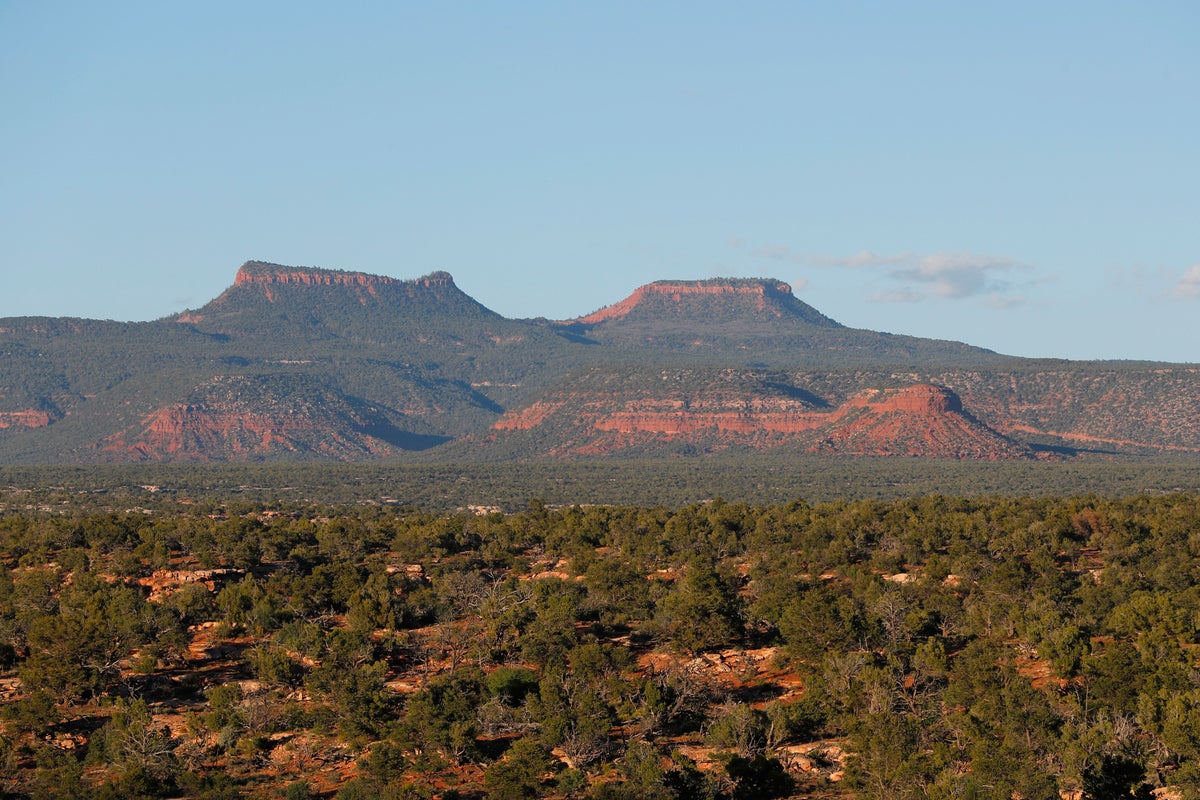
If you stand on the Cedar Mesa in southern Utah when the afternoon light turns the sandstone into liquid copper, you are looking at canyon country that feels ancient beyond measure. But beneath that quiet lies a battle line. In December 2017, when President Donald Trump signed executive proclamations slashing the boundaries of Grand Staircase-Escalante National Monument by nearly half and shrinking Bears Ears National Monument by 85 percent, many saw it as an unprecedented shock. A sudden fracture in how America treats its sacred places.
It wasn't.
It was merely the latest chapter in a long, predictable pendulum swing that began more than a hundred years ago.
A Law Written for Pickaxes and Thieves
To understand why a signature in Washington can instantly erase protection from two million acres of red rock, you have to travel back to 1906.
Put yourself in the shoes of a turn-of-the-century archaeologist or a Native leader watching grave robbers plunder ancient cliff dwellings. Looters were dynamite-blasting Ancestral Puebloan homes, dragging away pottery, and selling human remains to private collectors on the East Coast. Congress moved with rare speed to stop the theft.
They passed the Antiquities Act of 1906.
The law was shockingly brief. It gave the President of the United States unilateral authority to declare federal lands as national monuments to protect "historic landmarks, historic and prehistoric structures, and other objects of historic or scientific interest." Theodore Roosevelt jumped at the chance. He declared Devils Tower first, then Grand Canyon, setting a precedent that the law could safeguard massive ecosystems, not just tiny ruin sites.
There was a catch built directly into the text.
The law specified that monuments must be confined to "the smallest area compatible with the proper care and management of the objects to be protected." That tiny phrase became an open doorway for every resource developer, rancher, and politician who ever looked at public soil and saw dollar signs instead of sanctuary.
The Shrinking Map
The narrative that national monuments are permanent is a comforting myth. History tells a very different story.
Consider hypothetical rancher Thomas Vance in 1915—a man working a patch of timber along the Olympic Peninsula. When Theodore Roosevelt created Mount Olympus National Monument in 1909, local timber companies and settlers raged that valuable Douglas fir trees were trapped behind federal red tape.
Enter President Woodrow Wilson.
In 1915, under intense pressure from timber interests as World War I raged in Europe, Wilson sliced Mount Olympus National Monument in half. With a stroke of a pen, roughly 300,000 acres lost their federal protection overnight. Sawmills buzzed. Clear-cutting commenced.
The pattern was set:
- 1911: William Howard Taft shrank the Olympic Monument to allow mining access.
- 1938 and 1943: Franklin D. Roosevelt carved chunks out of Grand Teton National Monument to appease cattle ranchers.
- 1962: Dwight D. Eisenhower shaved off land from Natural Bridges National Monument in Utah.
Before 2017, U.S. presidents had altered national monument boundaries at least 18 times. The cuts in Utah were not an anomaly. They were the execution of an established political playbook.
The Human Cost in the Canyons
Imagine Jonah, a real-world composite of the tribal leaders and local guides who spent decades lobbying for the protection of Bears Ears. For Hopi, Navajo, Ute, Ute Mountain Ute, and Zuni peoples, the land between the two distinct sandstone bluffs isn't a playground. It is a living church. It holds medicine plants, ancestral burial sites, and thousands of years of rock art.
When the Obama administration designated Bears Ears National Monument in 2016, it was hailed as a historic act of co-management between Native tribes and the federal government. For the first time, indigenous wisdom was meant to guide land preservation.
Then came the rollback.
When the boundaries receded in late 2017, thousands of sacred sites were suddenly left outside the protected core. Mining claims were filed within days on land that had just been secured. For the local tribes, the shrinking map felt like a direct revocation of their history. It signaled that solemn promises made by one administration could be tossed in the trash by the next.
On the other side of the fence sat rural residents who felt squeezed out by Washington bureaucrats. For generations, local families grazed cattle on those flats and made a living off coal and uranium leases. When thousands of acres were declared off-limits, they felt their livelihoods slipping away.
This tension is the real driver of the cycle. Washington draws a line. Locals feel ignored. Politicians exploit the anger. The line gets erased. The tribal nations sue. The public gets caught in the middle.
The Legal Question Hanging in the Air
Does a president actually have the legal authority to shrink a national monument created by a predecessor?
The 1906 Antiquities Act explicitly gives the president the power to create monuments. It says nothing—not a single word—about the power to revoke or reduce them.
When Congress wants to give the president the power to undo a previous executive decision, it explicitly writes that authority into the statute. For a century, legal scholars have argued that only Congress holds the constitutional power to alter or dismantle a national monument once established.
When President Joe Biden restored the original boundaries of Bears Ears and Grand Staircase-Escalante in October 2021, the legal fight did not end. Utah officials filed lawsuits, arguing that the restorations were an overreach of executive power that violated the "smallest area compatible" clause.
The core question remains unanswered by the highest court in the land: Is public land a permanent legacy, or is it merely a temporary lease subject to the shifting whims of the election cycle?
What Remains in the Dust
Walk through the desert scrub near Bluff, Utah, and you can still find pottery sherds resting where they were dropped eight hundred years ago. They carry the thumbprints of the artisans who shaped them.
Those clay fragments survived droughts, migrations, and centuries of shifting human power. They are fragile, yet surprisingly durable.
The land itself is no different. It outlasts political campaigns, judicial arguments, and executive orders. But the marks we leave on it—the drill rigs, the tire tracks across cryptobiotic soil, the carved-out access roads—do not heal easily in a dry climate.
The red rock country does not care about election dates. It only holds what we leave behind, waiting to see which side of history wins the next round.