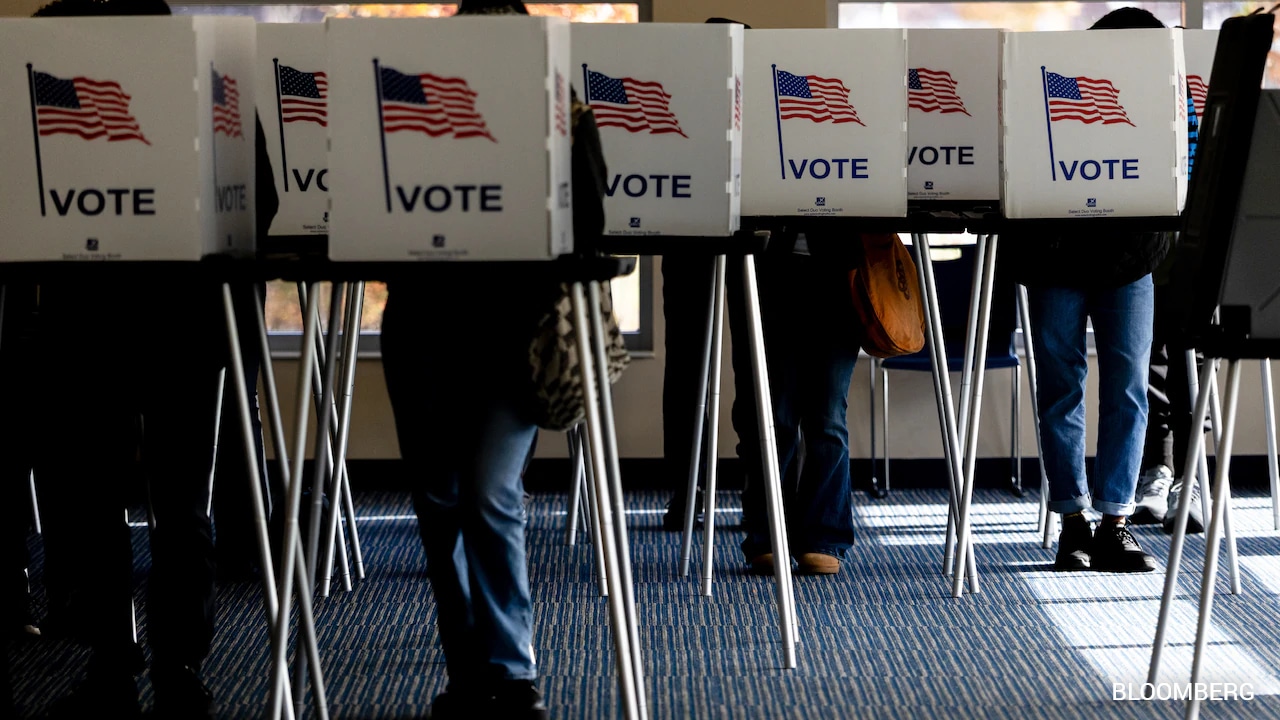
Running the Los Angeles County Sheriff's Department is arguably the hardest local law enforcement job in the United States. You're managing a massive multi-billion-dollar budget, roughly 18,000 employees, and a sprawling jail system that has been under federal oversight for years. When Robert Luna and Alex Villanueva squared off again for that seat, voters weren't just picking a top cop. They were choosing between two wildly different philosophies on how policing should work in America's most populous county.
It's a genuine grudge match. Back in 2022, Luna—a former Long Beach police chief—unseated Villanueva by a wide margin after a term defined by public feuds, deputy gang scandals, and fierce battles with the Board of Supervisors. Villanueva didn't just fade away after losing. He stayed loud, built a media presence, and came right back for another swing at the badge, arguing that Luna's softer, reform-minded approach left the county less safe.
If you live in LA County, or if you just follow big-city politics, this race is fascinating because it strips away all the polite political theater. Neither guy likes the other. Both think the other's approach is actively dangerous for the people living there.
What Actually Separates Robert Luna and Alex Villanueva
On paper, both men have decades of policing under their belts. They know how patrol operations work, they understand command structures, and they both claim to care deeply about rank-and-file deputies. That's where the similarities end.
Alex Villanueva ran as a populist disruptor in 2018, shocking the political establishment by defeating an incumbent sheriff with backing from progressive groups and labor unions. Once in office, though, he pivoted hard. He clashed constantly with the civilian oversight commission, refused subpoenas, and framed himself as the last line of defense against "woke" politicians trying to defund the police. To his supporters, he was a fearless leader who stood up for working deputies when politicians threw them under the bus. To his critics, he was an unaccountable wildcard who dragged the department into endless legal and public relations disasters.
Robert Luna came in promising the exact opposite. Quiet, methodical, and institutional. He spent 36 years in the Long Beach Police Department, working his way up from reserve officer to chief. His pitch to voters has always been about stability, transparency, and rebuilding trust with county leaders and federal monitors. He created an Office of Constitutional Policing and started working directly with the civilian oversight panel that Villanueva had spent four years ignoring.
Honestly, it's a classic clash of styles. Do you want a fighter who treats county supervisors like enemies, or an administrator who tries to fix the system from within?
The Deputy Gang Problem Nobody Has Fully Solved
You can't talk about the Los Angeles County Sheriff's Department without talking about deputy cliques—or gangs, depending on who you ask. Groups like the Banditos, the Executioners, and the Regulators have plagued LASD stations for decades. We're talking about tattooed subgroups of deputies accused of aggressive policing, hazing, and operating outside the chain of command.
During Villanueva's term, this issue became a national embarrassment. County investigators and the Inspector General repeatedly demanded answers, and Villanueva largely dismissed the problem as political theater or an exaggeration by anti-police activists. He argued that existing policies were enough and resisted outside probes into which deputies had matching tattoos.
Luna took a totally different route. He explicitly acknowledged that deputy gangs exist and hurt the department's credibility. Under his watch, the department rolled out stricter policies banning participation in exclusionary cliques and began working toward mandatory tattoo disclosures during internal investigations.
Here's the catch, though. Changing a deeply entrenched subculture inside an agency with nearly 10,000 sworn deputies doesn't happen overnight. Critics from community groups argue Luna hasn't fired enough people or moved fast enough to dismantle these networks. Meanwhile, Villanueva and his allies argue that Luna's focus on internal policing hurts morale and makes deputies hesitant to do their jobs on the street. Both sides have a point, which is why the issue never really goes away.
Crime Rates, Homelessness, and the Reality on the Ground
When voters step into the ballot box, they usually care less about internal department politics and more about whether their car is going to get broken into. This is where the Luna versus Villanueva rematch gets really sharp.
Villanueva's core message is simple. Look around, he says. Retail theft feels out of control, homelessness is visible on every major corridor, and recruitment is in a freefall. He blames Luna and the Board of Supervisors for tying deputies' hands and creating an environment where veteran officers are retiring early or jumping ship to smaller, higher-paying municipal departments. There's real data behind the staffing crunch—LASD has struggled with hundreds of deputy vacancies, forcing mandatory overtime that burns people out and drains the budget.
Luna counters that screaming at politicians doesn't put more cops on the street. His team points to targeted retail theft task forces, regional partnerships with local police departments, and efforts to streamline the hiring pipeline without lowering standards. On homelessness, Luna leans heavily on the department's Homeless Outreach Services Team (HOST), pairing deputies with mental health clinicians rather than just sweeping encampments and arresting people who end up back on the street two days later.
Does a clinician-and-deputy model work better than aggressive enforcement? If you talk to business owners frustrated by repeat offenders, they often want immediate arrests. If you talk to jail administrators dealing with severe overcrowding and mental health crises behind bars, they'll tell you that arresting your way out of homelessness is a dead end.
Inside the Los Angeles County Jail Crisis
Most people outside law enforcement don't realize that the LA County Sheriff essentially runs the largest mental health facility in the country. The county jail system—including Men's Central Jail and Twin Towers—houses roughly 12,000 to 14,000 inmates on any given day, and a huge percentage of them suffer from serious mental illness.
The conditions inside these facilities have been a nightmare for decades. Overcrowding, crumbling infrastructure, in-custody deaths, and a federal consent decree with the U.S. Department of Justice hang over whoever sits in the sheriff's chair.
During Villanueva's tenure, tensions with the DOJ and the ACLU hit a boiling point, with monitors warning that conditions in the Inmate Reception Center were unconstitutional—people were literally chained to benches for days waiting for medical screenings. Villanueva blamed the Board of Supervisors for refusing to build a new mental health treatment facility to replace the aging Men's Central Jail.
Luna inherited that exact same mess. Under his leadership, the department improved intake processing times and worked to bring facilities closer to federal compliance, though in-custody deaths and contraband overdoses remain stubbornly high. The truth is that no sheriff can fix the jail system alone because the Board of Supervisors controls the purse strings and the courts control sentencing and diversion programs. Still, whoever holds the badge takes the heat when things go wrong behind those walls.
Why the Sheriff's Office Has So Much Power
To understand why this grudge match gets so much media coverage, you have to understand how weird the office of county sheriff actually is in California. Unlike a city police chief—who is hired and fired by a mayor or city manager—the sheriff is an independently elected constitutional officer.
Once elected, the sheriff answers directly to the voters, not the county supervisors. That independence is intentional. The idea is that a sheriff shouldn't be a political lackey who drops investigations because a mayor told them to.
The flip side is what happens when a sheriff and the Board of Supervisors hate each other. Under Villanueva, that friction turned into full-blown trench warfare. Supervisors tried to strip his powers, put measures on the ballot to allow them to remove a sheriff for cause, and slashed parts of his budget. Villanueva responded by launching criminal corruption investigations into his political critics—probes that largely fizzled out without charges but sent shockwaves through local government.
Luna's pitch has always been that co-governance works better than constant war. By maintaining a civil relationship with the Board of Supervisors, he's been able to secure funding for body-worn cameras, wellness programs, and recruitment incentives. Yet his detractors say that cozying up to the board makes him too compliant, turning an independent watchdog into just another county bureaucrat.
How to Evaluate the Two Approaches Yourself
If you're trying to cut through the campaign ads, press conferences, and partisan spin surrounding this matchup, stop listening to the slogans and look at the actual track records. Both men have served full terms, which means you don't have to guess how they'll govern.
Start by checking the official oversight reports from the Los Angeles County Civilian Oversight Commission and the Office of Inspector General. Look closely at deputy-involved shooting trends, use-of-force data, and how each administration handled internal misconduct investigations. Numbers don't lie, even when politicians try to spin them.
Pay attention to staffing and overtime costs in the county's public budget documents. A sheriff's department running on excessive mandatory overtime is a department under strain, regardless of who's at the podium. Compare recruitment numbers and attrition rates to see whether deputies are actually sticking around or voting with their feet.
Finally, look at how each leader handles transparency when things go sideways. Bad shootings, jail deaths, and deputy misconduct happen under every sheriff in a department this size. The real test of leadership isn't preventing every single mistake—it's whether the person at the top releases the body-camera footage, cooperates with investigators, and holds people accountable when those mistakes happen.