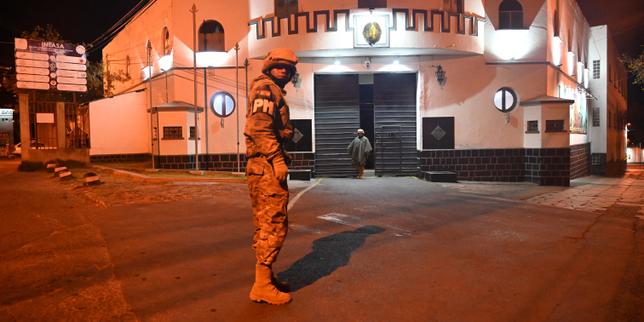
Bolivia’s declaration of a nationwide state of exception under President Rodrigo Paz is not a sudden detour in governance; it is the mathematical end-state of an unsustainable macroeconomic equilibrium. On June 6, 2026, following more than six weeks of systemic highway blockades and violent urban friction, the executive branch activated Law 1740 to authorize the deployment of the armed forces. The underlying trigger for this militarization is not merely political ideological polarization, but rather the total exhaustion of the state’s fiscal reserves under a structural crisis forty years in the making.
The administration’s pivot toward exceptional legal powers highlights a fundamental breakdown in the nation's economic operational model. Paz, who assumed office in November 2025 as the country’s first conservative president in nearly two decades, inherited an economy burdened with inflation exceeding 20%, rapidly depleting net international foreign currency reserves, and critical fuel shortages. When Supreme Decree 5503 sought to stabilize the fiscal accounts by dismantling the state's heavily subsidized fuel regime, it triggered a predictable cascade of civil disruption. The resulting six-week bottleneck offers a clear case study in how targeted logistical blockades exploit structural vulnerabilities to impose crippling friction on developing economies.
The Choke Point Mechanics of Bolivian Dissent
Understanding the breakdown of the Bolivian state requires analyzing its physical and logistical geography. Unlike highly distributed economies, Bolivia relies on a highly vulnerable, centralized transport grid connecting its three economic engines: La Paz, Cochabamba, and Santa Cruz. The intersection of these routes forms a critical logistics corridor where targeted physical disruptions yield disproportionate systemic damage.
This dynamic can be defined through a standard economic cost function, where the marginal cost to the state grows non-linearly with every day a road link is severed:
$$C_{total} = \sum_{t=1}^{n} (D_t \cdot \alpha) + E_t$$
Where:
- $D_t$ represents the daily volume of unfulfilled cargo tonnage.
- $\alpha$ represents the compounding factor of supply chain depreciation (e.g., agricultural spoilage in the eastern lowlands).
- $E_t$ represents the structural price shocks driven by immediate localized scarcity.
During the 39 days of uninterrupted protest leading up to the June decree, the Central Obrera Boliviana (COB), alongside allied indigenous syndicates and factions loyal to former president Evo Morales, executed a strategy of asymmetric logistical interdiction. By placing physical barriers at primary transit nodes, these groups achieved structural leverage over the state without needing to capture formal government infrastructure.
This logistical strangulation operates through three distinct transmission lines:
- The Agricultural Perishability Trap: Santa Cruz, the agrarian powerhouse of the country, produces the bulk of domestic food supplies and export-heavy soy crops. Securing a blockade at the Locotal or Ichilo bottlenecks prevents this output from reaching western consumers in La Paz or departing via Pacific ports. The immediate result is capital destruction for agribusinesses and a parallel food inflation spike in urban centers.
- The Fuel Distribution Death Spiral: Because Bolivia must import refined petroleum products—a burden exacerbated by the collapse of domestic natural gas production—fuel must move via tankers over long overland routes from border entry points. Blockading these routes creates an immediate energy deficit. Transport networks stall, which prevents workers from reaching urban centers and halts the distribution of food, triggering a secondary wave of systemic paralysis.
- The Capital Flight Loop: As cities remain isolated, local commercial entities exhaust their cash buffers. The perceived risk premium of the country spikes, prompting capital to flee through parallel market channels, which adds severe downward pressure on the boliviano.
The Fiscal Trilemma of Post-Subsidy Stabilization
President Paz’s deployment of Law 1740 is a direct response to the failure of his economic stabilization package. The administration faces a classic policy trilemma, where it can choose only two of the following objectives: fiscal sustainability, social stability, or market-driven pricing.
                  [ Fiscal Sustainability ]
                             /\
                            /  \
                           /    \
                          /      \
                         /________\
[ Market-Driven Pricing ]          [ Social Stability ]
Prior administrations maintained social stability by artificially suppressing the local cost of living through deep fiscal subsidies for imported diesel and gasoline. This policy was sustainable only as long as state-run energy companies could fund the imports through lucrative natural gas exports to Brazil and Argentina. However, as domestic production wells dried up and fields depreciated over the last decade, the state shifted from a net energy exporter to a net importer. Subsidies transformed from a social safety net into a structural fiscal deficit.
When the Paz administration attempted to correct this by enforcing market-based fuel pricing, it triggered an immediate correction in the domestic supply curve. For an economy where informal transport and small-scale agriculture comprise a major share of employment, doubling fuel prices shifts the operational breakeven point for ordinary operators into negative territory. The compensatory measures introduced alongside the cuts—including adjusting the minimum wage to 3,300 bolivianos and expanding direct cash transfers—proved insufficient to offset the sudden increase in daily logistics costs.
The ensuing labor strike demonstrates the institutional limits of technocratic reform. The state can no longer afford the subsidy without precipitating a total sovereign balance-of-payments collapse; yet, removing the subsidy strips away the implicit social contract that has bound the rural and working-class populations to the central state for twenty years.
The Executive Fracturing and Institutional Vulnerabilities
The implementation of the state of exception exposes significant structural weaknesses within the administration's political coalition. Paz lacks a working majority in the Plurinational Legislative Assembly, forcing the executive to govern via emergency administrative measures rather than negotiated statutory legislation. This legislative gridlock is further complicated by a severe internal rift at the top of the executive branch.
Vice President Edmand Lara’s public break from the administration shortly after the inauguration removed any veneer of executive cohesion. In presidential systems where the vice president retains independent political ties to security sectors or specific labor factions, an open institutional split severely weakens the state's executive authority. This internal fracturing creates a complex enforcement challenge for the administration:
- Command Structure Friction: When the executive orders the deployment of police or military units to clear strategic chokepoints, the internal rift raises the political cost of enforcement for field commanders, who fear future legal liability if leadership changes.
- Legislative Bottlenecks: Under Law 1740, the legislature retains a 72-hour review window over presidential emergency decrees. Without a reliable legislative majority, every declaration of an exception risks a formal constitutional challenge, degrading the credibility of the state's security apparatus.
- Asymmetric Security Demands: The exemption law explicitly excludes legal protection for security forces in cases of torture, extrajudicial killings, or sexual violence. While necessary for basic human rights compliance, these explicit boundaries limit the military's operational approach when clearing blockades, allowing agile protest groups to sustain long-term resistance just below the threshold of lethal force.
Strategic Outlook and Sovereign Liquidity Risks
The activation of Law 1740 provides the executive branch with temporary tactical relief, but it does not fix the underlying structural imbalances driving the crisis. Using the military to clear highways may momentarily restore logistics flows between Santa Cruz and La Paz, but it cannot replenish the central bank's depleted foreign currency reserves.
The state's near-term stability depends entirely on its ability to quickly secure hard-currency inflows from multilateral lenders or sovereign credit lines. The restoration of diplomatic ties with the United States and the return of international enforcement agencies like the DEA are designed to signal institutional predictability to external capital markets. However, international capital rarely enters an economy where the domestic transport network can be shut down at will by regional syndicates.
If the administration uses the state of exception to forcibly depress social unrest without addressing its core balance-of-payments problem, the underlying economic friction will simply manifest elsewhere. Unofficial parallel exchange rates for the dollar will continue to diverge from the official peg, driving a broader black-market economy that operates entirely outside the domestic tax base.
The immediate tactical choice for the executive is whether to maintain rigid fiscal discipline at the cost of prolonged domestic militarization, or to roll back its fuel pricing reforms to secure social peace, which would accelerate the sovereign liquidity crisis. If the government chooses the latter, it merely delays a structural default; if it chooses the former, it must accept a prolonged period of governance through emergency decrees, fundamentally redefining the country's institutional landscape.