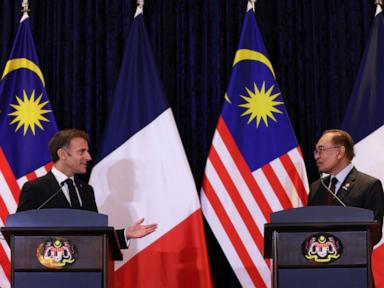
French President Emmanuel Macron has signaled that a Malaysia-France rare earths project is slated to begin operations in early 2027, an ambitious timeline aimed at diversifying Western access to critical minerals outside dominant Asian supply chains. Yet announcing a target date on a diplomatic stage is far easier than commissioning a separation plant, securing consistent feedstock, and meeting strict environmental benchmarks on schedule. Across three decades covering industrial metals and cross-border joint ventures, I have watched plenty of high-level pledges run straight into permitting delays, chemical bottlenecks, and pricing whiplash.
Rare earths are not actually rare in the Earth's crust. They are notoriously difficult and dirty to separate into high-purity oxides and metals needed for electric vehicle traction motors, wind turbine generators, defense sensors, and precision electronics. When Paris and Kuala Lumpur align on a rare earths project targeting early 2027, the headline captures political momentum, while the real test sits in engineering execution, supply chain resilience, and long-term commercial durability.
Why Diplomatic Timelines Collide With Metallurgy
Politicians speak in quarters and summits. Chemical engineers and project financiers live by mass balances, commissioning curves, and reagent supply contracts.
A target launch in early 2027 leaves narrow margin for error if key equipment packages, solvent extraction trains, or waste-handling systems still face validation. Even when two governments back a venture enthusiastically, industrial delivery depends on dozens of unglamorous details: reliable power and water utilities, skilled process operators, customs clearance for specialized alloys, and predictable transport corridors.
History offers sobering lessons for anyone treating an early-2027 start date as a finished line. Across the global critical minerals sector, announced start dates routinely slip when pilot-scale chemistry meets commercial-scale throughput. A flowsheet that works cleanly in a laboratory or small demonstration unit can behave differently when scaled up to handle thousands of tons of mineral concentrate each year.
Three practical pressure points usually decide whether a timeline holds or fractures.
- Feedstock continuity: A processing facility without assured, specification-matched concentrate or intermediate feedstock risks running below capacity or sitting idle while commercial negotiations drag on.
- Separation complexity: Seventeen elements sit close together chemically, requiring multi-stage solvent extraction circuits where tiny impurity swings can knock final product grades out of specification for magnet makers.
- Commissioning reality: Moving from mechanical completion to steady-state output takes months of tuning pumps, valves, and recovery loops, not a ribbon-cutting ceremony.
None of these hurdles are insurmountable. They simply reward disciplined execution over diplomatic optimism.
Malaysia's Industrial Footprint and Regulatory Memory
Malaysia brings serious industrial credentials to any Malaysia-France rare earths project. Decades of export-oriented manufacturing, port infrastructure, chemical processing experience, and an established legal and engineering workforce give the country capabilities that many greenfield jurisdictions lack.
At the same time, rare earth processing in Malaysia carries unmistakable historical baggage. Local communities and regulators have long scrutinized how radioactive and chemical residues are managed, stored, and monitored over generations. Any new or expanded venture operating in this space inherits heightened public skepticism.
That scrutiny is not an obstacle to wish away. It is part of the operating license.
In modern minerals processing, radiation and residue management must be engineered from day one with transparent monitoring, clear accountability for long-term containment, and verifiable compliance with domestic and international standards. When companies cut corners or treat community engagement as a public relations exercise, projects stall in courtrooms and state assemblies. When operators prove technical containment and open reporting, they earn durable credibility.
Local Value Addition Versus Raw Export
Governments across Southeast Asia have pushed harder to capture more domestic value from natural resources rather than shipping out low-margin raw materials. For Malaysia, participating in higher-value processing and industrial partnerships fits a broader strategy of moving up the manufacturing ladder while maintaining trade balance with major partners.
Still, moving up the value chain brings trade-offs. Higher-purity separation and downstream processing require greater capital intensity, specialized chemical inputs, and strict environmental controls. If global prices for key rare earth oxides soften, high-cost plants outside established low-cost hubs can face margin compression unless offtake agreements include thoughtful pricing structures.
France's Industrial Stakes and European Strategy
For France, backing a Malaysia-France rare earths project aligns with a broader European effort to reduce single-point dependence on concentrated processing networks. European automakers, aerospace contractors, energy equipment builders, and defense suppliers all depend on permanent magnets and specialty materials that keep modern industrial systems running.
Paris has long argued for industrial sovereignty and strategic autonomy within the European Union. Building partnerships with trusted Indo-Pacific economies like Malaysia allows French technology providers, engineering firms, and industrial buyers to participate in alternative supply pathways rather than relying solely on distant or geopolitically sensitive routes.
Yet strategy on paper must survive commercial math. European buyers generally say they want diversified, traceable supply chains. When a slightly cheaper alternative appears on the spot market, procurement teams sometimes face a sharp tension between boardroom resilience mandates and quarterly cost targets.
Diversification only sticks when strategic intent is backed by bankable contracts, technical qualification, and realistic cost discipline.
Qualifying Materials for High-Spec Buyers
Even after a plant produces separated oxides or metals, selling into high-reliability supply chains takes time. Automotive OEMs and industrial motor manufacturers put new material sources through rigorous qualification audits to verify purity consistency, batch stability, and supply reliability.
Qualification is rarely a rubber stamp. It involves sample testing, process audits, and sometimes multi-year validation cycles before a supplier earns meaningful volume in critical components. An early-2027 operational start does not automatically mean full commercial revenue on day one; ramp-up and customer qualification often run in parallel.
What Separates Credible Execution From Wishful Thinking
When I evaluate cross-border critical minerals announcements, I look past press-release milestones and focus on verifiable operational signals. Anyone tracking the Malaysia-France rare earths project toward early 2027 can judge progress using a straightforward checklist rather than taking headline dates at face value.
- Binding feedstock and offtake clarity: Look for clear alignment between upstream supply sources, processing capacity, and downstream industrial buyers who actually need the output.
- Permitting and environmental transparency: Watch for concrete regulatory approvals, waste-handling plans, and public disclosures that address local environmental concerns head-on.
- Capital and schedule realism: Pay attention to whether engineering procurement, construction contracts, and commissioning budgets match the proposed timeline without glossing over contingencies.
- Technology readiness at scale: Distinguish between proven industrial separation methods and unproven shortcuts that might create bottlenecks during ramp-up.
Gray areas remain across the entire sector. A hypothetical example illustrates the trap: suppose a joint venture sets an aggressive launch date while still finalizing secondary waste-treatment permits and negotiating long-term feed supply; even a minor delay in either track can push commercial production back by quarters. That kind of friction is standard in heavy industry, not a sign of malice, yet investors and policymakers routinely underestimate it.
Geopolitical Crosscurrents and Pricing Realities
Rare earths sit squarely at the intersection of trade policy, industrial competitiveness, and green-tech transition. Shifts in export controls, tariffs, or industrial subsidies can reshape trade flows overnight, creating sudden urgency for non-concentrated supply.
At the same time, rare earth market volatility has burned plenty of ambitious projects over the years. When supply tightens, prices spike and attract a wave of announcements. When new capacity comes online or demand cools, prices can drop sharply, testing the balance sheets of higher-cost producers.
Partnerships between Malaysia and France have a natural advantage if they focus on clear industrial roles, disciplined capital spending, and long-term technical cooperation rather than chasing short-term price spikes. Building resilient supply chains takes years of steady work, not a single summit declaration.
Watch what happens between now and early 2027 on site readiness, regulatory sign-offs, and commercial commitments—those concrete milestones will tell the real story of whether this project moves from political ambition to dependable industrial output.