On the night of July 6, 1988, the air inside Mexico City’s Ministry of the Interior felt thick enough to chew. Millions of citizens had just walked away from ballot boxes across the republic, their thumbs stained with indelible purple ink, convinced they had done the impossible. For fifty-nine years, one political machine—the Institutional Revolutionary Party, known simply as the PRI—had ruled Mexico with the quiet, suffocating certainty of gravity. Nobody beat the PRI. You didn't vote against them; you merely watched them count the inevitability.
Except that night, the numbers refused to behave.
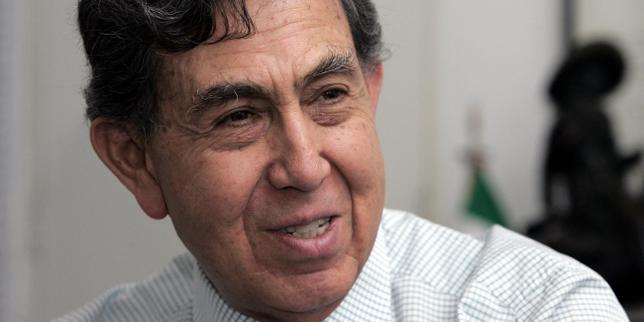
In the basements and municipal halls from Tijuana to the Yucatán, early returns poured into the central tabulating computers showing an opposition candidate pulling ahead. Not a fringe radical. Not an armed insurgent from the mountains. It was Cuauhtémoc Cárdenas, a quiet, solemn civil engineer with a face carved from volcanic stone and a name that carried the weight of modern Mexican history. And then, just as the unthinkable became undeniable, the screens went black. The government announced that the system had crashed. Se cayó el sistema. When the monitors flickered back to life days later, the official tally had magically inverted, handing the presidency to the PRI's chosen heir, Carlos Salinas de Gortari.
Silence. That was the sound that followed. Not the silence of peace, but the heavy, suffocating quiet of a locked room where everyone knows a theft has occurred, yet the thief holds the keys to the courthouse.
Cuauhtémoc Cárdenas is dead now. The obituaries will dutifully recite the dates—born in 1934, governor of Michoacán, three-time presidential contender, the first democratically elected Head of Government of Mexico City—and they will call him the moral compass of the Mexican left. They will flatten a turbulent, heartbreaking, stubbornly dignified life into neat chronological bullet points.
They will miss the point entirely. To understand what died with Cárdenas, you cannot read a political biography; you have to stand in the dust of a Michoacán plaza in 1987, or sit at a kitchen table in Guadalajara in 1994, and feel what it meant to live under a system that owned not just the government, but the very definition of reality.
The Weight of a Sacred Name
To grasp the sheer audacity of Cárdenas’s rebellion, consider a hypothetical family sitting around a radio in rural Oaxaca in the late 1980s. Let us call the father Mateo, a third-generation maize farmer whose land title bears a signature from 1938. To Mateo, the PRI was not merely a political party; it was the architecture of survival. The party built the rural clinic. The party subsidized the fertilizer. And at the center of that mythology stood one near-mythic figure: General Lázaro Cárdenas, the president who expropriated foreign oil companies in 1938 and distributed millions of acres of land to peasants like Mateo’s grandfather.
Cuauhtémoc was Lázaro’s only son. He was literally born inside Los Pinos, the presidential residence, named after the last Aztec emperor who resisted Hernán Cortés until his feet were burned over hot coals.
He was royalty inside the PRI. He didn't need to fight the machine; he was engineered to inherit its highest seats. Educated as a civil engineer at the National Autonomous University of Mexico, steeped in the technocratic confidence of the mid-twentieth century, Cuauhtémoc served as a senator, an undersecretary of forestry, and eventually the governor of his father’s home state of Michoacán. By every metric of Mexican political life, his path was paved with marble.
Yet by the mid-1980s, the party of his father had mutated into something unrecognizable. Debt crises had gutted the Mexican peso. Hyperinflation devoured working-class wages while a new breed of neoliberal technocrats inside the PRI dismantled the social safety nets Lázaro had built, handing state industries over to private oligarchs. Inside the party, democracy was a theatrical performance; the sitting president handpicked his successor in a secretive ritual known as the dedazo—the big finger pointing from above.
Cárdenas did something that terrified the elite far more than an armed uprising: he demanded that the PRI obey its own constitution. Alongside Porfirio Muñoz Ledo and Ifigenia Martínez, he formed the Democratic Current inside the party, insisting on open primaries and a return to social justice.
The machine responded as machines always do. It tried to crush him. In 1987, Cárdenas walked out of the PRI, severing himself from fifty years of family legacy, patronage, and protection. Imagine walking away from the only house in a barren desert, carrying nothing but a set of blueprints for a shelter nobody believes can be built.
The Ghost in the Ballot Box
What happened next caught even Cárdenas off guard. He was never a fiery orator. Watching him speak at a podium was an exercise in austerity; he rarely smiled, his voice remained measured, almost professorial, devoid of the theatrical bravado that defined Latin American populism. He did not seduce crowds. He anchored them.
When he launched his 1988 presidential campaign under the National Democratic Front—a fragile coalition of tiny socialist parties and disaffected PRI reformers—the state television monopoly, Televisa, largely erased him from the airwaves. Newspapers ignored his rallies or buried them on back pages. The PRI expected a quiet, easily managed coronation.
Instead, Mexico erupted.
In university auditoriums, factory towns, and dusty agricultural villages, hundreds of thousands of people poured into the streets to see the man with the solemn face. They didn't come for fireworks or free food—the traditional currency of PRI rallies. They came because for the first time in living memory, someone was speaking to them as citizens rather than subjects.
I remember talking years later with an election observer from that July night—a retired schoolteacher whose hands still trembled slightly when she described watching soldiers haul away wooden ballot boxes in the dead of night. We often think of authoritarianism as a man with a boot on your neck. In Mexico, Mario Vargas Llosa famously called it "the perfect dictatorship"—a system so subtle, so camouflaged in democratic language, that it convinced its victims they were free while ensuring the outcome never changed.
When the computers "crashed" on July 6, the mask slipped.
In the days after the fraud, millions of angry citizens looked toward Cárdenas. The air crackled with the threat of civil war. Many of his closest allies urged him to call for a general strike, to march on the National Palace, to spark an uprising that would tear the regime down by force. He had the numbers. He had the rage of a betrayed nation at his fingertips.
He said no.
The Hardest Kind of Courage
That refusal remains the single most misunderstood act of his life—and perhaps his greatest gift to modern Mexico.
Critics on the radical left accused him of timidity, of letting a stolen presidency slip away to avoid bloodshed. It is easy to demand martyrdom when you aren't the one signing the death certificates. Cárdenas knew the Mexican state intimately; he knew the army would fire on unarmed crowds without hesitation, just as it had at Tlatelolco in 1968, leaving hundreds of students dead in the plaza. An insurrection in 1988 would not have birthed a democracy. It would have buried a generation.
Instead, Cárdenas chose the long, agonizing road of institutional trench warfare.
In May 1989, he gathered the fragments of his coalition and founded the Party of the Democratic Revolution, the PRD. If the PRI was a monolithic fortress, the early PRD was a chaotic encampment held together by sheer stubbornness and grief. Over the next six years, more than five hundred PRD activists, organizers, and local mayors were assassinated across Mexico—shot on rural highways, ambushed outside their homes, disappeared into the night.
Think about what it takes to keep showing up under those conditions. No state funding. Hostile media. Ballot boxes stuffed before dawn. Cárdenas ran for president again in 1994, bruised by internal party infighting and outmaneuvered by a PRI machine that weaponized fear following the Zapatista uprising in Chiapas and the assassination of PRI candidate Luis Donaldo Colosio. He finished third. The pundits declared him finished, a tragic relic of an obsolete nationalism.
They didn't understand how erosion works. Water does not break a stone with a single blow; it finds the microscopic fractures and refuses to leave.
The City That Proved the Possible
By 1997, the fractures inside the PRI’s monolith could no longer be plastered over. Economic collapse in 1994 had shattered the regime's last claim to competence, and relentless pressure from Cárdenas and opposition figures across the spectrum had forced through genuine electoral reforms, creating an independent electoral institute that the government could no longer unplug at will.
For the first time in history, the residents of Mexico City were allowed to elect their own mayor instead of accepting a presidential appointee.
Cárdenas ran. And this time, the computers stayed on.
He won in a landslide, taking nearly forty-eight percent of the vote. On December 5, 1997, when Cuauhtémoc Cárdenas took the oath of office as Head of Government of the Federal District, something fundamental shifted in the Mexican psyche. The spell was broken. For the first time in seventy years, an opposition figure governed the beating heart of the nation, controlling a budget and a bureaucracy that had belonged exclusively to the ruling party since before most citizens were born.
His tenure in Mexico City was not a fairy tale. Governing a sprawling metropolis of twenty million people—choked by smog, crime, and decades of systemic corruption—proved far messier than opposing a dictatorship. He clashed with the press, struggled to reform a deeply entrenched police force, and refused to indulge in the populist giveaways that might have boosted his approval ratings.
Yet his administration established the template for progressive governance in Mexico: direct social pensions for the elderly, expanded public housing, and an uncompromising commitment to transparency. More importantly, he proved that the sky would not fall when the PRI lost power. Three years later, in July 2000, when Vicente Fox of the conservative National Action Party finally ended the PRI’s seventy-one-year grip on the presidency, he walked through a door that Cuauhtémoc Cárdenas had spent thirteen years prying open with his bare hands.
The Price of Unbending Principles
History rarely rewards the architects of transitions; it usually hands the trophies to the opportunists who arrive once the scaffolding comes down.
Cárdenas ran for president a third time in 2000, splitting the opposition vote and finishing third once again. Soon after, the very party he had built—the PRD—began to rot from within, seduced by the same patronage politics and factional greed he had fled in 1987. Watching his political children trade their ideals for legislative seats and municipal contracts must have felt like a second, quieter betrayal.
In 2014, at eighty years old, Cárdenas did what he had done twenty-seven years earlier: he walked away. He resigned from the PRD, refusing to lend his name to a party that had lost its moral center. Nor did he bend the knee to Andrés Manuel López Obrador—his former protégé, whom Cárdenas had elevated in Mexico City politics before López Obrador broke away to build his own movement, Morena, sweeping into the presidency in 2018.
I will admit something that used to frustrate me deeply about Cárdenas: his refusal to play the modern political game could feel maddeningly rigid. In an era where politicians measure their worth in viral soundbites and ideological tribalism, Cárdenas remained stubbornly, almost painfully austere. He criticized López Obrador’s administration when he believed it concentrated too much power or undermined democratic checks, just as he had criticized the neoliberals before him. He belonged to no man's court.
That kind of integrity is lonely. It makes you inconvenient to allies and incomprehensible to enemies.
What Remains When the Lantern Fades
Today, Mexican democracy stands once again at a crossroads, tested by organized crime, institutional erosion, and the eternal temptation of strongman politics. Young voters in Guadalajara or Monterrey, scrolling through feeds on smartphones, may look at black-and-white photographs of Cuauhtémoc Cárdenas and see only a stern old man in a dark suit—a figure from a textbook chapter about a past that feels remote.
They shouldn't.
Every time a Mexican citizen walks into a voting booth today knowing their ballot will be counted by fellow citizens rather than a ministry computer; every time a newspaper publishes an investigation into presidential corruption without being shut down overnight; every time power transfers peacefully from one party to another—they are walking across a bridge built over an abyss that nearly swallowed the country in 1988.
Cuauhtémoc Cárdenas never lived inside Los Pinos as an adult. He never wore the presidential sash that his father had worn, the sash that millions believed was stolen from him on a humid July night when the lights flickered and died.
Yet as his casket is carried through the streets of Mexico City, draped in the green, white, and red of the republic, the irony is unmistakable: the man who never became president shaped modern Mexico more profoundly than almost anyone who held the office. He proved that you do not need to win the throne to dethrone a tyrant. Sometimes, it is enough to stand in the dark, refuse to lie about what you see, and hold up a lantern until the rest of the country wakes up.