The blackboard in a public school in Zambales smells faintly of damp chalk and the relentless humidity of the wet season. Outside, the jeepneys rattle past, their exhaust mixing with the scent of wet asphalt. Inside, twelve-year-old Mateo traces a finger across a laminated map of the archipelago. His thumb rests on a blue expanse dotted with tiny coral reefs, shoals, and submerged banks. To him, it is just geography. To the state, it is an escalating frontline.
A quiet revolution is taking root in Philippine classrooms. Lawmakers and educational authorities are pushing to institutionalize mandatory instruction concerning the West Philippine Sea across basic and higher education. Curricula are shifting to include the 2016 Permanent Court of Arbitration ruling that dismantled Beijing's expansive nine-dash line. The objective is simple on paper: arm the youth with evidence-based knowledge of maritime entitlements under the United Nations Convention on the Law of the Sea.
Yet, translating a complex geopolitical conflict into lesson plans for ten-year-olds blurs the delicate line between objective pedagogy and state-sanctioned messaging. Critics and cautious educators whisper about where critical inquiry ends and indoctrination begins. When a nation feels its borders shrinking under the shadow of a rising superpower, the impulse to fortify the minds of its children becomes nearly irresistible.
Consider what happens next: a generation raised not just on math and vernacular poetry, but on the coordinates of Bajo de Masinloc and the geopolitical weight of the Spratly Islands.
The strategy relies heavily on accessible mediums. The National Task Force for the West Philippine Sea, alongside bodies like the Department of Education, has integrated reference materials such as comic books—exemplified by works like The Stories of Teacher Jun—to explain sovereignty to elementary students. Caricatures of educators and pupils discuss exclusive economic zones beneath cartoon panels, simplifying concepts that routinely baffle seasoned diplomats.
Detractors argue that turning territorial disputes into primary school curricula risks hardening nationalistic sentiment before children possess the analytical tools to parse international law independently. Diplomacy requires flexibility. Classrooms often demand absolute certainties. When textbooks declare absolute truths about contested waters, room for diplomatic nuance narrows.
Proponents counter that passivity is a luxury an archipelagic nation cannot afford. Social media feeds are saturated with sophisticated disinformation campaigns designed to blur lines and normalize foreign encroachment. Without institutionalized pushback, algorithms do the teaching.
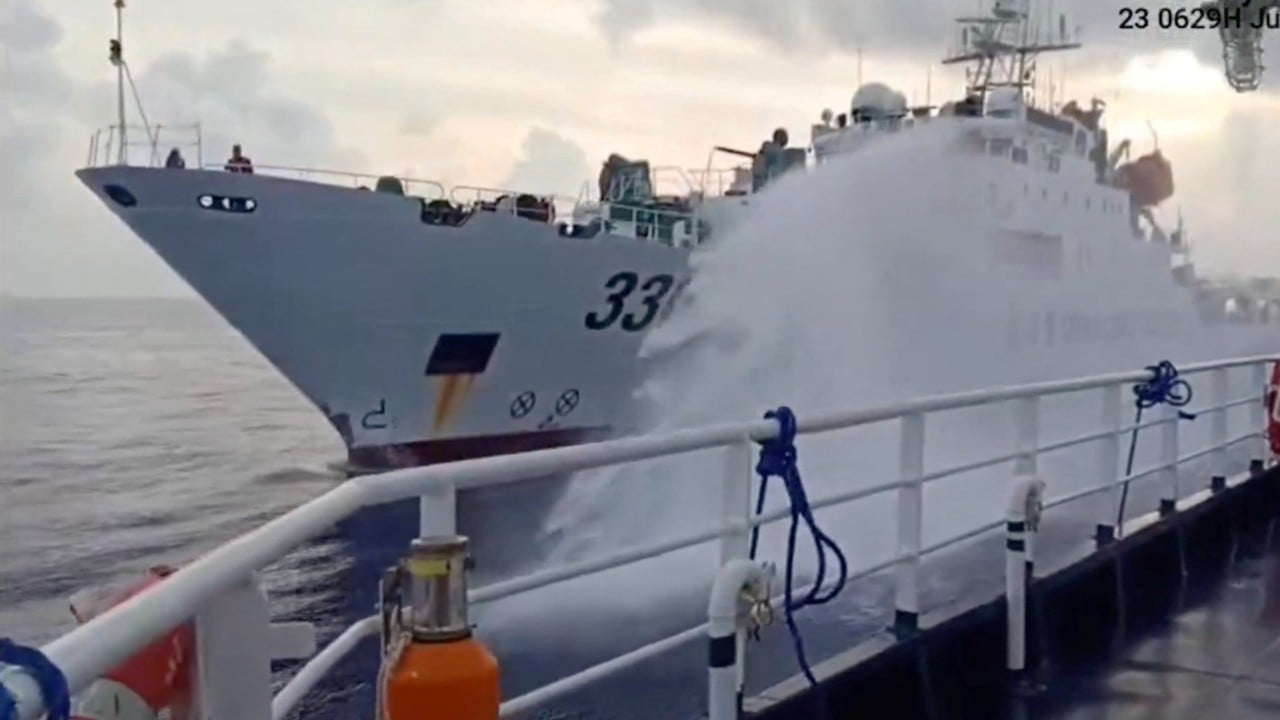
The fishermen of Zambales and Pangasinan know the reality behind the curriculum without needing to read a textbook. They feel it when steel-hulled coast guard vessels block their traditional fishing grounds. They feel it when water cannons shatter their wooden outriggers. For these coastal communities, the dispute is not an abstract legal theory debated in The Hague or Manila. It is the price of diesel, the scarcity of catch, and the silhouette of foreign gray hulls hovering on the horizon.
Education officials maintain that teaching children about these maritime realities is an act of civic defense. They argue that awareness breeds resilience. If a child grows up understanding that the nation’s exclusive economic zone spans two hundred nautical miles of ocean wealth, they are less likely to surrender those rights to apathy or online propaganda.
The debate ultimately forces a reckoning over the purpose of public education itself. Is a school a sanctuary for neutral inquiry, or is it an incubator for national survival? In times of peace, nations can afford the luxury of detached academic debate. In times of contested sovereignty, the classroom becomes an extension of the coastline.
Mateo does not think about international jurisprudence when he looks at the map. He only sees the blue lines defining the water where his uncle catches fish. As the school bell rings, signaling the end of the history lesson, the map remains pinned to the wall, a silent sentinel over a generation tasked with holding the line.