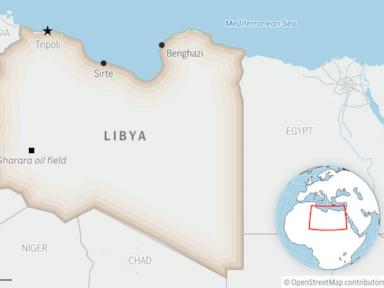
A kinetic strike against a Russian-affiliated maritime asset off the coast of Libya alters the risk calculus for every logistics operator transiting the Central Mediterranean. While initial reporting treats a suspected drone strike on a Russian vessel as an isolated tactical incident, operational analysis reveals a structural shift in how maritime supply lines are contested far outside active theater boundaries. Understanding this event requires separating verified operational mechanics from unconfirmed attribution, mapping the logistical dependencies of the Russian presence in North Africa, and quantifying the second-order effects on commercial shipping and regional security architectures.
Separating Verified Mechanics from Attribution Hypotheses
In maritime security incidents involving unmanned aerial systems, premature attribution obscures operational reality. A rigorous assessment separates the physical parameters of the engagement from the political hypotheses surrounding the perpetrator.
The verified baseline rests on three observable elements:
- Asset Profile: The targeted vessel operates within the logistical network supporting Russian state-aligned activities in North Africa, moving through maritime corridors connecting Black Sea or Baltic ports to eastern Libyan terminals such as Tobruk or Benghazi.
- Delivery Mechanism: The physical damage profile aligns with a long-range, one-way attack unmanned aerial vehicle (OWA-UAV) or a maritime unmanned surface vessel (USV), rather than conventional anti-ship cruise missiles or naval gunfire.
- Geographic Operating Environment: The strike occurred within a contested littoral zone characterized by fragmented air defense coverage, dense commercial shipping lanes, and overlapping Exclusive Economic Zones.
Attribution remains an exercise in probability rather than certainty. Three primary hypotheses account for the capability and intent required to execute an unmanned strike in this theater:
- State-Sponsored Extra-Theater Interdiction: Ukrainian intelligence or special operations elements extending maritime interdiction campaigns beyond the Black Sea. While Ukraine has demonstrated advanced USV and long-range UAV capabilities, operating in the Central Mediterranean requires either forward-deployed launch platforms—such as converted commercial vessels—or transit through third-party airspace and waters, introducing severe diplomatic and logistical friction.
- Local Factional Competition: Rival Libyan militias or political factions utilizing externally supplied drone systems. Libya functions as a testbed for Turkish, Emirati, and Russian unmanned systems. A localized strike could represent an effort by western Libyan factions aligned with the Government of National Unity (GNU) to disrupt supply lines reinforcing eastern factions aligned with the Libyan National Army (LNA).
- Third-Party Deterrence Signaling: State actors seeking to impose costs on Russian force projection into the Sahel without triggering direct kinetic escalation under international law. Anonymous unmanned strikes exploit the attribution gap, forcing the targeted state to absorb losses without a clear retaliatory target.
The Logistical Architecture of the Eastern Libyan Corridor
To understand why a single vessel becomes a high-value target, one must examine the structural vulnerability of Russia's logistics chain in Africa. Unlike deployments in Eastern Europe, which rely on dense rail networks and short-haul road transport, Russian operations across Libya, Mali, Burkina Faso, and the Central African Republic depend entirely on long-range maritime and air bridges.
The Syrian-Libyan Transit Bottleneck
Historically, Russia sustained its Mediterranean naval squadron and African deployments through the port of Tartus and Khmeimim Air Base in Syria. When access to Syrian infrastructure faces political instability or restricted airspace permissions over Turkey and European states, eastern Libyan ports transition from secondary waypoints to primary logistical hubs.
This creates a single-point-of-failure dynamic. Heavy equipment—armored vehicles, air defense radars, artillery ammunition, and bulk fuel—cannot be moved efficiently via strategic airlift due to payload constraints and overflight bans. Transport aircraft like the Il-76 carry roughly 40 to 50 metric tons per sortie; a single medium-sized roll-on/roll-off (Ro-Ro) or general cargo vessel moves 5,000 to 15,000 metric tons in a single transit. Interdicting one cargo vessel eliminates the equivalent of more than one hundred strategic airlift sorties.
The Shadow Fleet Vulnerability
Because state-owned Russian logistics vessels face port bans, sanctions, and continuous intelligence surveillance, operations frequently rely on commercial proxies, flagged-out vessels, or ships operating with disabled Automatic Identification System (AIS) transponders.
This operational security measure introduces a severe defensive liability:
- Absence of Escort: Proxy vessels transit without dedicated naval escorts equipped with layered air defense systems (such as shipborne radar and close-in weapon systems).
- Lack of Hardening: Commercial hulls lack compartmentalized damage control, armored bulkheads, and electronic warfare (EW) suites capable of jamming commercial or military-grade GNSS and command-and-control links.
- Predictable Choke Points: Regardless of AIS manipulation, vessels bound for eastern Libya must decelerate and hold predictable headings when approaching port infrastructure at Tobruk or Benghazi, creating an optimal engagement window for slow-moving unmanned systems.
The Economics of Asymmetric Maritime Attrition
The strategic significance of a drone strike on a logistics vessel lies in the inverted cost function between the attacker and the defender. Modern naval warfare has shifted from platform-on-platform engagements to cost-exchange warfare.
Consider the unit economics of the engagement:
- Offensive Cost: A long-range OWA-UAV carrying a 40-to-50-kilogram high-explosive warhead costs between $20,000 and $100,000 to manufacture and deploy. Even a sophisticated satellite-guided maritime USV rarely exceeds $250,000 to $500,000.
- Defensive Cost: Protecting a slow-moving cargo vessel against low-observable, low-altitude aerial threats requires deploying a guided-missile frigate or destroyer. Operating such a warship costs hundreds of thousands of dollars per day, and firing a single surface-to-air interceptor missile to defeat a drone costs between $1 million and $4 million.
- Replacement and Delay Cost: If a strike damages a vessel's propulsion system or superstructure, the immediate repair bill runs into millions of dollars. The operational penalty is higher: the cargo is delayed by weeks or months, port turnaround schedules collapse, and downstream ground forces in the Sahel face acute shortages of spare parts and munitions.
When an attacker achieves a 10:1 or 50:1 cost-exchange advantage, the defender cannot achieve security through conventional deterrence. Deploying high-end naval assets to escort low-value cargo hulls bankrupts the defender's operational budget.
Second-Order Effects on Mediterranean Commercial Risk
A kinetic strike in the Central Mediterranean does not remain confined to state actors. Maritime risk is priced collectively through insurance markets, routing algorithms, and port security protocols.
War Risk Insurance Repricing
Marine insurers rely on historical loss data and threat intelligence to set premiums for specific geographic zones, tracked by bodies such as the Joint War Committee (JWC). When unmanned systems strike a vessel off the Libyan coast, underwriters immediately reassess the probability of collateral damage to neutral shipping.
Unmanned platforms operating with degraded GNSS signals—a frequent occurrence in the eastern and central Mediterranean due to widespread electronic warfare—experience navigation drift. Furthermore, target-recognition algorithms or remote operators viewing low-resolution electro-optical feeds can misidentify a neutral bulk carrier or tanker as a state-affiliated proxy vessel. Consequently, insurers impose Additional War Risk Premiums (AWRP) on vessels transiting the Libyan littoral, raising freight rates across North African trade routes.
Electronic Warfare Spillover
To counter the threat of unmanned strikes, state forces stationed in eastern Libya and aboard naval vessels intensify electromagnetic spectrum denial. High-power GPS jamming and spoofing disrupt drone guidance systems, but they simultaneously blind commercial vessels operating nearby.
For commercial captains, GNSS interference forces a reversion to traditional terrestrial navigation, radar plotting, and dead reckoning in waters heavily trafficked by fishing vessels, migrant boats, and unlit small craft. The probability of collisions, groundings, and delayed port entries rises proportionally to the intensity of regional electronic warfare.
Defensive Countermeasures and Their Operational Limits
Operators managing maritime assets in contested littoral zones have four primary defensive options, each carrying distinct operational trade-offs and failure modes.
- Acoustic and Electro-Optical Perimeter Sensing: Mounting commercial off-the-shelf (COTS) thermal cameras and directional acoustic arrays on merchant vessels provides early warning of approaching UAVs without requiring military radar emissions. Limitation: Detection ranges for small, low-altitude drones rarely exceed 3 to 5 kilometers, leaving crews with less than two minutes to react—insufficient time to maneuver a heavy cargo vessel out of a terminal dive path.
- Localized Electronic Countermeasures: Deploying directional radio-frequency jammers on deck disrupts the control links between a drone and its operator. Limitation: Modern OWA-UAVs increasingly rely on inertial navigation systems (INS) paired with visual terrain-matching or terminal optical lock-on. Once the drone enters its terminal phase, severing the radio link has zero effect on its trajectory.
- Armed Vessel Protection Detachments (VPDs): Embarking security teams equipped with heavy machine guns (12.7mm) or man-portable air-defense systems (MANPADS) provides a kinetic last line of defense. Limitation: Engaging a fast-moving, small cross-section drone from a pitching deck at night requires specialized fire-control optics. Without radar cueing, human gunners struggle to acquire targets before impact, and firing heavy caliber rounds near flammable cargo or fuel tanks introduces self-inflicted hazard risks.
- Route Obfuscation and Nocturnal Port Entry: Altering transit corridors, avoiding predictable coastal hugging, and executing port approaches exclusively under cover of darkness complicates intelligence, surveillance, and reconnaissance (ISR) cueing. Limitation: Commercial ports in Libya lack the advanced automated traffic control and tug infrastructure required for safe, rapid nocturnal berthing of large vessels, increasing the risk of navigational accidents.
Strategic Execution for Maritime and Security Planners
The strike off Libya confirms that the geographic buffer separating regional conflicts from global maritime trade routes has eroded. Any state or commercial entity moving high-value cargo through the Central Mediterranean must operate under the assumption that low-cost unmanned systems can reach vessels hundreds of miles from declared front lines.
Security planners and fleet operators must abandon reactive, hull-by-hull defense and implement three immediate structural adjustments:
- Decentralize Cargo Loads: Stop concentrating critical logistics payloads onto single large vessels. Splitting high-priority equipment across multiple smaller, lower-profile hulls reduces the operational impact of a single interdiction event and complicates the attacker's target prioritization.
- Mandate Multi-Sensor Navigation Redundancy: Equip all transiting vessels with non-GNSS inertial navigation backups and enforce strict bridge-team drills for operating in GPS-denied environments to prevent collisions during regional electronic warfare spikes.
- Integrate Real-Time OSINT Cueing into Routing: Relying solely on traditional naval advisories leaves a multi-hour intelligence lag. Routing algorithms must ingest real-time open-source intelligence—tracking regional air defense activations, AIS anomaly clusters, and local militia movements—to dynamically alter waypoints 24 to 48 hours prior to entering littoral choke points.