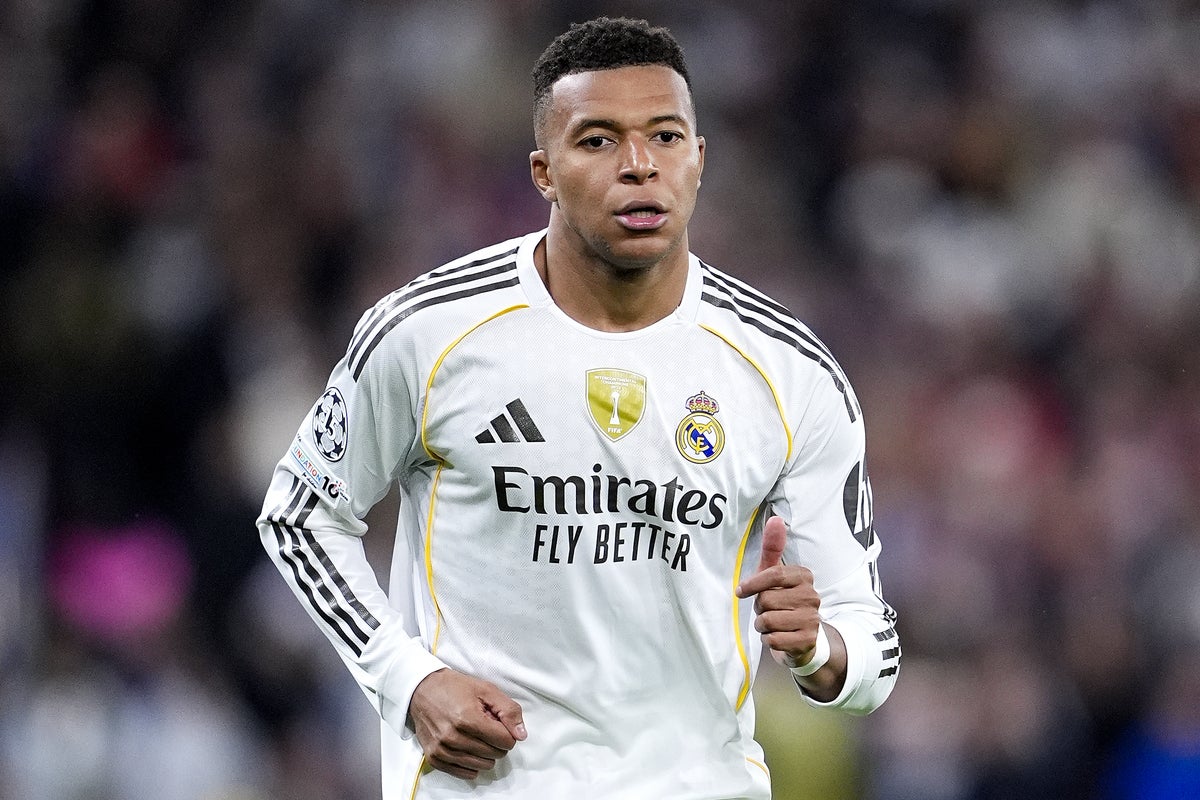
The intersection of elite athletics and national governance is rarely a matter of coincidence; it is a calculated deployment of cultural capital. When Kylian Mbappe publicly challenged the rise of the Rassemblement National (RN) during the 2024 Euro campaign, he transitioned from a sporting asset to a political protagonist. This move represents a fundamental shift in the risk-reward calculus for high-net-worth athletes. The dispute between Mbappe and Jordan Bardella functions as a case study in the "influence-governance feedback loop," where a celebrity’s personal brand is leveraged to counteract populist momentum, fundamentally altering the traditional boundaries of French secularism and neutrality in professional sports.
The Triad of Influence: Why the Mbappe Intervention Scales
The impact of Mbappe’s rhetoric against the far-right is not merely a product of his popularity, but a result of three specific pillars of influence:
- Demographic Saturation: Mbappe maintains a near-total reach within the 18–34 demographic, a segment where traditional political messaging often fails to penetrate. His platform bypasses legacy media filters, delivering a direct ideological nudge to a voter base characterized by high volatility and low institutional trust.
- National Symbolism: As the captain of the French national team and a product of the banlieues, Mbappe personifies the "Republican Meritocracy." When he speaks, he does so as a physical manifestation of the state’s integrationist ideals. An attack on him by political figures risks alienating not just football fans, but those who subscribe to the French mythos of social mobility.
- Economic Autonomy: Unlike athletes of previous generations, Mbappe’s wealth is decoupled from domestic political favor. His recent move to Real Madrid further insulated him from local French institutional pressure, granting him a "sovereign status" that allows for high-stakes political signaling without immediate fear of career-ending domestic repercussions.
The Bardella Counter-Strategy: The Weaponization of "Elite Distance"
Jordan Bardella’s response—labeling Mbappe’s comments as those of a "multi-millionaire" out of touch with the "real France"—utilizes a classic populist cost function. The RN strategy aims to transform Mbappe’s cultural capital into a liability by highlighting the wealth gap between the athlete and the average voter.
This creates a specific logical friction:
The RN attempts to frame the debate as a conflict between "The Globalist Elite" (Mbappe) and "The Forgotten Citizen" (the RN voter). By doing so, they negate the moral weight of Mbappe’s argument about diversity and inclusion by reframing it as a lecture from the privileged. The effectiveness of this counter-move depends entirely on the voter's perception of economic alienation. If a voter feels the French economy is failing them, they are structurally predisposed to reject the political advice of a person whose daily earnings exceed the voter's lifetime wealth.
The Mechanism of Political Polarization in Sport
The friction between the French National Team and the RN reveals a deeper structural shift in how national identity is contested. Historically, the French "Black-Blanc-Beur" (Black-White-Arab) ideal of the 1998 World Cup was used as a tool for national cohesion. In the current 2026 landscape, that cohesion has fractured into a battle for "Symbolic Ownership."
The conflict operates on a cause-and-effect chain that the media often overlooks:
- Action: A prominent athlete identifies a political movement as an existential threat to national identity.
- Reaction: The political movement characterizes the athlete as a foreign agent or a commercial entity detached from national roots.
- Outcome: The sporting arena ceases to be a neutral "third space" and becomes a proxy for the ballot box. This forces the Fédération Française de Football (FFF) into an impossible position where neutrality is interpreted by the public as complicity.
The Cost of Neutrality vs. The Price of Activism
There is a measurable trade-off for any athlete entering the political fray. While Mbappe strengthens his brand among liberal, urban, and international audiences, he incurs a "fragmentation cost." This is the deliberate alienation of a significant percentage of the domestic population that supports the RN.
For the RN, the confrontation is a low-risk, high-reward maneuver. If they ignore Mbappe, they appear weak. If they attack him, they solidify their base’s resentment of "enlightened" celebrities. Bardella’s specific rhetoric about "professional players who have no problems making ends meet" is a calculated attempt to trigger the "Economic Resentment Variable" (ERV). The ERV suggests that the more an advocate's lifestyle deviates from the median, the less persuasive their moral arguments become to those below the poverty line.
Structural Bottlenecks in French Political Discourse
The dispute highlights a major bottleneck in French Republicanism: the tension between individual freedom of speech and the collective expectation of discrétion. In France, the secular state expects civil servants and, by extension, those representing the nation, to maintain a degree of neutrality. Mbappe’s rejection of this norm signals the Americanization of French political discourse, where individual "brands" are expected to take moral stances on systemic issues.
The primary limitation of Mbappe's intervention is the lack of a policy-driven follow-through. His rhetoric is aspirational and defensive—focused on what the country should not be—rather than a constructive political platform. This creates a vacuum where the RN can claim the mantle of "practical solutions" while Mbappe is relegated to the role of "moral critic." Without a connection to tangible socio-economic proposals, celebrity-led anti-extremism risks being perceived as aesthetic rather than substantive.
Strategic Realignment of the National Narrative
The long-term consequence of this row is the permanent dissolution of the "apolitical athlete" in France. Organizations and sponsors must now account for "Political Risk Profiles" when signing players of Mbappe’s stature.
The strategy for the French center-left must involve more than just using Mbappe as a mouthpiece. They must bridge the gap between his symbolic power and the ground-level economic anxieties that Bardella exploits. Conversely, for Mbappe, the next strategic move involves moving beyond "warning" rhetoric. To maintain influence without falling into the "out-of-touch elite" trap, he must leverage his foundation and resources to address the specific material grievances—inflation, security, and rural neglect—that drive voters toward the RN.
The battle for France is no longer just happening in the polling stations or the halls of the National Assembly. It is being fought in the comments sections of Instagram and the post-match press conferences in Germany. The athlete is no longer a guest in the political house; they are the new architects of the national psyche.