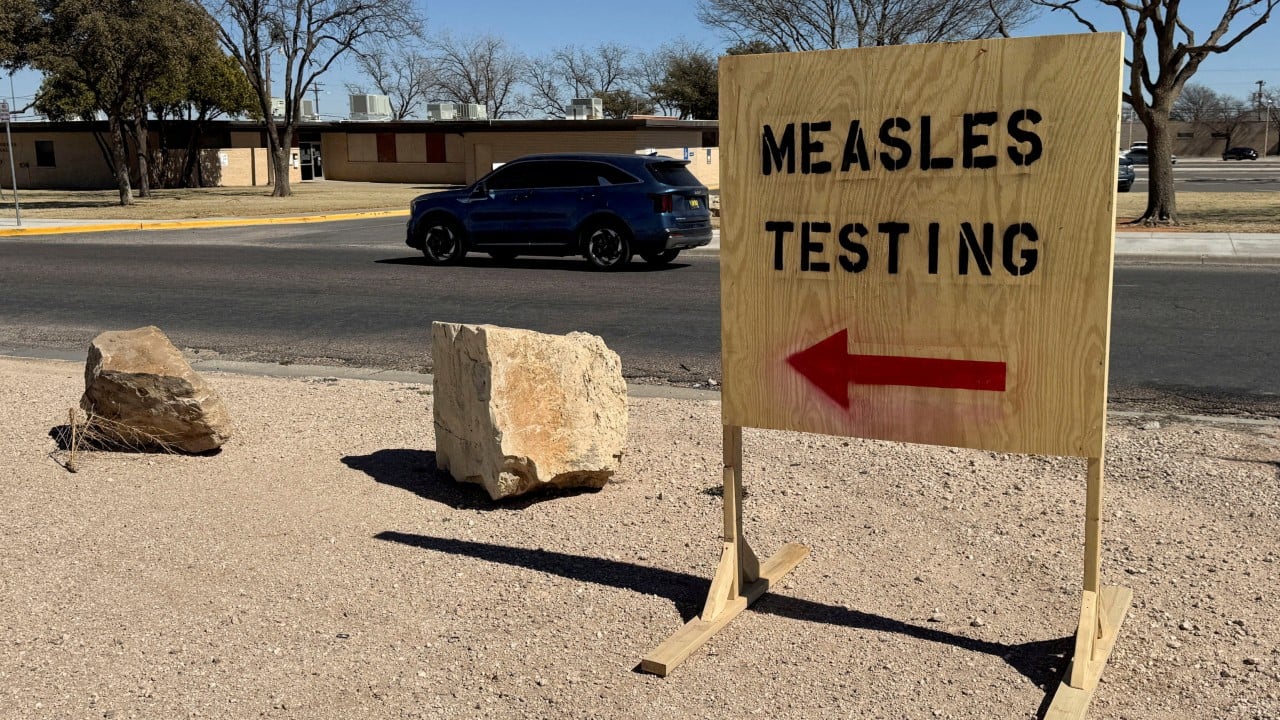
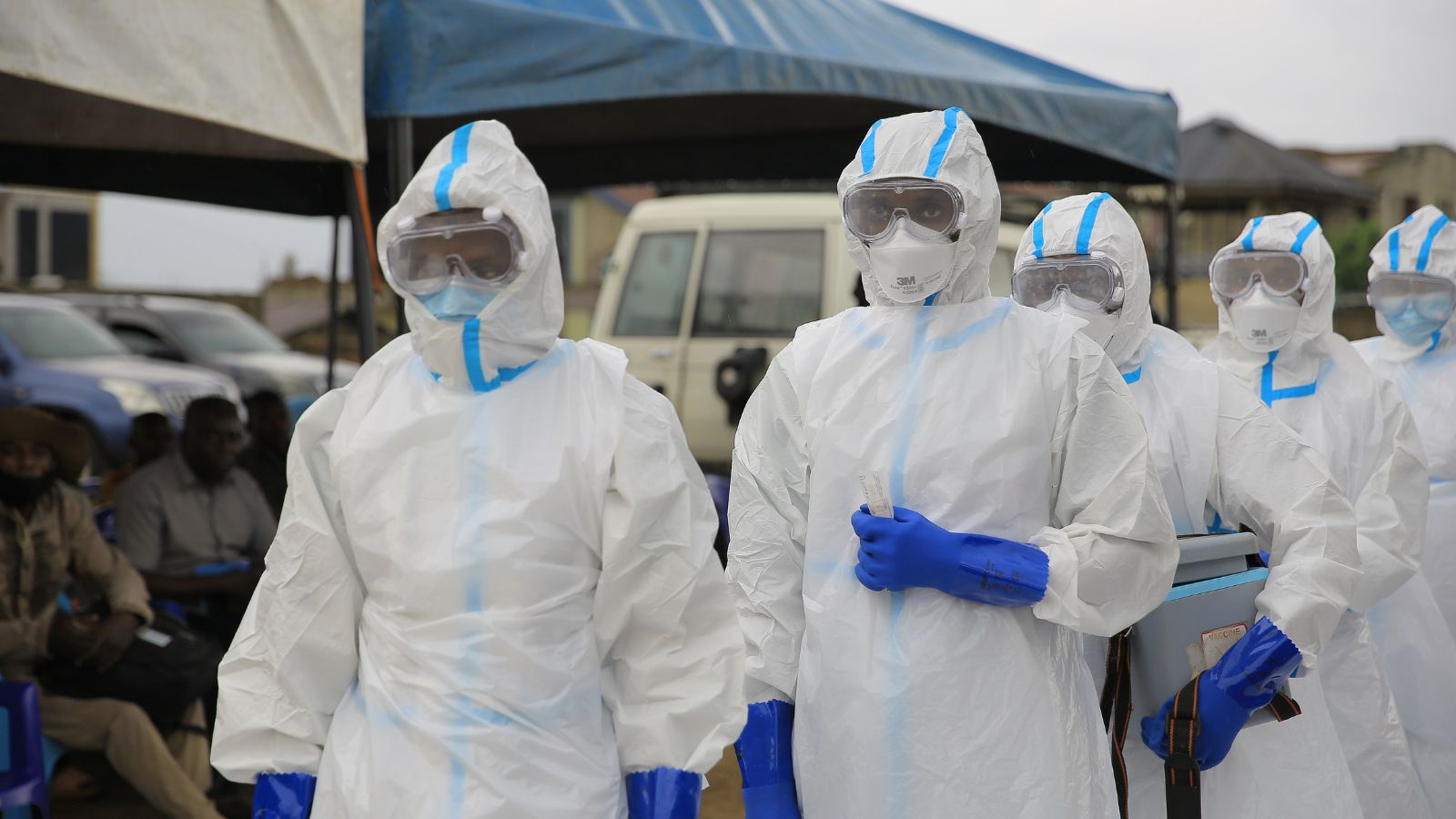
The return of sustained measles transmission in the United States is not a medical mystery; it is a predictable mathematical failure of herd immunity thresholds colliding with fragmented public health infrastructure. When vaccination coverage drops below the critical 95 percent barrier required to contain a pathogen with a basic reproduction number ($R_0$) between 12 and 18, localized outbreaks shift from statistical anomalies to operational certainties. Containing this resurgence requires abandoning broad awareness campaigns in favor of targeted epidemiological containment, rapid diagnostic triage, and localized immunity mapping.
The Epidemiological Math of Resurgence
Public discourse frequently treats measles outbreaks as isolated incidents caused by individual choices. From an operational standpoint, measles behaves according to strict threshold dynamics. The pathogen is among the most contagious human viruses ever documented, transmitted via respiratory droplets and airborne aerosols that remain viable in enclosed spaces for up to two hours after an infected individual departs.
To understand why the United States has lost its elimination status—or stands on the immediate brink of losing it—analysts must evaluate the herd immunity threshold ($HIT$), calculated as:
$$HIT = 1 - \frac{1}{R_0}$$
Given an $R_0$ of 12 to 18, the required population immunity sits between 91.7 percent and 94.4 percent. Public health frameworks standardize this target at 95 percent to account for vaccine efficacy variables and population density clustering.
National vaccination averages mask the true vulnerability of the American grid. A national rate of 93 percent does not mean every community has 93 percent coverage. Instead, it reflects an average composed of districts at 98 percent coverage and hyper-local clusters sitting at 70 percent or lower. Pathogens do not respect national averages; they exploit local density. When an imported case enters a pocket where coverage has slipped below 85 percent, the effective reproduction number ($R_e$) spikes above 1, triggering exponential transmission chains before local health departments can mobilize contact tracers.
The Three Drivers of Immunity Erosion
The decay of the 95 percent barrier stems from three distinct operational failures across the healthcare and regulatory spectrum.
- Geographic and Social Clustering: Non-medical exemptions for school-entry mandates have concentrated within specific counties, school districts, and social networks. Because social networks exhibit high homophily—unvaccinated individuals tend to associate with other unvaccinated individuals—the functional $R_e$ within these micro-networks mimics that of an entirely naive population. One infected student in an under-vaccinated school does not expose a randomized sample of the US population; they expose a concentrated cohort of susceptible hosts.
- Pandemic-Induced Routine Disruption: During the COVID-19 response, pediatric well-child visits dropped precipitously. While catch-up campaigns recovered a portion of missed Measles, Mumps, and Rubella (MMR) doses, a persistent cohort of children aged four to seven entered kindergarten without their primary or booster series. Administrative backlogs in school districts further delayed the enforcement of provisional enrollment rules, allowing susceptible cohorts to remain in classrooms for months without verification.
- Global Importation Pressure: Measles remains endemic across large sections of Europe, Asia, and Africa, where routine immunization systems experienced severe capital and logistical contraction between 2020 and 2024. International air travel acts as a continuous seeding mechanism. Every international hub in the United States functions as an entry point for viral importation. Outbreaks begin when these routine importations intersect with domestic pockets of low immunity.
Clinical Reality Versus Public Perception
A major barrier to rapid containment is the widespread underestimation of measles morbidity. Standard media narratives often frame the virus as a benign childhood rash. Clinical data contradicts this framing entirely.
Measles is a systemic febrile illness that induces profound, multi-year immunosuppression. The virus targets memory T-cells and B-cells, effectively erasing a substantial portion of the host's acquired immune repertoire—a phenomenon clinicians term immune amnesia. For two to three years following recovery from acute measles, patients face significantly elevated mortality and morbidity rates from secondary bacterial and viral infections they were previously immune to, such as pneumococcal pneumonia and influenza.
Acute complications occur at predictable rates within unvaccinated populations:
- Otitis Media: Occurs in roughly 10 percent of cases, frequently resulting in permanent sensorineural or conductive hearing loss.
- Pneumonia: Develops in approximately 5 percent of cases and represents the primary driver of measles-related pediatric mortality.
- Acute Encephalitis: Affects roughly 1 in 1,000 patients, leading to permanent neurological damage, intellectual disability, or death.
- Subacute Sclerosing Panencephalitis (SSPE): A rare, universally fatal degenerative neurological disorder caused by persistent viral infection of the central nervous system. SSPE manifests seven to ten years post-infection, occurring at a rate of roughly 1 in 10,000 cases, with higher incidence among children infected before age two.
Diagnostic Blind Spots in Modern Clinical Settings
The success of the 1963 vaccine rollout created an unintended operational vulnerability: clinical unfamiliarity. The vast majority of practicing emergency room physicians, pediatricians, and urgent care clinicians in the United States have never diagnosed a clinical case of measles in person.
This diagnostic blind spot creates severe nosocomial (hospital-acquired) transmission risks. Measles presents initially with a prodromal phase lasting two to four days characterized by high fever, cough, coryza (runny nose), and conjunctivitis—symptoms indistinguishable from routine influenza, adenovirus, or respiratory syncytial virus (RSV). The classic maculopapular rash does not appear until several days after fever onset, yet the patient is maximally contagious four days prior to the rash emerging.
When an undiagnosed prodromal patient enters a standard urgent care waiting room, they contaminate the shared airspace. Without immediate airborne infection isolation rooms (AIIR) and N95 respirator protocols, a single waiting room visit routinely generates dozens of secondary exposures among immunocompromised oncology patients, pregnant women, and infants too young to receive their first MMR dose (routinely administered at 12 to 15 months).
The Economics of Outbreak Containment
Public health budgets in the United States are structurally underfunded for reactive surge capacity. Containing a single measles case requires an immediate, labor-intensive mobilization that drains local municipal resources.
Health departments must execute reverse contact tracing to identify where the patient acquired the virus, alongside forward contact tracing to locate every individual who shared airspace with the patient during their infectious window—including two hours after the patient left any indoor location. For each exposed contact lacking documented immunity, officials must verify vaccination records, administer post-exposure prophylaxis (MMR vaccine within 72 hours or immune globulin within six days), or enforce mandatory 21-day home quarantines.
Financial modeling of recent US outbreaks demonstrates that the median cost to a local public health department to contain a single case exceeds $30,000, with large multi-case outbreaks rapidly escalating into the millions. These funds are not drawn from surplus reserves; they are cannibalized from ongoing maternal health, STI prevention, chronic disease management, and food safety programs. Every dollar spent chasing an easily preventable airborne virus degrades the broader preventative health architecture of the municipality.
Tactical Containment Protocols for Healthcare Systems
Preventing localized outbreaks from coalescing into endemic transmission requires immediate operational adjustments across clinical, administrative, and municipal levels. Broad public service announcements yield diminishing returns among entrenched vaccine-hesitant cohorts. Resources must shift toward structural containment and precision intervention.
1. Triage Redesign and Airborne Isolation
Hospital systems and urgent care networks must hardcode travel and exposure screening into intake workflows. Any patient presenting with fever and cough must be masked immediately upon entry, prior to registration. Facilities must establish direct-to-isolation pathways for patients presenting with the "three Cs" (cough, coryza, conjunctivitis) alongside fever, bypassing shared waiting areas entirely. Staff immunity verification must be audited continuously; healthcare workers without documented two-dose MMR series or serological proof of immunity cannot staff front-line triage desks.
2. Granular Vulnerability Mapping
State health departments must abandon county-level reporting in favor of census-tract and school-building granularity. Public health analysts should cross-reference state immunization registries with school enrollment data to identify specific facilities where kindergarten MMR coverage sits below 90 percent. Once mapped, health systems can pre-position mobile vaccination clinics, rapid diagnostic testing kits (RT-PCR throat swabs and IgM serology), and immune globulin stockpiles within those specific ZIP codes before an importation event occurs.
3. Administrative Friction Elimination
A measurable percentage of under-vaccinated children belong to families who are not ideologically opposed to immunization, but rather face logistical barriers—lack of paid time off, transportation deficits, or confusion over insurance coverage. Health systems must eliminate structural friction by authorizing pharmacists to administer pediatric MMR doses nationwide, extending pediatric clinic hours to weekends, and deploying automated, multi-lingual SMS recall systems tied directly to electronic health record (EHR) immunization registries.
4. Tightening Exemption Verification
States permitting non-medical exemptions must introduce administrative parity. Obtaining an exemption should never be easier than obtaining a vaccination. States that require annual renewal of exemptions, mandatory completion of an educational module signed by a licensed physician, and notarized documentation consistently maintain higher vaccination rates than states accepting simple parent-signed checkboxes. Simultaneously, school districts must enforce strict exclusion policies during active outbreaks: any student without documented immunity must be legally barred from campus for 21 days following the last known exposure, shifting the economic and logistical burden of non-vaccination onto the household rather than the public school system.
Limitations of Current Interventions
No single policy lever will restore universal immunity immediately. Mandatory vaccination laws without religious or philosophical exemptions—such as those enacted in California, New York, and Maine—successfully raise statewide compliance rates, yet they frequently trigger secondary effects, including increased homeschooling enrollment and heightened political polarization that complicates local public health governance.
Furthermore, serological waning presents a minor but non-zero vulnerability. While two doses of the MMR vaccine provide roughly 97 percent protection against clinical disease, a small fraction of vaccinated individuals experience secondary vaccine failure over decades. During high-force exposure events, breakthrough infections can occur in fully vaccinated adults. While these breakthrough cases exhibit milder symptoms and substantially lower viral shedding—making them poor transmitters—they complicate diagnostic algorithms that rely strictly on vaccination history to rule out measles.
The Strategic Play
Public health leaders and hospital administrators must treat measles containment as an acute logistical and engineering challenge rather than a communications problem. Stop allocating capital toward broad persuasion campaigns aimed at entrenched ideological holdouts. Instead, redirect operational budgets entirely toward hardening clinical triage perimeters to eliminate hospital-acquired spread, enforcing strict 21-day exclusion protocols in under-vaccinated school districts to break transmission chains early, and deploying hyper-local, friction-free vaccination access in the specific census tracts where immunization coverage has fallen below the 90 percent threshold.