International relations commentary routinely conflates US policy volatility with systemic realignment, arguing that unilateral trade pressures and tariff escalations automatically drive aggrieved nations into unified alternative blocs such as BRICS. This linear model misreads the structural mechanics of both American statecraft and emerging market coordination. Unilateral state pressure does not create a cohesive anti-systemic coalition; rather, it accelerates transactional bilateralism while exposing the deep internal contradictions that prevent BRICS from functioning as a true geopolitical counterweight. Analyzing the interaction between Washington's foreign economic policies and the expansion of non-Western multilateral bodies requires an examination of structural incentives, collective action problems, and the actual utility of alternative economic architectures.
The Cost Function of Unilateralism
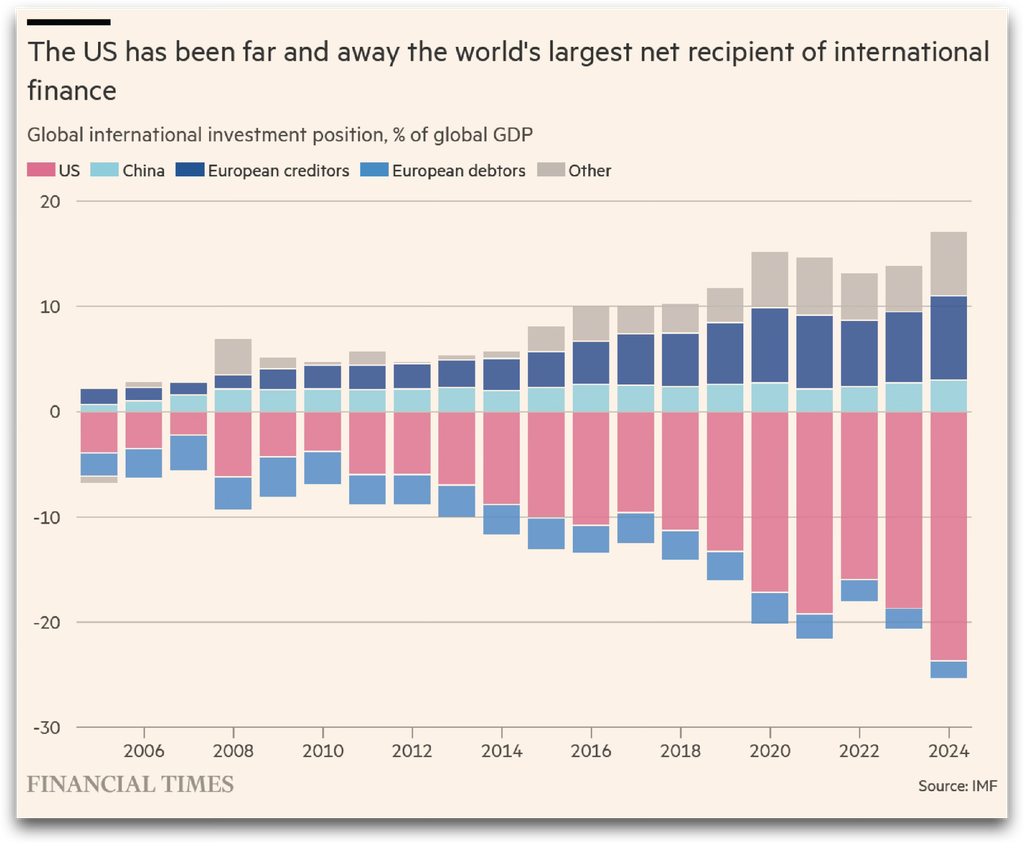
When an administration deploys tariffs, sanctions, and secondary trade penalties as primary instruments of foreign policy, observers frequently calculate the cost solely in terms of damaged alliances. This approach ignores the asymmetric distribution of power. The United States maintains structural dominance not through benevolence or the maintenance of multilateral institutions, but through asymmetric financial power, deep capital markets, and security guarantees that cannot easily be substituted.
The economic calculus governing targeted states involves two competing variables:
- The friction and deadweight loss imposed by US trade barriers.
- The transaction costs and sovereignty surrenders required to integrate into alternative economic blocs.
For most middle powers, bilateral friction with Washington is a manageable operational cost of doing business, whereas institutional alignment with a Beijing-centric or uncoordinated BRICS bloc introduces severe security and economic trade-offs. Nations joining BRICS or expanding non-dollar trade mechanisms are rarely acting out of ideological solidarity against Western hegemony. They are executing short-term hedging strategies to insulate themselves from US policy volatility without severing ties to the lucrative Western consumer market.
The Internal Mechanics and Limitations of BRICS
Characterizing BRICS as a coherent economic bloc misunderstands its internal composition. The grouping suffers from profound structural fragmentation that prevents it from acting as a unified geopolitical actor. Unlike the European Union or historical security alliances, BRICS lacks a shared security architecture, a common ideological core, or institutionalized enforcement mechanisms.
The bloc is defined by competing regional ambitions and zero-sum economic rivalries:
- Sino-Indian Strategic Rivalry: The two largest economies within the grouping maintain an active territorial dispute, incompatible industrial policies, and opposing views on Asian security architecture. India's strategic alignment increasingly tilts toward minilateral security frameworks like the Quad precisely to balance against Chinese hegemony in Eurasia.
- Economic Divergence: The macroeconomic profiles of members range from commodity exporters facing domestic structural crises to state-capitalist manufacturing powerhouses grappling with severe deflationary pressures. Their monetary policies and currency regimes are entirely non-interoperable.
- The De-Dollarization Myth: While central banks seek to diversify foreign exchange reserves, replacing the US dollar requires deep, liquid capital markets with absolute convertibility and legal predictability—attributes that authoritarian alternative issuers cannot or will not provide. Bilateral trade settlements in local currencies merely shift exchange-rate risk to commercial actors without establishing a stable reserve asset.
Consequently, declarations issued at annual summits reflect lowest-denominator consensus rather than operational coordination. Pushing countries toward BRICS does not mean building an anti-Western fortress; it means expanding a loose directory of states seeking strategic autonomy through multi-alignment.
The Illusion of Spheres of Influence
A common analytical error in contemporary geopolitical forecasting is the assumption that great powers are returning to a clean, nineteenth-century division of spheres of influence. Proponents of this view argue that as the United States retreats from global governance and prioritizes hemispheric dominance or transactional bilateral deals, regional heavyweights will cleanly carve out their own domains.
The globalized economy resists this compartmentalization. Global supply chains, digital infrastructure, and energy markets are deeply entangled. A nation can align with China for infrastructure financing while relying on Western security partnerships or technological inputs. This multi-alignment strategy invalidates rigid bloc-to-bloc competition models.
When Washington applies aggressive pressure via tariffs or extraterritorial sanctions, the immediate response of middle powers is not conversion to an opposing ideological camp. It is the diversification of supply chains, the negotiation of bespoke minilateral trade pacts, and the selective utilization of alternative payment channels where unavoidable. This behavior is pragmatic risk mitigation, not revolutionary realignment.
Strategic Forecast
The trajectory of international commerce and security architecture over the medium term will not be characterized by a bipolar split between a Western coalition and a consolidated BRICS bloc. Instead, the global system is fracturing into a fragmented network of transactional, issue-specific arrangements.
As unilateral economic statecraft persists, the primary casualty will not be global capitalism itself, but the institutional credibility of multilateral rule-making bodies. States will increasingly rely on bilateral leverage, sovereign industrial policies, and localized currency arrangements to insulate themselves from systemic shocks. For institutional strategists and corporate planners, the operational takeaway is clear: navigate geopolitical risk by assuming continuous policy volatility, avoiding reliance on uniform multilateral regimes, and pricing regulatory friction directly into cross-border capital allocation.