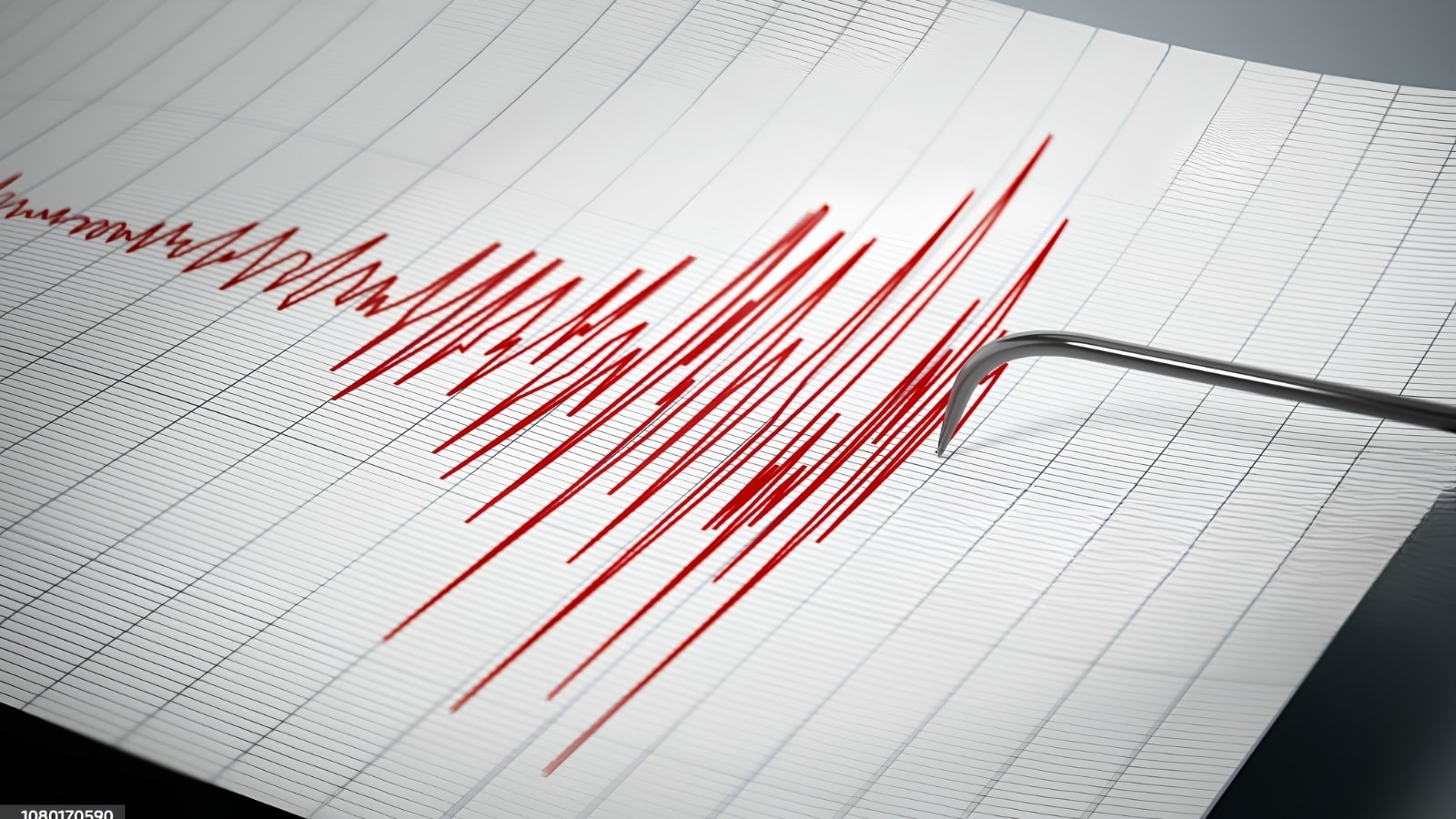
Seismic events in densely populated megacities are often analyzed through the lens of raw magnitude, yet structural survival depends on the velocity of ground motion attenuation, depth, and building code enforcement. When a moderate seismic event registers a preliminary magnitude of 5.9 with a hypocentral depth of 70 kilometers beneath the southern Ibaraki prefecture, the resulting shockwave dissipation protects metropolitan infrastructure from catastrophic failure. Evaluating an urban center's response to sudden tectonic stress requires isolating the mechanical variables of the energy release from the human behavioral responses that dictate injury distributions.
The Mechanics of Attenuation and Depth
The primary factor dictating structural safety during the eastern Japan event was the hypocentral depth of 70 kilometers. Shallow earthquakes, typically categorized at depths under 10 kilometers, concentrate energy release near the surface, amplifying peak ground acceleration and maximizing localized destruction.
When a fault ruptures at a intermediate depth of 70 kilometers, seismic waves undergo geometric spreading and material damping across a significantly wider volume of the earth's crust before intersecting surface structures. This attenuation vector reduces the high-frequency components of the seismic wavefield that typically trigger resonant structural failure in low-to-mid-rise buildings.
The Japan Meteorological Agency measured the event at 5.9, while the U.S. Geological Survey logged it at 5.8. Both metrics confirm an intermediate-energy release insufficient to exceed the elastic design thresholds of modern Japanese reinforced concrete and steel structures. Energy dissipation over distance ensures that the spectral acceleration experienced in Tokyo remained well within code safety margins established under the Building Standard Act.
The Cost Function of Panic
While structural integrity remained intact, physical harm manifested through human behavioral kinetics rather than structural collapse. At least 37 individuals sustained injuries across Tokyo, Saitama, Kanagawa, Chiba, and Ibaraki prefectures. These incidents trace a direct causal path back to immediate physical reactions upon receiving mobile emergency earthquake alerts.
The injury distribution reveals a distinct operational vulnerability:
- Falls resulting from rapid evacuation attempts out of bed during sleep cycles.
- Impact trauma from domestic furniture, fixtures, and unanchored residential items.
- Secondary lacerations from merchandise displacement in retail environments.
This indicates that for intermediate-magnitude deep-focus earthquakes, the primary medical burden shifts entirely from structural trauma, such as crush syndrome or structural entrapment, to kinetic trauma generated by sudden postural disruption. The biological reflex of panic introduces an unmitigated variable into crisis management, causing elderly demographics, such as an 80-year-old resident in Yokohama who suffered a severe hip fracture after falling from a bed, to bear a disproportionate share of the health toll.
Infrastructure Resilience and Network Vulnerability
Metropolitan resilience is governed by the redundancy of critical lifelines. The event tested transportation and utility grids across eastern Japan, exposing precise points of operational vulnerability.
Express train networks serving Tokyo and Narita Airport experienced operational holds and scheduling delays, alongside regional lines in northeastern prefectures. High-speed Shinkansen bullet train operations continued uninterrupted due to automatic seismic interlock systems that cut power prior to the arrival of primary shear waves.
Subsurface utility networks demonstrated localized fragility. An underground water pipe ruptured in the Koto ward of Tokyo, releasing water onto surface roadways before isolation valves and repair teams neutralized the leak. Power grids experienced minor disruptions, including brief outages affecting approximately 460 homes in Tokyo that were resolved within hours by utility grid operators.
Nuclear regulatory authorities confirmed zero operational anomalies across approximately a dozen nuclear facilities and material handling sites in the affected zone. This stability stems from redundant automated shutdown mechanisms that engage when peak ground acceleration thresholds are breached.
Managing Secondary Seismic Risk
The issuance of post-event advisories by meteorological agencies underscores the probabilistic nature of aftershocks. A seismic release of magnitude 5.9 alters localized stress tensors along adjacent fault segments, elevating the probability profile for secondary adjustments over a nominal one-week window.
Disaster management protocols must therefore transition from immediate damage assessment to sustained structural monitoring. Government task forces, established under executive coordination, focus on verifying the integrity of secondary lifelines, checking bridge expansion joints, and maintaining standby protocols for public transportation networks.
Urban populations operating within high-density seismic zones must recalibrate household risk mitigation. Securing top-heavy furniture, anchoring domestic shelving, and eliminating hazardous fall zones around sleeping quarters represent the highest-leverage interventions for minimizing injuries during non-catastrophic seismic events.
Prioritize the immediate physical securing of domestic living spaces to decouple human injury rates from minor-to-moderate tectonic movements, shifting reliance away from reactive behavioral panics toward structural preparation.