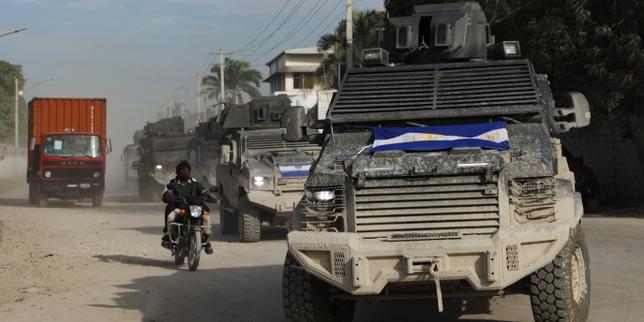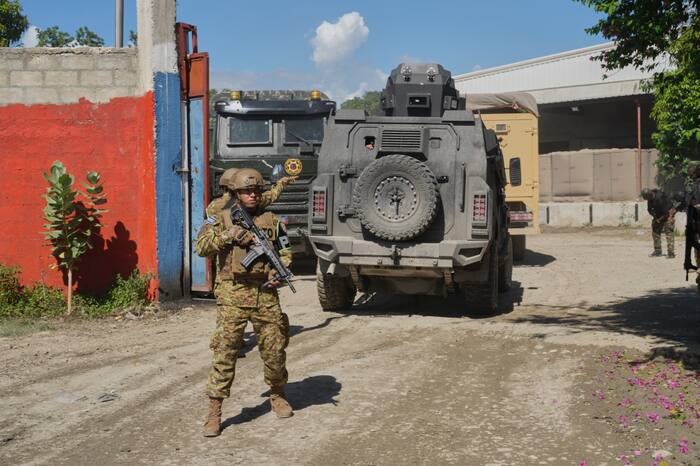
Bilateral security diplomacy between Port-au-Prince and San Salvador represents a structural shift in hemispheric crisis management: the transition from multilateral peacekeeping dependencies to direct, state-to-state tactical contracting. When Haitian leadership travels to El Salvador to negotiate the operational future of Salvadoran troops deployed in Haiti, the meeting functions not as a ceremonial diplomatic exchange, but as a critical audit of command architecture, rules of engagement, and force sustainability. Evaluating this summit requires stripping away diplomatic rhetoric to examine the underlying operational variables governing asymmetric urban pacification, force multiplication, and political survival for both administrations.
The Structural Failure of Legacy Multilateralism
To understand why Haiti’s transitional authorities must negotiate directly with El Salvador, one must first analyze the failure mode of traditional international intervention mechanisms in Port-au-Prince. Historically, multilateral missions operate under consensus-driven mandates designed for post-conflict stabilization rather than active counter-insurgency. In Haiti, where armed coalitions control critical transit corridors, port infrastructure, and urban terrain, the operational environment is defined by decentralized, predatory warfare rather than a conventional ceasefire violation.
Standard multilateral deployments suffer from three compounding bottlenecks:
- Authorization Latency: Every expansion of rules of engagement requires multi-nation diplomatic clearance, allowing agile urban militias to adapt faster than command directives can be updated.
- Risk Aversion Asymmetry: Contributing nations prioritize force protection over territorial clearance, resulting in static defensive postures that cede the initiative to irregular combatants.
- Logistical Fragmentation: Disparate national contingents operate with incompatible communications protocols, supply chains, and tactical doctrines, degrading joint operational tempo.
El Salvador’s deployment model bypasses these constraints by exporting a specialized, unified doctrine forged during its domestic Territorial Control Plan. Unlike traditional peacekeepers trained for interposition, Salvadoran military and police units are structured for offensive urban clearance, intelligence-led sweeps, and sustained territorial holding. The summit in San Salvador centers on whether this offensive posture can be scaled and legally insulated within Haitian jurisdiction without triggering domestic political collapse in Port-au-Prince or logistical overextension in San Salvador.
The Three Pillars of the San Salvador Negotiations
Any substantive agreement emerging from high-level talks between Haitian and Salvadoran leadership must resolve three interdependent operational variables. If any single pillar fails, the deployment degrades from an offensive pacification campaign into a static garrison mission.
1. Rules of Engagement and Legal Indemnification
Offensive urban operations against embedded criminal networks inevitably generate high-friction kinetic engagements. The primary friction point in bilateral security deployments is the legal jurisdiction governing the use of lethal force. Salvadoran commanders operate domestically under a state of exception that suspends standard procedural constraints, enabling rapid detention and aggressive engagement protocols. Exporting this operational tempo to Haiti requires explicit bilateral Status of Forces Agreements (SOFAs) that shield Salvadoran personnel from both local prosecution and international judicial exposure.
Haitian leadership faces an acute political dilemma here. Granting broad legal immunity to foreign troops risks domestic backlash and accusations of sovereignty erosion. Conversely, restricting Salvadoran forces to defensive rules of engagement neutralizes their primary tactical advantage—aggressive, pre-emptive disruption of gang leadership nodes. The negotiations must establish a clear threshold for offensive action, defining precisely when Salvadoran units can initiate clearing operations independently versus when they must operate strictly as tactical support for the Haitian National Police (PNH).
2. Command Integration and Intelligence Fusion
A foreign expeditionary force cannot hold terrain indefinitely; it can only clear space for domestic institutions to re-establish governance. The operational failure of past interventions in Haiti stemmed from treating military clearance and institutional rebuilding as sequential phases rather than simultaneous processes.
For the Salvadoran offensive to yield durable territorial gains, command integration between Salvadoran tactical commanders and the PNH must solve the intelligence-to-action cycle:
- Human Intelligence (HUMINT) Sourcing: Salvadoran forces lack the linguistic fluency (Haitian Creole) and granular neighborhood familiarity required to distinguish combatants from non-combatants in dense urban districts like Cité Soleil or Bel Air. They rely entirely on vetted PNH intelligence assets to identify targets.
- Operational Security (OPSEC) Compartmentalization: The PNH has historically suffered from severe infiltration by armed coalitions. Sharing real-time operational plans with compromised local units results in leaked raid schedules and ambushes.
- Tactical Handover Protocols: Once Salvadoran units clear a contested sector, a specialized holding force must immediately occupy the terrain. If the handover is delayed by even hours, irregular fighters infiltrate back into the zone through subterranean drainage networks and dense informal housing.
The diplomatic agenda in El Salvador directly addresses the creation of joint fusion cells—small, heavily vetted bilateral command units designed to process local intelligence without exposing operational timelines to the broader, unvetted Haitian security apparatus.
3. Force Sustainment and Financial Architecture
Military deployments are ultimately constrained by logistics and capital flows. El Salvador possesses a highly disciplined, battle-tested light infantry and specialized police apparatus, yet it remains a small Central American economy with finite fiscal capacity. Sustaining an expeditionary contingent abroad requires continuous funding for airlift, ammunition replenishment, medical evacuation (MEDEVAC), armored mobility, and combat pay.
Because Haiti’s domestic tax base has been crippled by the collapse of customs revenue and commercial activity, Port-au-Prince cannot self-finance a prolonged bilateral security contract. The sustainability of the Salvadoran offensive depends on third-party financing—specifically, trust funds administered by international donors or direct bilateral security assistance packages from major hemispheric powers. The talks in San Salvador must align operational tempo with financial disbursement schedules. If donor funds are delayed by bureaucratic compliance audits, Salvadoran commanders face a forced reduction in offensive patrols, creating a predictable operational pause that armed groups will exploit to regroup and rearm.
The Cost Function of Asymmetric Urban Pacification
Evaluating the viability of the Salvadoran model in Haiti requires analyzing the underlying cost function of urban counter-insurgency. In El Salvador, the state achieved rapid pacification by leveraging overwhelming local numerical superiority, total control over telecommunications infrastructure, and a unified judicial-penal pipeline capable of processing tens of thousands of detainees simultaneously.
Haiti presents an inverted operational matrix across every critical variable:
- Force-to-Population Ratio: Classic counter-insurgency doctrine dictates a minimum ratio of 20 security personnel per 1,000 inhabitants to secure contested urban terrain. In Port-au-Prince, the combined strength of the PNH, the Multinational Security Support (MSS) mission, and the Salvadoran contingent falls far below this threshold. Consequently, offensive forces cannot execute simultaneous city-wide sweeps; they must rely on sequential, targeted raids ("clear-and-leave" rather than "clear-and-hold"), which allows displaced gang elements to migrate into adjacent unpoliced sectors.
- Carceral Infrastructure Deficit: An offensive arrest strategy requires functioning detention facilities. Haiti’s primary prison infrastructure has been systematically destroyed or breached during coordinated gang assaults. Capturing combatants without secure, long-term detention capacity creates a revolving-door dynamic that exhausts tactical units and destroys local informant trust.
- Terrain and Infrastructure Control: Unlike San Salvador, where the state maintained control over major highways, electrical grids, and port facilities throughout the crisis, Haitian armed groups actively tax commercial transit routes and periodically blockade fuel terminals. Salvadoran troops must therefore expend significant combat power simply securing their own logistical arteries before launching offensive maneuvers.
Geopolitical Arbitrage and Domestic Incentives
To understand why both governments pursue this high-risk bilateral arrangement despite severe structural constraints, one must examine the political utility each leadership derives from the partnership. Neither administration acts solely out of abstract regional solidarity; both are executing calculated geopolitical arbitrage.
For El Salvador’s executive branch, exporting security expertise serves a dual strategic purpose. Internationally, it repositions El Salvador from a net consumer of security aid and a source of regional instability into an indispensable security provider for the Western Hemisphere. By deploying troops to solve a crisis that larger nations refuse to engage directly, San Salvador accumulates diplomatic capital in Washington and across the Organization of American States (OAS), effectively insulating its domestic governance model from international criticism. Domestically, overseas deployments keep elite military and police units operationally sharp while validating the administration's narrative of national transformation.
For Haiti’s transitional leadership, engaging El Salvador bypasses the paralysis of traditional diplomatic channels. Facing existential threats to the capital's remaining state institutions and intense domestic pressure to restore basic commercial mobility, Haitian officials require immediate kinetic results rather than multi-year institutional reform blueprints. Partnering with San Salvador signals to both the Haitian public and the entrenched criminal coalitions that the transitional government is willing to import uncompromising enforcement mechanisms. Furthermore, cultivating direct bilateral ties with Central American partners diversifies Haiti’s diplomatic dependencies, reducing its singular reliance on North American and European capitals.
Operational Limitations and Failure Scenarios
No tactical deployment can compensate for a vacuum in political governance. Relying on Salvadoran offensive operations as the primary mechanism for stabilizing Haiti carries three distinct failure risks that strategists must account for:
- The Attrition Trap: Irregular urban combatants operate with minimal logistical overhead and deep familiarity with local micro-terrain. If Salvadoran units are drawn into prolonged, block-by-block urban attrition without overwhelming numerical reinforcements, casualty rates will rise. In an expeditionary deployment, even moderate casualties can trigger rapid domestic political pressure in El Salvador to withdraw the contingent, collapsing the mission prematurely.
- Collateral Damage and Legitimacy Erosion: Dense urban centers like Port-au-Prince offer no clear physical separation between combatants and civilians. Aggressive offensive sweeps inevitably increase the probability of civilian casualties and property destruction. Armed coalitions actively exploit these incidents through local information networks to frame foreign troops as an occupying force, turning neutral populations hostile and drying up vital human intelligence streams.
- The Governance Vacuum Post-Clearance: Military force can dismantle a gang’s command structure and clear a transit corridor, but infantry units cannot administer municipal services, adjudicate property disputes, or generate employment. If Haitian civil authorities fail to deploy administrators, judges, and infrastructure repair teams into cleared zones immediately behind the Salvadoran vanguard, the economic incentives driving youth recruitment into armed groups remain unchanged. Within months, new criminal hierarchies will organically reconstitute to fill the power vacuum.
The Strategic Imperative for Port-au-Prince and San Salvador
The diplomatic summit in El Salvador will ultimately be judged not by joint communiqués, but by whether it produces a synchronized operational doctrine that bridges the gap between kinetic clearance and institutional hold. To prevent the Salvadoran deployment from degenerating into an isolated, unsustainable tactical exercise, both governments must execute a strict sequencing protocol.
First, bilateral negotiators must lock in a dedicated, ring-fenced sustainment fund backed by international stakeholders before expanding the geographic footprint of Salvadoran operations. Offensive tempo cannot be contingent on ad-hoc diplomatic fundraising. Second, operational planning must shift away from broad urban sweeps toward securing critical economic chokepoints—specifically the port facilities, fuel terminals, and primary agricultural transit highways connecting Port-au-Prince to the northern and southern departments. Restoring commercial flow is the single fastest mechanism to undercut the financial liquidity of armed groups and rebuild Haitian state revenue. Finally, every Salvadoran tactical unit deployed into a contested sector must be paired with a pre-staged, vetted Haitian administrative and judicial cell tasked with assuming territorial control within 72 hours of clearance. Without this immediate civil-military handoff, offensive kinetic superiority will remain a temporary tactical disruption rather than a permanent strategic resolution.