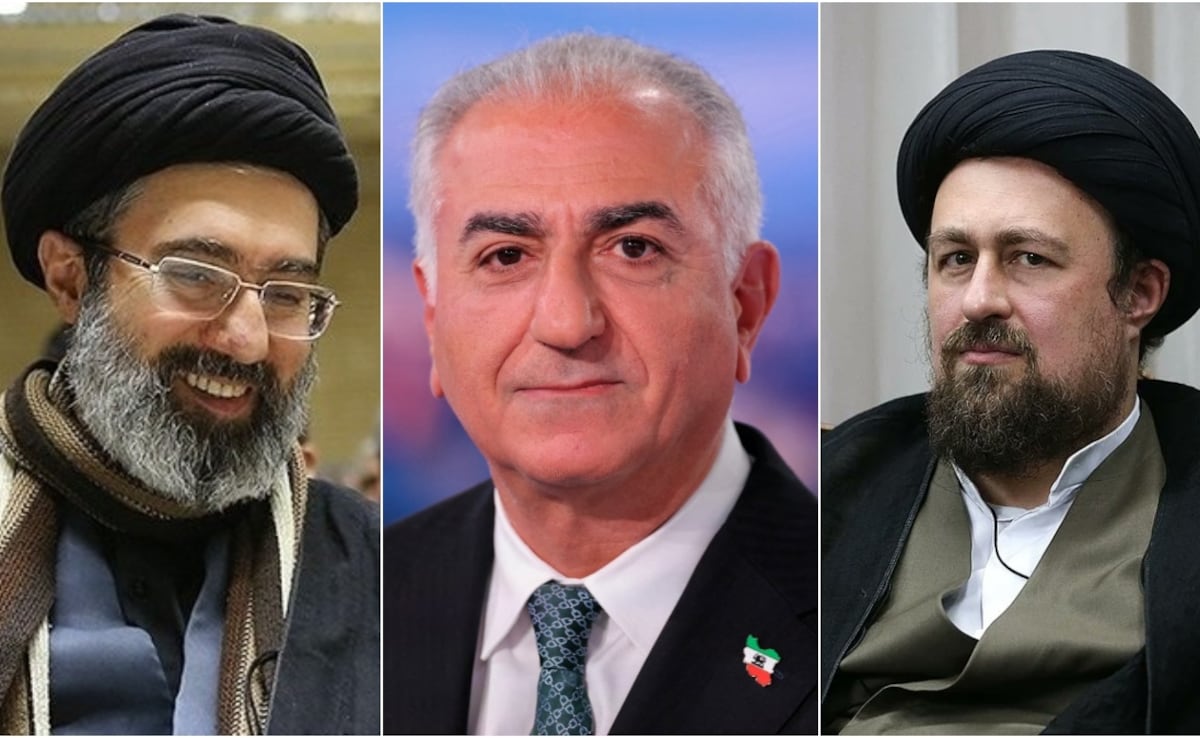
The stability of the Islamic Republic of Iran rests on a binary power structure: the constitutional authority of the Assembly of Experts and the extra-constitutional influence of the security apparatus. Following the death of Ebrahim Raisi, the succession process for Ali Khamenei has shifted from a managed transition toward a high-stakes survival calculation. The successor will not merely inherit a title; they must navigate a fragmented political ecosystem where the IRGC (Islamic Revolutionary Guard Corps) acts as both the kingmaker and the primary threat to clerical autonomy.
The Tri-Pillar Framework of Legitimacy
To identify the next Supreme Leader, one must evaluate candidates against three non-negotiable pillars of power. Any candidate lacking strength in even one of these areas faces an immediate structural bottleneck.
- Jurisprudential Standing (Feqh): The leader must be a high-ranking cleric. While the 1989 constitutional revision lowered the requirement from Marja (Grand Ayatollah) to Mujtahid (one capable of independent reasoning), a baseline of religious credibility is required to maintain the loyalty of the Qom seminary.
- Institutional Alignment: This represents the candidate’s ability to manage the "Bonyads" (charitable trusts) and the sprawling bureaucracy of the Office of the Supreme Leader (Beit-e Rahbari).
- Security Integration: This is the most critical variable. The successor must have a deep, symbiotic relationship with the IRGC and the intelligence services. Without their "bayonets," the clerical leadership cannot enforce its will against domestic unrest or external pressure.
The Assembly of Experts and the Formal Mechanism
The Assembly of Experts, a body of 88 clerics, is the only group constitutionally empowered to elect the Supreme Leader. However, the formal vote is the final step in a process that begins long before the incumbent's death. The Assembly operates via a secretive "Succession Committee" that vets a shortlist of candidates.
The primary risk in this mechanism is the "vacuum interval." If the Assembly fails to reach a consensus rapidly—defined here as 48 to 72 hours—the power vacuum invites a military intervention. The IRGC has a vested interest in a swift appointment to prevent civil mobilization or factional infighting that could destabilize the borders. Therefore, the Assembly’s choice will likely be pre-negotiated with the security chiefs to ensure a seamless transition of coercive power.
Candidate Profiling: The Primary Contenders
The field of potential successors has narrowed significantly. By analyzing the career trajectories of the remaining elites, we can quantify their probability of ascension.
Mojtaba Khamenei: The Shadow Institutionalist
As the second son of the current leader, Mojtaba Khamenei possesses the highest degree of "Beit" integration. He has spent two decades managing his father’s inner circle and maintaining a direct pipeline to the IRGC’s top brass, particularly the Basij and the intelligence wings.
- Strength: Unrivaled control over the administrative machinery of the leadership.
- Weakness: The "Monarchy Paradox." The Islamic Revolution was built on the rejection of hereditary rule. His appointment risks delegitimizing the Republic’s foundational myths and could provoke significant internal clerical opposition.
- Succession Probability: High, provided he can secure an elevation in his clerical rank (Ayatollah status) and the IRGC deems his continuity more valuable than the optics of a dynasty.
Alireza A’rafi: The Technocratic Cleric
As the head of the Iranian seminaries and a member of the Guardian Council, A’rafi represents the bridge between the religious establishment and the state. He is a loyalist who lacks the polarizing baggage of the Khamenei family name.
- Strength: Strong theological credentials and a clean record regarding the hereditary rule controversy.
- Weakness: Lack of a personal power base within the military. He would be a "weak" leader, potentially serving as a civilian facade for a military junta.
Mohsen Qomi: The International Strategist
Qomi serves as the deputy for international affairs in the Leader's office. His expertise lies in the "Axis of Resistance" and regional influence operations.
- Strength: Deep ties to Hezbollah and regional proxies, making him a candidate who understands the "Forward Defense" doctrine.
- Weakness: Limited domestic visibility and a lack of populist appeal or a significant factional following within the domestic political theater.
The Cost Function of the IRGC Kingmaker
The IRGC’s preference is dictated by a specific cost function: $C = R - (L + E)$, where $C$ is the cost of transition, $R$ is the risk of civil unrest, $L$ is the loyalty of the candidate to the Guard's economic interests, and $E$ is the external pressure from Sanctions/Israel.
The IRGC does not want a strong, independent Supreme Leader who might challenge their 30% to 40% share of the Iranian economy. They require a figurehead who provides "Halal" cover for their operations while maintaining the status quo of the "Resistance Economy." If the Guard perceives the Assembly of Experts as leaning toward a reform-minded or overly independent candidate, they are structurally incentivized to bypass the constitutional process through a "Security Committee" declaration.
Structural Constraints on the Next Leader
Regardless of who is selected, the next leader faces a set of exogenous and endogenous constraints that Khamenei did not face in 1989.
- The Legitimacy Deficit: The 2022-2023 "Woman, Life, Freedom" protests signaled a permanent rupture between the state and the youth demographic. The next leader will lack the revolutionary "street cred" of Khomeini or the long-term consolidation period enjoyed by Khamenei.
- Economic Atrophy: The exhaustion of the Iranian middle class and the systemic failure of the banking sector limit the leader’s ability to buy social peace through subsidies.
- The Nuclear Pivot: The successor will inherit a "threshold" nuclear state. The decision to cross the weaponization line or negotiate a grand bargain with the West will be the first and most defining test of their tenure.
The Crisis Management Protocol
Evidence suggests the leadership is preparing for a "Leadership Council" model as a contingency. While the 1989 constitution abolished the council in favor of an individual leader, the Assembly of Experts could theoretically revert to a three-to-five-person committee if no single candidate achieves a two-thirds majority.
This model is inherently unstable. A council would institutionalize factionalism, leading to a paralysis of the Supreme National Security Council (SNSC) and potentially accelerating a formal military takeover by the IRGC to restore unified command.
Strategic Forecast: The Military-Clerical Hybrid
The data points toward a transition that favors a "Regulated Succession." This involves the appointment of a low-profile, compliant cleric—likely someone of Alireza A’rafi’s profile—paired with a significant, formalized expansion of the IRGC’s role in the SNSC.
The strategic play for external observers is to monitor the promotions within the IRGC's "Quds Force" and the "Intelligence Organization" (SAS) over the next 12 months. If Mojtaba Khamenei continues to be featured in high-level security briefings, the path to a dynastic transition is being cleared. If a "Dark Horse" cleric from the Guardian Council begins appearing alongside General Salami, the Guard is opting for a puppet-master strategy.
The most probable outcome is not a revolution, but a "Quiet Coup" where the clerical mantle remains, but the operational core of the Iranian state shifts from a theocracy to a praetorian military state. The successor's first 100 days will be defined by a purge of the "Old Guard" loyalists to ensure the new security-clerical compact is unchallenged.


