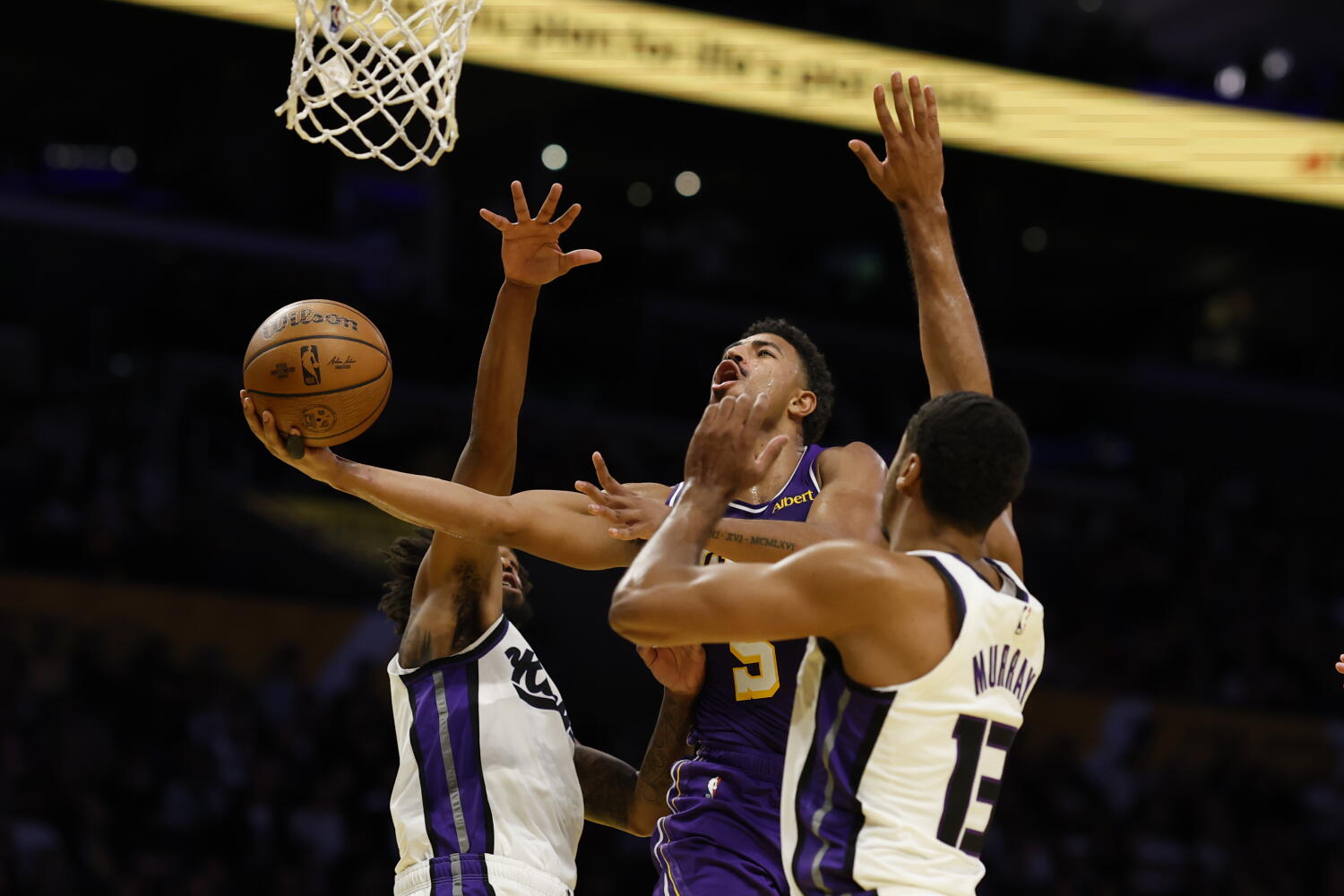
A narrow victory between two Pacific Division rivals—specifically the Los Angeles Lakers holding off the Sacramento Kings—is routinely mischaracterized by standard sports coverage as a triumph of willpower or clutch shooting. In reality, single-possession outcomes in the final two minutes of an NBA contest represent the mathematical convergence of possession economy, defensive switchability, and fatigue-induced decision degradation. Evaluating a game solely by its final margin obscures the structural inefficiencies that allowed a double-digit lead to evaporate or prevented a trailing roster from completing a comeback. To accurately assess the competitive trajectory of both franchises, analysts must strip away outcome bias and isolate the underlying tactical mechanisms that govern late-game basketball.
The Architecture of Possession Economy
In modern NBA analytics, a game is not measured by points scored, but by points generated per 100 possessions—known as Offensive Rating (ORtg) and Defensive Rating (DRtg). When the Lakers secure a narrow win over the Kings, the box score reflects the cumulative output of approximately 98 to 104 possessions per team. Within that sample size, a two-to-four-point margin equates to a variance of roughly two successful defensive stops or two avoided turnovers across 48 minutes of play.
Standard narratives focus on the final shot. Operational analysis focuses on the possessions between minute 36 and minute 44—the transition period from rotation bench units back to closing lineups. During this window, the possession economy shifts from pace-and-space volume to half-court execution.
Three primary variables dictate possession efficiency in this phase:
- Turnover Differential: A live-ball turnover in the final four minutes carries an expected value swing of nearly 2.4 points, factoring in the forfeited offensive possession and the opponent's elevated efficiency in transition.
- Offensive Rebounding Rate (ORB%): Securement of defensive glass eliminates second-chance points, which operate at an inherently higher efficiency due to disorganized defensive matchups.
- Free Throw Rate (FTr): Generating fouls stops the game clock, prevents opponent transition opportunities, and yields the highest points-per-shot attempt in basketball.
When Los Angeles holds off Sacramento, the decisive factor is rarely superior shot-making in isolation. Instead, it is the suppression of Sacramento's transition frequency combined with deliberate foul-drawing by Los Angeles' primary ball-handlers. By forcing the Kings into static, half-court sets, the Lakers manipulate the shot clock to compress the total number of remaining possessions, mathematically reducing the probability of a Sacramento statistical regression to the mean.
Tactical Matchup Asymmetries
The Lakers and the Kings represent fundamentally opposing offensive philosophies. Analyzing their head-to-head matchups requires breaking down how each system stresses the opponent's defensive shell.
Sacramento operates a motion-heavy, read-and-react offense predicated on handoffs (DHOs), off-ball screens, and high-post hub distribution. The objective is to force defensive rotations, create momentary closeout advantages, and exploit recovery gaps with high-velocity perimeter passing. The system relies on speed, spacing, and constant off-ball movement to tax the opposition's communication and lateral agility.
Los Angeles, conversely, utilizes a size-dominant, downhill attack centered on pick-and-roll manipulation, post-up mismatches, and rim pressure. Rather than moving the ball rapidly around the perimeter to find an open shooter, the Lakers use screening actions to force specific defensive switches, isolating slower or smaller defenders against physically superior ball-handlers.
This stylistic clash creates a distinct tactical friction:
- Defensive Rim Protection vs. Perimeter Volume: The Lakers prioritize verticality and paint deterrence, funneling drivers toward length at the rim while conceding contested midrange attempts or above-the-break three-pointers. Sacramento’s offensive efficiency hinges on converting those exact perimeter looks at an above-average clip. If the Kings' three-point variance dips below 34% in the fourth quarter, their offensive floor collapses because they lack the interior physicality to consistently score through contact in a crowded paint.
- Transition Defense vs. Pace Acceleration: Sacramento seeks to initiate offense within the first seven seconds of the shot clock before the Lakers' half-court defense can establish its shell. Every missed long rebound by Los Angeles acts as an immediate catalyst for a Kings fast break. To hold off Sacramento, Los Angeles must balance offensive rebounding aggression with strict transition containment—typically sending only one player to the offensive glass while four retreat immediately below the free-throw line extended.
The Cost Function of Defensive Switching
A recurring theme in narrow games between these two franchises is the breakdown of defensive communication during late-clock scenarios. Modern NBA defenses rely heavily on switching—exchanging assignments on screens to prevent open three-point shots or unimpeded driving lanes. However, switching is not a zero-cost strategy; it introduces mismatch liabilities that an observant offense will systematically exploit.
When the Kings run a guard-to-guard screen or a guard-to-center handoff, the Lakers face a binary choice: execute a hard hedge and recover, or switch the assignment.
If Los Angeles switches a slower frontcourt defender onto a quick Kings perimeter creator, the immediate threat of a catch-and-shoot three is neutralized, but the defense concedes a massive speed advantage off the dribble. The defender is forced to give cushion, inviting a pull-up jumper or a blow-by drive that triggers help rotations from the weak side. Once the weak-side defender steps in to tag the driver, the baseline or opposite corner three-pointer becomes wide open.
Conversely, if Los Angeles switches a smaller guard onto a rolling Kings big man, the Kings gain deep paint position. While this does not immediately yield a three-pointer, it forces the Lakers to send a double-team, resetting the defensive rotation sequence and conceding high-percentage cutting lanes.
Holding off a late rally requires dynamic coverage adjustments. Winning teams do not use a single coverage scheme across an entire fourth quarter; they alternate between switching, drop coverage, and "scram" switching—an advanced off-ball maneuver where a larger defender sprints in to swap assignments with a mismatched smaller teammate before the offense can deliver the entry pass. The narrow margin of victory indicates that Los Angeles executed these recovery rotations just frequently enough to disrupt Sacramento's rhythm, though the closeness of the score confirms that multiple coverage breakdowns still occurred.
Fatigue-Induced Decision Degradation
Standard sports reporting treats fourth-quarter execution as a static test of mental toughness. Sports science and operational tracking data demonstrate that it is actually a test of physiological endurance under cognitive load.
By the 42nd minute of an NBA game, primary starters have typically logged between 32 and 36 minutes of high-intensity interval exertion, covering roughly 2.2 to 2.5 miles of court distance involving hundreds of sharp decelerations and lateral shuffles. At this threshold of neuromuscular fatigue, two measurable degradations occur:
- Shooting Mechanics Drift: Fatigued legs fail to generate standard upward force, leading to flatter shot trajectories, compensatory upper-body tension, and a statistically significant drop in three-point accuracy—often declining by 3% to 5% compared to first-half baselines.
- Cognitive Tunnel Vision: Elevated heart rates and metabolic stress narrow a player's visual field. Ball-handlers become slower to read weak-side help defenders, leading to telegraphed cross-court passes and late-clock isolation dribbling.
In a close contest, the team that manages this cognitive and physical degradation superiorly secures the win. If the Lakers hold off the Kings, the mechanism behind that survival is often pace manipulation. By walking the ball up the floor, initiating sets with 14 seconds remaining on the shot clock, and operating out of stationary post or high-screen actions, Los Angeles reduces the cardiovascular demand per possession. They trade tempo for precision.
Sacramento's system, which demands continuous sprinting, cutting, and rapid ball reversal, suffers disproportionately when neuromuscular fatigue sets in. A half-second delay in a cutter's timing or a slightly off-target handoff pass disrupts the spatial geometry of their offense, turning fluid scoring sequences into stagnant, contested late-clock heaves.
Evaluating Competitive Sustainability
A narrow win provides two points in the standings, but from a front-office and coaching perspective, it functions as a diagnostic warning light. Outcome bias frequently blinds organizations to systemic flaws when a victory masks poor process.
If the Lakers required a last-minute defensive stand to survive against the Kings, the underlying data almost certainly reveals critical inefficiencies during the preceding three quarters. Common culprits in these scenarios include:
- Non-Staggered Bench Minutes: Lineup combinations lacking a primary creator frequently suffer negative net ratings during the transition between the third and fourth quarters, surrendering leads built by the starting five.
- Defensive Rebounding Lapses: Allowing offensive rebounds on missed free throws or long three-point attempts artificially inflates the opponent's possession count, neutralizing strong half-court defense.
- Shot Selection Regression: Settling for low-efficiency, early-clock contested midrange jumpers when holding a lead stops the clock on misses and fuels opponent transition runs.
Similarly, for Sacramento, a narrow loss does not validate their overall approach if the defeat was engineered by predictable structural weaknesses—specifically, an inability to generate rim pressure without relying on perimeter shooting variance, and a lack of defensive length to contest shots without fouling.
###Limitations of Analytical Models in Single-Game Samples
Applying rigorous frameworks to a single NBA game carries inherent analytical boundaries. Basketball is a high-variance sport governed by discrete stochastic events. Across an 82-game season, expected value models (such as shot quality metrics derived from player tracking data) correlate strongly with team success. Over a single 48-minute sample, variance dominates.
A team can execute its defensive scheme to perfection—forcing contested, off-balance midrange shots late in the shot clock—and still lose if the opposing shooter converts those low-probability attempts at a 60% clip. Conversely, a team can commit blatant rotational errors, surrender wide-open corner three-pointers, and escape with a narrow victory simply because the opponent missed open looks.
Analysts must separate process from variance:
- Process: Did the Lakers generate shots within five feet of the rim or open catch-and-shoot threes? Did the Kings force turnovers and control defensive rebounds?
- Variance: Did the ball go through the hoop on open shots?
Without tracking data confirming shot quality and contested versus uncontested attempt ratios, attributing a narrow win entirely to tactical superiority is an overreach. The box score confirms the outcome; only film breakdown and spatial tracking confirm whether the outcome was repeatable or anomalous.
Strategic Imperatives Moving Forward
To convert narrow, high-variance survivals into sustainable, repeatable dominance, both coaching staffs must execute specific operational adjustments before their next division matchup.
For the Lakers, the priority is insulating their fourth-quarter net rating against transition bleed and defensive mismatch hunting. The coaching staff must enforce a strict rotational mandate during the final six minutes: eliminate lineups featuring two negative perimeter defenders simultaneously, regardless of their offensive upside. Offensively, when protecting a two-possession lead under three minutes, Los Angeles must abandon early-clock perimeter attempts entirely, running deliberate two-man actions designed exclusively to force defensive switches, attack the paint, and either score at the rim or draw shooting fouls.
For the Kings, the strategic correction centers on diversifying late-game offense beyond perimeter motion. When opposing defenses switch all screens and crowd the three-point line in the final four minutes, Sacramento must deploy inverted pick-and-rolls—using their primary guards as screeners for their forward creators—to punish smaller defenders in the post and generate interior fouls. Relying on three-point volume to close narrow deficits against physically longer rosters is a negative-expected-value proposition over a seven-game playoff series.