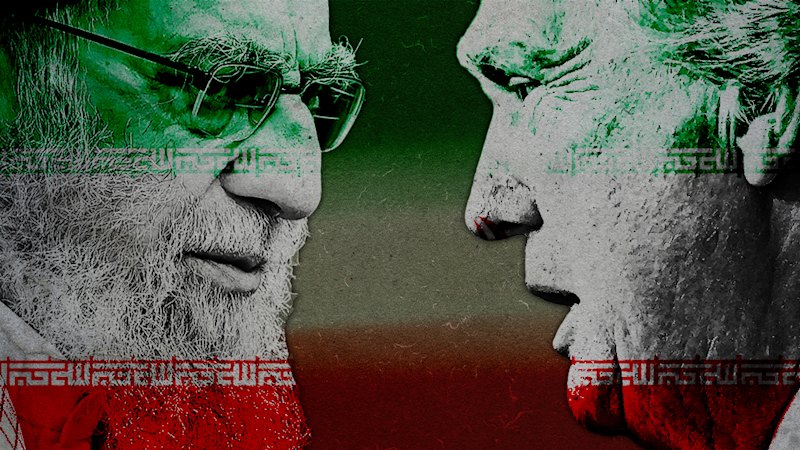
The return of a Trump administration to the White House necessitates an immediate audit of the "Maximum Pressure" framework, moving beyond political rhetoric toward a functional analysis of economic and kinetic levers. The primary objective of this doctrine is not necessarily regime change, but rather the total degradation of the Iranian state's capacity to fund regional proxies and advance its nuclear breakout timeline. To understand the trajectory of this policy, one must evaluate the intersection of three specific variables: global oil market elasticity, the efficacy of "secondary sanctions" on Chinese financial institutions, and the threshold for Iranian asymmetric retaliation.
The Architecture of Economic Attrition
The initial Maximum Pressure campaign (2018–2020) demonstrated that the United States can effectively de-link a mid-sized economy from the global financial system using the dominance of the US Dollar. However, the 2026 context differs from 2018 due to the maturation of "sanction-evasion ecosystems" involving "ghost fleets" and non-Western payment rails. Don't forget to check out our recent coverage on this related article.
A structural analysis of Iran’s current fiscal health reveals a reliance on three revenue streams that the next administration will likely target with surgical intent:
- Illicit Hydrocarbon Exports: Iran currently exports significant volumes of crude, primarily to "teapot" refineries in China. Disrupting this requires a shift from targeting the vessels themselves to targeting the regional banks and insurance entities that facilitate the transactions.
- Petrochemical Derivatives: Unlike crude oil, which is easier to track via satellite and AIS (Automatic Identification System) data, petrochemicals are more easily blended and obscured in global supply chains.
- The Shadow Budget: Significant portions of the Iranian economy are controlled by the Islamic Revolutionary Guard Corps (IRGC). This creates an environment where economic pressure on the civilian population does not linearly translate to a reduction in military or proxy spending.
The cost function of this strategy is the potential for an energy price spike. If the US removes 1.5 million barrels per day of Iranian supply without a corresponding increase from OPEC+ or domestic shale production, the resulting inflationary pressure becomes a domestic political liability. Therefore, the first step of any renewed campaign is a diplomatic synchronization with Riyadh to ensure spare capacity is ready to be deployed the moment enforcement tightens. To read more about the history of this, Al Jazeera provides an excellent breakdown.
Nuclear Breakout and the Kinetic Threshold
The most critical delta between 2020 and 2026 is the advancement of the Iranian nuclear program. With enrichment levels reaching 60% and higher, the "breakout time"—the duration required to produce enough weapons-grade uranium for a single device—has shrunk from months to days. This creates a binary decision matrix for US planners.
- Variable A: Continued Containment. This relies on the assumption that Iran views the possession of a weapon as a "suicide pill" that would invite immediate destruction.
- Variable B: Pre-emptive Degradation. This involves physical strikes on hardening facilities like Fordow or Natanz.
The limitation of Variable B is the "Knowledge Problem." While you can destroy centrifuges and stockpiles, you cannot bomb the technical expertise acquired by Iranian scientists over the last decade. A kinetic strike might delay the program by 18 to 36 months but would almost certainly trigger a total withdrawal from the Non-Proliferation Treaty (NPT), removing the last vestiges of international monitoring.
The Proxy War Equilibrium
Iran’s "Forward Defense" strategy utilizes an integrated network of non-state actors—the "Axis of Resistance"—to project power without engaging in direct state-to-state conflict. The Trump administration’s previous approach was characterized by the decapitation of leadership (e.g., the 2020 strike on Qasem Soleimani). While this caused a temporary command-and-control vacuum, the structural resilience of these groups remains high.
To neutralize this network, the US must address the Cost-to-Benefit Ratio of Proxy Warfare:
- Asymmetric Advantage: It costs a few thousand dollars to manufacture a one-way attack drone (OWA-UAV) and millions of dollars for an Aegis-equipped destroyer to intercept it with a standard missile. This cost-imbalance favors Iran in a prolonged war of attrition in the Red Sea or the Persian Gulf.
- Logistical Chokepoints: The Iranian land bridge through Iraq and Syria remains the primary artery for hardware transfer. A renewed strategy would likely prioritize the permanent disruption of these corridors through enhanced presence at the Al-Tanf garrison and increased support for regional partners.
The risk of "miscalculation" is often cited by analysts, but this is a vague term. In precise terms, the risk is a Reaction-Loop Escalation. If the US targets an IRGC facility in response to a proxy attack, and Iran responds by mining the Strait of Hormuz, the global economic impact creates a "feedback loop" where the US may be forced into an escalation it did not originally budget for in its strategic planning.
Chinese Cooperation and the Sanctions Ceiling
The efficacy of US policy is increasingly dependent on the "China Variable." Beijing is the primary buyer of Iranian oil and a provider of dual-use technology. In a period of heightened US-China competition, Beijing has little incentive to assist Washington in stabilizing the Middle East on American terms.
The US has two primary levers to influence Chinese behavior regarding Iran:
- Financial Decoupling Threats: Threatening to cut off major Chinese banks from the SWIFT system. This is a "nuclear option" in financial terms and carries immense risk to the global economy.
- Trade-Off Negotiations: Offering concessions on South China Sea issues or semiconductor export controls in exchange for Iranian compliance. This is unlikely given the current hawkish consensus in Washington.
Without Chinese cooperation, sanctions can reduce Iran’s growth but cannot achieve the "economic collapse" required to force a fundamental shift in the regime's strategic DNA.
Tactical Realignment of Regional Alliances
The Abraham Accords represented a shift from a "Palestinian-centric" Middle East policy to an "Iran-centric" security architecture. The next phase of this strategy involves the formalization of an Integrated Air and Missile Defense (IAMD) system between Israel, the Gulf States, and US assets.
This system seeks to solve the "Saturation Problem"—where an adversary launches more projectiles than a defense system can handle simultaneously. By sharing radar data and interceptor responsibilities, the regional bloc can nullify the primary threat of Iran’s ballistic missile arsenal. This reduces Iran’s leverage, as its conventional deterrent (the threat of leveling regional cities) becomes less credible.
The Strategic Play
The most effective path forward is a Multidimensional Decoupling Strategy. The United States should not seek a "Grand Bargain," as the ideological gap between Washington and Tehran is currently unbridgeable. Instead, the focus must be on Resource Denudation.
This involves:
- Implementing a "Zero-Tolerance" enforcement policy on all Iranian oil tankers, utilizing the US Coast Guard and Navy to seize or turn back vessels in international waters.
- Expanding the definition of "Terrorist Organization" to include all financial entities associated with the IRGC, triggering immediate asset freezes globally.
- Deploying advanced electronic warfare assets to the region to disrupt the GPS and guidance systems of Iranian drones before they leave their launch sites.
The objective is to move Iran from a position of "Active Expansion" to "Internal Preservation." When the cost of maintaining the proxy network exceeds the total liquid assets of the state, the regime will be forced to choose between regional influence and domestic survival. This is the only point at which a new, more restrictive nuclear and regional agreement becomes a possibility.
Acknowledge that the window for a non-kinetic resolution is closing. If enrichment reaches 90%, the "Maximum Pressure" phase ends, and the "Pre-emptive Strike" phase begins. The strategy must be executed with a speed that outpaces the spinning of the centrifuges in Natanz.
The immediate move is to signal a credible military threat through the deployment of heavy bombers to Diego Garcia while simultaneously issuing a final financial ultimatum to the primary clearing banks in Beijing. Power in this theater is not measured by the willingness to talk, but by the demonstrated capacity to make the status quo unaffordable for the Iranian leadership.


