The decline of United Kingdom pollinator populations is frequently framed as a sentimental environmental loss, yet it is fundamentally a systemic supply chain failure within agricultural economics. Insects—specifically wild bees, hoverflies, and managed honeybees—function as uncompensated capital inputs in food production. The structural collapse of these populations directly threatens crop yields, agricultural price stability, and ecosystem resilience. Public awareness campaigns, such as World Bee Day, often fail to catalyze systemic change because they treat a complex ecological bottleneck as a simple awareness problem. To reverse this trajectory, intervention must shift from generalized conservation rhetoric to targeted, data-driven resource allocation.
The Triple Bottleneck of Pollinator Attrition
The reduction in UK pollinator density is driven by three interconnected variables that operate as a compounding negative feedback loop. Treating any of these variables in isolation yields sub-optimal conservation returns.
1. Landscape Homogenization and Nutritional Deficits
The conversion of diverse agricultural landscapes into monocultures has eliminated the continuous floral resources required by pollinators.
Pollinators require a diverse diet of pollen and nectar to maintain immune function. Monochromatic agricultural systems create severe nutritional bottlenecks. For example, a vast field of oilseed rape provides a massive influx of nectar for a brief multi-week window, followed by an absolute nutritional desert for the remainder of the foraging season. This seasonal deficit causes acute colony starvation and reduces larval survival rates.
2. Chemical Exposure and Sub-Lethal Neurotoxicity
The application of synthetic crop protection products introduces chemical stressors into the ecosystem. While regulatory frameworks focus heavily on immediate mortality rates, the primary driver of population collapse is sub-lethal neurotoxicity. Low-dose exposure to systemic pesticides impairs the cognitive architecture of bees.
- Navigation Failure: Contaminated foragers lose the ability to navigate back to the nest, effectively removing productive individuals from the workforce.
- Foraging Inefficiency: Affected insects show a reduced learning capacity, requiring more time to locate and extract resources from floral hosts.
- Reproductive Suppression: Sub-lethal chemical loads decrease queen production and drone viability, capping the long-term growth potential of colonies.
3. Thermal Stress and Phenological Mismatch
Climate volatility disrupts the temporal synchronization between pollinators and the plants they rely on. Rising mean spring temperatures cause flora to bloom earlier in the calendar year. However, insect emergence is governed by a distinct set of environmental cues, such as soil temperature and photoperiod. When plants bloom before insects emerge, a phenological mismatch occurs. Plants miss their primary pollination window, resulting in lower seed sets, while emerging insects encounter a depleted foraging landscape, causing immediate population drops.
The Economic Cost Function of Pollination Failure
The depreciation of wild pollinator assets cannot be externalized indefinitely. Agriculture relies on a mix of managed pollination services (primarily Apis mellifera) and wild assemblages (bumblebees and solitary bees). Relying exclusively on managed honeybees to offset the loss of wild pollinators is a flawed economic strategy due to structural inefficiencies in pollination mechanics.
Total Pollination Economic Value = V_m (E_m * D_m) + V_w (E_w * D_w)
Where:
V = Market value of crop dependent on pollination
E = Transfer efficiency per flower visit
D = Population density of pollinators
m, w = Managed and wild variants respectively
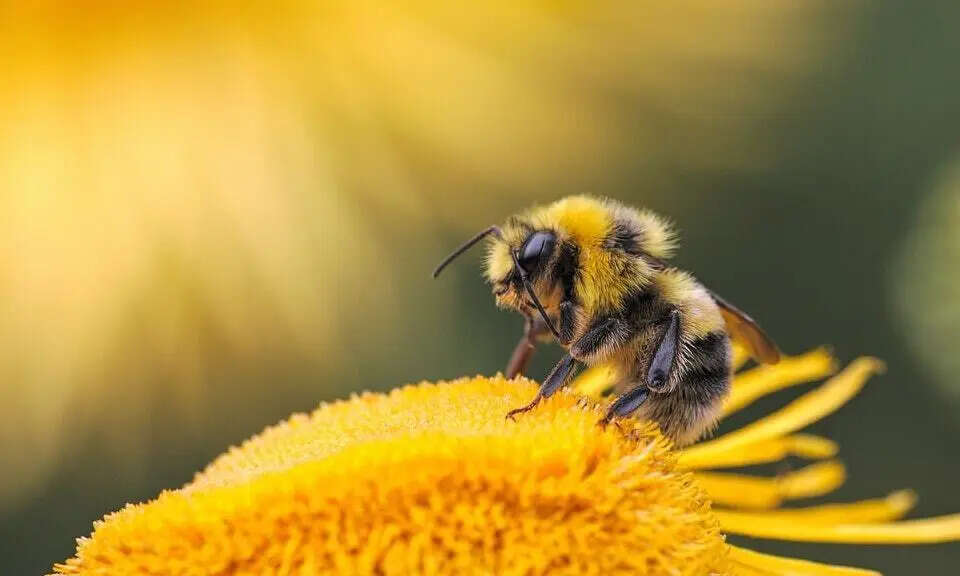
Wild pollinators are significantly more efficient at pollen transfer per flower visit than managed honeybees for many high-value crops. Bumblebees utilize sonication, or buzz pollination, to release tightly held pollen from specific floral structures—a capability honeybees lack.
If wild populations continue to contract, the agricultural sector faces a severe escalation in production costs. Farmers must either lease managed hives at inflated market rates or invest in mechanical, labor-intensive artificial pollination methods. This increases the marginal cost of production, which translates directly into food price inflation at the retail level.
High-Yield Strategic Interventions for Land Managers
Reversing pollinator decline requires moving beyond residential gardening initiatives toward macro-scale interventions across agricultural and industrial land holdings.
Optimizing Non-Crop Foraging Infrastructure
Landowners must transition from passive land abandonment to active landscape engineering. Dedicating marginal field margins to wild seed mixes is highly effective, but the composition of these margins must be mathematically optimized for seasonal availability.
- Phase 1: Species Selection for Continuous Bloom. Seed mixes must feature a minimum of 15 distinct floral species with overlapping flowering phenologies. The objective is an unbroken nectar and pollen supply chain spanning from March through October.
- Phase 2: Spatial Distribution and Flight Radii. Solitary bees have a restricted foraging radius, often limited to a 500-meter zone around their nesting sites. Foraging habitats must be deployed as interconnected corridors rather than isolated patches, ensuring no point in an agricultural matrix sits more than 250 meters from a diverse floral source.
- Phase 3: Structural Complexity. Incorporate a mix of annual and perennial species alongside deadwood and bare earth patches to provide simultaneous nesting substrates and nutritional resources.
Precision Agronomy and Chemical Risk Mitigation
Eliminating crop protection products entirely is economically non-viable under current yield requirements. The realistic solution is a strict minimization of the exposure matrix through precision application technologies.
- Temporal Decoupling: Enforce application protocols that limit spraying to hours of darkness when pollinators are inactive within nests or hives. This allows volatile chemical components to dissipate before insects begin foraging at dawn.
- Targeted Delivery Systems: Transition from broad-scale broadcast spraying to ultra-localized droplet application guided by machine-learning vision systems. This restricts chemical placement strictly to target weed or pest populations, minimizing drift into non-crop field margins.
Limitations and Uncertainties of Current Models
Any strategy designed to mitigate pollinator loss must acknowledge the significant data gaps within current ecological models.
First, standard monitoring protocols rely heavily on citizen science data and sporadic opportunistic sightings. This creates a structural bias toward highly populated geographic regions and large, easily identifiable insect species, such as distinct bumblebees. Cryptic species—including hundreds of varieties of solitary bees and hoverflies that perform significant pollination work—remain under-monitored, obscuring their specific decline trajectories.
Second, the synergistic effects of multiple stressors remain poorly quantified. While toxicological profiles exist for individual chemical compounds under laboratory conditions, real-world interactions between multiple low-dose pesticides, parasitic loads (Varroa destructor mites, Nosema fungi), and nutritional stress are not fully understood. A population may tolerate a single stressor effectively but collapse rapidly when exposed to a minor secondary variable.
Operational Roadmap for Industrial and Public Landowners
To convert ecological theory into measurable conservation assets, institutional land managers must execute a structured, audited deployment plan across their portfolios.
[Site Audit & Baseline Assessment]
              │
              ▼
[Identify Structural & Thermal Niches]
              │
              ▼
[Deploy Region-Specific Seed Matrix]
              │
              ▼
[Implement Automated Bioacoustic Monitoring]
- Conduct a Spatial Resource Audit: Map all land holdings to identify existing foraging gaps and areas of high chemical exposure. Classify zones based on proximity to intensive agricultural operations.
- Design Region-Specific Seed Matrices: Source native seed stock tailored to the local climate and soil profile. Avoid commercial mixes containing non-native or invasive cultivars that offer low-quality nectar rewards.
- Establish Nesting Infrastructure: Deploy localized nesting substrates alongside foraging corridors. This includes maintaining south-facing banks of undisturbed earth for mining bees, and installing durable, drill-hole structures for cavity-nesting species.
- Deploy Automated Monitoring Arrays: Replace manual counting with automated bioacoustic or optical sensor arrays at key foraging hubs. These systems continuously record visitor frequency and morphospecies distribution, generating real-time datasets to evaluate the financial return on conservation spending.