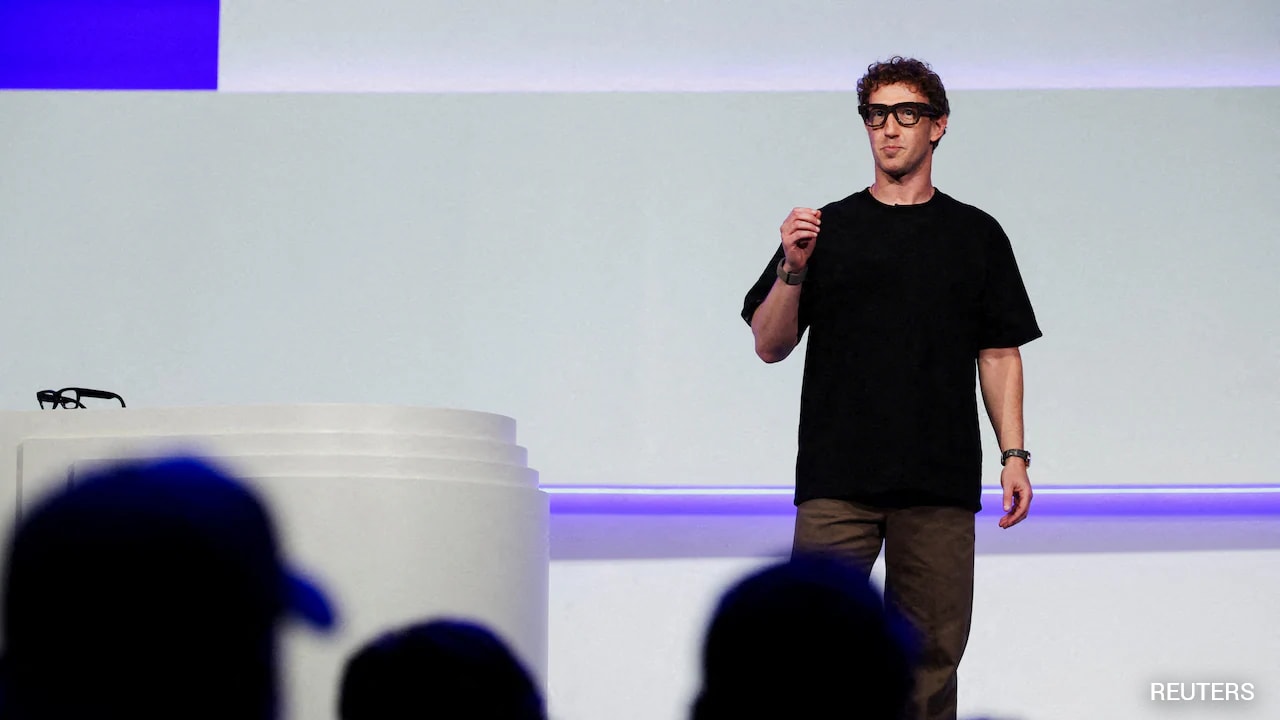
Hardware companies rarely admit when a flagship feature becomes a corporate liability. Meta spent years pushing the narrative that outward-facing cameras on everyday spectacles represented the vanguard of personal computing, scaling shipments past seven million units for its camera-equipped Ray-Ban models. Then reality set in. Bystanders flatly rejected being filmed without explicit consent. Venues, schools, and public establishments began banning the frames outright. Antagonistic nicknames stuck online, branding the tech with a toxic reputation. Behind closed doors, product planners had to recalibrate. Meta engineered a camera-free variant internally known as Luna, stripping out the optical sensor entirely while doubling down on a dense array of six microphones, open-air directional speakers, and direct voice hooks into artificial intelligence assistants.
The Anatomy of a Hardware Pivot
This strategic pivot exposes a fundamental truth about wearable hardware. People want ambient intelligence without the social friction of a lens pointed at their neighbors. When a product invites hostility from strangers on the street, growth inevitably hits a brick wall. Meta understood that doubling down purely on visual recording would trigger regulatory crackdowns and social ostracization that no amount of marketing spend could scrub clean. By removing the camera, the company traded away the capability to capture point-of-view photographs and execute visual searches, choosing instead to preserve the core utility that everyday users actually enjoyed: hands-free audio, phone calls, and conversational voice interaction with Meta AI.
The friction was entirely predictable from day one. The second-generation Ray-Ban Meta glasses carried an inconspicuous white LED indicator designed to signal when recording was active. That tiny light proved inadequate in practice. Critics, privacy advocates, and everyday bystanders pointed out that the LED was easily missed, obscured by fingers, or ignored altogether. Independent developers even released scanner applications like ZuckOff and Nearby Glasses to help people detect active smart frames in crowded rooms. Lawsuits and investigative reports detailing internal handling of user-submitted video clips further eroded public goodwill. When a wearable device makes everyone in a coffee shop or subway car wonder if they are being documented for internet content, adoption runs into fierce cultural resistance. Meta needed a valve to release that pressure before regulators stepped in.
Engineering Trade-Offs in Audio-First Design
Building a pair of smart glasses without a camera changes the engineering equation completely. Without image sensors, glass elements, and heavy circuit boards dedicated to optical processing, overall weight drops significantly. The reported Luna hardware achieved a much lighter profile, utilizing slimmer temple arms and classic frame silhouettes like Clubmaster and Burbank. Battery life benefits from the omission as well, stretching operational endurance further into the day without requiring bulky power cells. Yet, stripping the lens does not mean all privacy questions vanish into thin air. An array of six microphones continuously listens for wake words and channels audio inputs straight to cloud-backed artificial intelligence models. Ambient audio collection introduces its own complex web of governance challenges regarding data retention, processing consent, and bystander audio capture.
The market for smart eyewear is officially fracturing along ideological lines. On one side sits the visual capture model, designed for creators, early adopters, and users who prioritize point-of-view photography over social harmony. On the other side sits the audio-first wearable, targeting office workers, commuters, and consumers who want voice assistance without the stigma of an onboard lens. Retail pricing and product positioning reflect this divergence. Consumers no longer buy into a single monolithic category called smart glasses. They choose between an active surveillance tool disguised as fashion and a passive audio accessory that stays socially invisible.
Fracturing the Eyewear Market
Eyewear giant EssilorLuxottica and Meta realized that forcing one product archetype to satisfy two entirely contradictory consumer desires was a losing battle. Traditional glasses wearers are fiercely protective of social norms. They expect eyewear to be non-threatening. When an accessory crosses the line into stealth recording, it alienates the very mainstream demographic required to scale hardware past niche tech enthusiasts. By introducing a clean acoustic alternative, Meta protects its manufacturing partnership and broadens its total addressable market. Schools that banned the original hardware may tolerate a frame that only listens for voice commands, provided users understand how audio data flows through the system.
The hardware trade-offs extend deep into the operating mechanics of voice agents. With the introduction of Muse alongside Meta AI, the assistant needs a reliable pipeline of natural language input. In a camera-free frame, voice becomes the sole gateway. That places an immense burden on microphone quality and acoustic beamforming. Six microphones allow the system to isolate speech from background noise in windy streets or crowded train stations. Without visual cues to provide context, the AI must rely entirely on verbal prompts and historical conversational state to understand user intent. It is a leaner, more constrained interaction model, but one that avoids the heavy privacy baggage associated with constant optical monitoring.
The Lessons of Google Glass and Mass Adoption
Google Glass learned this lesson the hard way over a decade ago. Early pioneers wearing optical head-mounted displays earned the derogatory moniker "Glassholes" because society rejected the implicit asymmetry of a camera permanently aimed at public spaces. Meta managed to achieve commercial scale with Ray-Ban branding and a sleeker form factor, but the core cultural friction never truly disappeared. It simply evolved. The transition toward audio-only smart frames represents a calculated retreat from visual surveillance back into the safer territory of wearable audio. It acknowledges that consumers will tolerate a computer in their ears long before they tolerate an uninvited camera on their face.
Manufacturing scale also plays a quiet role in this pivot. Camera modules require precise alignment, expensive image signal processors, and stringent thermal management. Dropping the optics slashes bill-of-materials costs, allowing manufacturers healthier margins or more accessible price points. For mass-market adoption, price sensitivity remains a major hurdle. If an audio-only variant can hit store shelves at a lower cost than its camera-equipped sibling, it removes a financial barrier for buyers who care about music and AI chat but despise the social friction of photography.
Regulatory Pressures and Institutional Doors
Regulatory scrutiny continues to cast a long shadow over wearable technology. European data protection authorities and global privacy watchdogs have repeatedly scrutinized continuous recording devices in public spaces. By offering an alternative that lacks image capture capabilities, hardware manufacturers can present a compliance-friendly option to enterprise buyers and public institutions where cameras are strictly prohibited. Hospitals, secure manufacturing facilities, and corporate offices that barred smart glasses at the door might finally open their gates to audio-only form factors.
The philosophical shift in product design cannot be overstated. For years, tech executives argued that future computers would possess eyes to see everything the user sees. That vision assumed humanity was willing to trade social privacy for ambient convenience. The marketplace proved otherwise. People want the intelligence without the optics. They want the voice assistant in their ear without being cast as involuntary extras in someone else's social media feed. Luna and its retail incarnations mark a sober recognition of human boundaries.
Consumer Psychology and the Boundaries of Vision
Consumer psychology around wearables reveals a deep-seated anxiety regarding passive surveillance. When smartphones entered pockets, society adapted because the device required a deliberate gesture to film. Smart eyewear short-circuits that social contract. Because the lens sits at eye level on a person's face, bystanders never know if they are subjects in a live stream or training data for a facial recognition model. Removing the camera eliminates that specific vector of paranoia. It returns the glasses to their historical function as passive fashion accessories rather than active recording terminals.
Software architectures must adapt to this audio-centric reality. Without visual input streams, developers cannot rely on multimodal AI features that interpret a user's physical surroundings through computer vision. Instead, the focus shifts entirely to contextual audio understanding, environmental sound processing, and rapid voice synthesis. This requires massive computational efficiency on the edge and in the cloud to ensure sub-second response times. The engineering challenge moves from pixels to decibels, demanding sophisticated filtering algorithms that can distinguish a user's whispered command from the din of urban transit.
Retail distribution channels will test whether the public actually distinguishes between camera-equipped and camera-free frames. Opticians and retail staff will need to explain why two similar-looking pairs of Ray-Ban frames carry vastly different privacy implications and price points. If marketing missteps occur, consumer confusion could stall adoption. Yet, the existence of a camera-free option provides a vital escape hatch for retail partners who feared backlash from customers unwilling to browse stores wearing recording equipment.
Technology succeeds when it integrates quietly into existing social structures without demanding constant defensive vigilance from the public. Meta learned that optics create an immediate barrier to mainstream acceptance. By scaling back to voice and audio, the company is betting that human speech is a far more acceptable interface than an unblinking glass eye. Whether consumers embrace this compromise or demand even tighter data safeguards will dictate whether audio-only smart frames become standard utility or remain an expensive novelty.