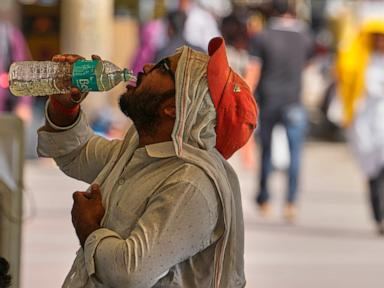
Extreme heat waves do not merely create temporary discomfort; they act as a regressive economic tax that systematically degrades labor productivity, fractures supply chains, and forces a capital-intensive reconfiguration of informal labor markets. When ambient temperatures in northern and central India breach the $45^\circ\text{C}$ ($113^\circ\text{F}$) threshold, the traditional daytime economy undergoes a forced bimodal shift. Economic activity does not cease; instead, it fractures into a high-risk nocturnal cycle or halts entirely, exposing deep structural vulnerabilities in capital allocation and labor welfare.
Understanding this transition requires moving past surface-level reportage of empty roads and quiet markets. It demands a rigorous analysis of the thermodynamic limits of human labor, the economic cost of shifting production schedules to the night, and the systemic capital bottlenecks that prevent long-term adaptation.
The Thermodynamic Limits of Labor: The Wet-Bulb Cost Function
The primary constraint on economic output during an extreme thermal event is the biological limit of human heat dissipation. In the informal economy—which employs over 80% of India's workforce across agriculture, construction, and retail—labor is highly exposed to ambient environmental conditions.
The core metric governing this constraint is the Wet-Bulb Globe Temperature (WBGT), which integrates temperature, humidity, wind speed, and solar radiation. When WBGT exceeds $32^\circ\text{C}$ ($89.6^\circ\text{F}$), the human body cannot cool itself effectively through the evaporation of sweat during sustained physical exertion. This introduces a strict thermodynamic limit to the labor supply curve.
The Velocity of Productivity Decay
As ambient temperatures rise from $35^\circ\text{C}$ to $45^\circ\text{C}$, labor productivity does not decline linearly. It follows an exponential decay curve driven by three distinct operational bottlenecks:
- The Metabolic Overhead: To prevent heat stroke, workers must increase rest-to-work ratios. At $40^\circ\text{C}$, a manual laborer requires approximately 30 to 45 minutes of rest for every 15 minutes of highly intensive work to maintain safe core body temperatures. This represents a structural reduction of 50% to 75% in effective labor hours per worker.
- Cognitive Degradation and Error Rates: Thermal stress impairs executive function, spatial awareness, and motor skills. In agricultural harvesting or urban construction, this manifests as increased equipment damage, higher rates of material waste, and a spike in workplace injuries that completely erases marginal gains in output.
- The Hydration Logistics Tax: Sustaining labor at extreme temperatures requires significant metabolic inputs. A worker requires between 5 to 10 liters of water per shift, alongside electrolyte replenishment. In rural or informal settings, the logistical burden and financial cost of securing this clean water supply acts as a direct tax on the worker's daily wage.
The Nocturnal Shift: Reconfiguring the Agricultural Supply Chain
Faced with a unviable daytime climate, agricultural communities across states like Uttar Pradesh, Punjab, and Bihar are executing a structural pivot: shifting harvesting, tilling, and planting operations entirely to the nocturnal window (10:00 PM to 5:00 AM). While this addresses the immediate thermal risk, it introduces a complex array of operational friction points and hidden costs that suppress net margins.
[Daytime Thermal Threshold Breached]
       │
       ▼
[Forced Shift to Nocturnal Labor]
       │
       ├──► Capital Premium: Cost of Mobile Lighting & Power
       ├──► Yield Depreciation: Reduced Visibility & Harvest Errors
       └──► Labor Risk: Nocturnal Hazards (Snares, Pests, Accidents)
The Capital Premium of Night Operations
The agricultural sector is structurally optimized for solar-synchronized workflows. Shifting to nocturnal operations requires an immediate injection of capital to convert fields into illuminated workspaces. Farmers must procure portable LED lighting systems, diesel generators, or high-capacity battery packs.
For smallholders operating on subsistence margins, this capital expenditure is deeply distorting. The cost of fuel for generators or the rental fees for lighting rigs directly cannibalizes the capital allocated for high-quality seeds, fertilizers, or mechanized equipment in the subsequent planting cycle.
Yield Depreciation and Sorting Inefficiencies
The human eye, even supplemented by low-cost LED illumination, cannot match the sorting and grading accuracy achieved under full daylight. During nocturnal harvests, several inefficiencies emerge:
- Imprecise Selection: Workers struggle to differentiate between optimal ripeness and early-stage spoilage. This leads to the premature harvesting of under-developed crops or the inclusion of diseased yield in the bulk collection.
- Increased Mechanical Loss: Operating heavy machinery, such as combine harvesters or tractors, under limited visibility increases the frequency of structural damage to the crops during the cutting phase.
- Post-Harvest Handling Delays: Sorting and packing executed in poorly lit environments take up to 40% longer per metric ton, creating a bottleneck that delays the transport of perishable goods to regional distribution hubs.
The Nocturnal Hazard Profile
The shift to nighttime labor introduces non-thermal physical risks that are absent during daytime operations. Agricultural fields become hostile environments at night due to the activity of venomous fauna (such as vipers and cobras) and the inability to navigate uneven terrain safely, leading to higher rates of fractures and severe lacerations. Because rural healthcare infrastructure is heavily constrained outside of standard business hours, the economic impact of a nighttime injury is amplified by delayed emergency medical intervention.
The Retail and Market Congestion Squeeze
In urban and semi-urban centers, traditional open-air marketplaces (mandis) serve as the critical nexus for food distribution and informal retail. Extreme heat waves distort the consumer demand curve and compress the operational window of these markets into a brief, highly volatile evening period.
The Perishable Velocity Problem
For retail vendors dealing in fresh produce, dairy, and meat, ambient temperatures of $45^\circ\text{C}$ create an existential inventory crisis. Without cold-chain infrastructure, the shelf life of leafy green vegetables drops from days to hours.
To mitigate total inventory loss, vendors are forced into a destructive pricing paradox. During the peak heat of the day, when foot traffic is near zero, they must heavily discount goods to liquidate stock before thermal spoilage occurs. By evening, when consumers finally emerge, the available high-quality stock is depleted, leading to artificial scarcity and localized price volatility.
Spatiotemporal Micro-Congestion
When the functional business day is compressed from twelve hours down to a three-hour window after sunset (typically 7:00 PM to 10:00 PM), the sudden concentration of human and vehicular traffic paralyzes local infrastructure.
Compressed Market Window (7 PM - 10 PM)
  │
  ├─► Hyper-localized traffic gridlock (Logistical delays)
  ├─► Surge pricing from transport providers (Increased overhead)
  └─► Compressed consumer decision window (Lower transaction volumes)
This spatiotemporal congestion creates a profound logistics bottleneck. Wholesalers, delivery vehicles, and retail buyers are trapped in hyper-localized traffic gridlocks within market districts. The time required to transport goods across a municipality doubles, accelerating the degradation of temperature-sensitive inventory and driving up surge-pricing from local transport providers. The compressed time frame also limits total consumer transaction volumes; buyers prioritize essential goods and eliminate discretionary browsing, causing a sharp contraction in secondary retail revenues.
The Macro Economic Friction: Capital Misallocation and Adaptation Bottlenecks
The persistent occurrence of these extreme thermal anomalies reveals a deeper structural failure: the lack of systemic capital allocation toward climate resilience. The ad-hoc adaptations currently observed—such as working at night or abandoning daytime market stalls—are defensive, survivalist tactics rather than sustainable, value-generating strategies.
The Cold-Chain Infrastructure Deficit
The ultimate solution to heat-induced market volatility is a continuous, unbroken cold chain from farm gate to urban consumer. However, the deployment of this infrastructure faces a massive capital bottleneck.
Refrigerated transport, solar-powered cold storage units, and climate-controlled sorting facilities require predictable, high-voltage electrical grids. In regions experiencing acute heat waves, the power grid is already destabilized by surging demand for residential and commercial cooling. The resulting rolling blackouts or voltage fluctuations make industrial refrigeration highly capital-intensive, as facilities must rely on expensive, carbon-heavy diesel backup generators.
The Financial Exclusion of Vulnerable Workers
The informal nature of the affected sectors prevents access to formal adaptation capital. A street vendor or a smallholder farmer cannot easily secure a low-interest bank loan to purchase a solar-powered cooling cart or mechanized night-vision harvesting aids.
They are systematically excluded due to a lack of formal collateral and verifiable cash flows. Instead, they rely on informal credit networks, which charge usurious interest rates. This dynamics traps the worker in a cycle of debt: they borrow capital at high rates to survive the heat wave, only to spend the cooler months servicing the interest, leaving zero surplus capital to invest in permanent structural resilience.
Actionable Strategy for Industrial Agritech and Supply Chain Logistics
To maintain operational continuity and preserve margin integrity during extreme thermal disruptions, enterprise-scale agribusinesses and regional logistics networks must transition from reactive scheduling to proactive, framework-driven adaptation.
Deploy Distributed Micro-Cold Hubs
Instead of relying on massive, centralized cold-storage facilities that require lengthy transport times through congested, high-heat urban corridors, firms must invest in a decentralized network of solar-powered micro-cooling hubs located directly at the primary rural collection points.
These units should utilize thermal energy storage (such as phase-change materials) to maintain internal temperatures during grid outages without relying on diesel fuel. By shortening the time between harvest and initial cooling to under 60 minutes, firms can structurally halt the velocity of spoilage and preserve product weight and quality before long-haul transport.
Implement Algorithmically Managed Hybrid Shifts
Relying entirely on nocturnal labor introduces unacceptable safety risks and yield depreciation. Organizations should implement a data-driven, three-tier hybrid shift matrix based on real-time WBGT forecasting:
| Shift Type | Time Window | Authorized Activities | Mandatory Mitigation Protocols |
|---|---|---|---|
| Thermal Dawn Shift | 04:00 AM – 09:30 AM | Precision harvesting, mechanized tilling, heavy logistical loading | Mandatory pre-hydration protocols; automated asset tracking to monitor operator fatigue. |
| Midday Static Shift | 09:30 AM – 04:30 PM | Low-exertion sorting in shaded/cooled hubs, indoor equipment maintenance | Absolute cessation of outdoor manual labor when WBGT breaches $32^\circ\text{C}$. |
| Thermal Dusk Shift | 04:30 PM – 09:00 PM | Bulk transport, primary packaging, non-precision land preparation | High-visibility gear mandates; deployment of mobile, field-ready hydration and electrolyte stations. |
Structured Transition to Mechanized Nocturnal Operations
For operations that must occur at night to preserve yield, the deployment of capital must be highly targeted. Rather than relying on inefficient, manual handheld lighting, agribusinesses should outfit existing tractor fleets with automated, high-intensity LED light bars and infrared sensors.
Integrating forward-looking infrared (FLIR) cameras onto harvesting equipment allows operators to identify thermal signatures of fauna or ground obstructions in absolute darkness. This structural upgrade removes the visual acuity bottleneck, lowers the error rate of nocturnal sorting to daylight levels, and drastically reduces the injury liability profile of the workforce.


