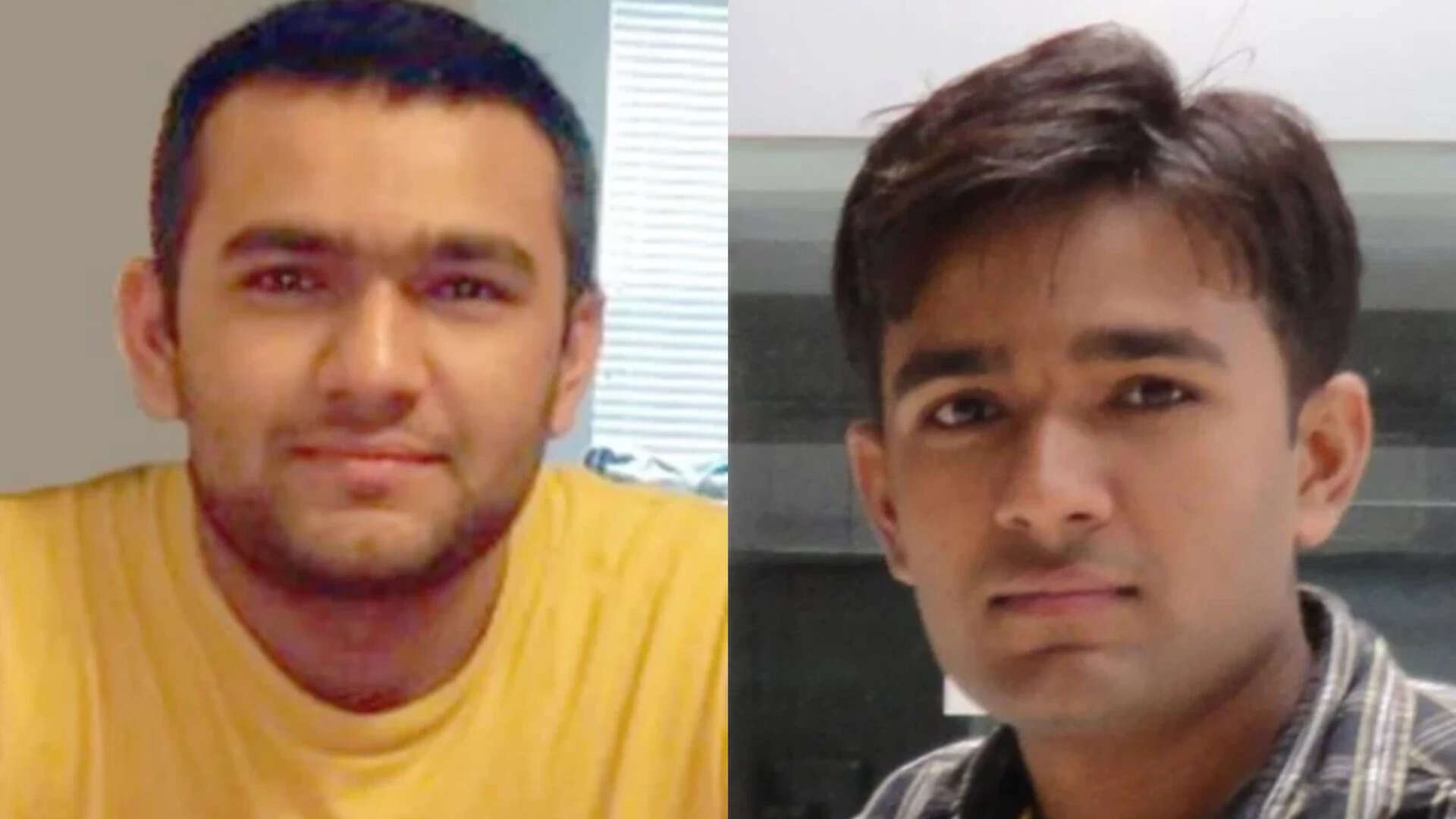
The FBI just upped the ante to $1 million for information leading to the arrest of Bhadreshkumar Chetanbhai Patel. This isn't just another addition to the Ten Most Wanted Fugitives list; it is a public admission of a decade-long investigative stall. In 2015, Patel allegedly murdered his wife, Palak, in a Dunkin’ Donuts kitchen in Hanover, Maryland. Since then, he has effectively vanished, leaving behind a trail that went cold almost the moment he stepped out of a hotel shuttle at Newark Liberty International Airport. The massive reward increase signals a desperate need to rattle the cages of anyone who might be shielding a man who has managed to outrun the most sophisticated surveillance apparatus on the planet.
The Midnight Shift That Ended in Blood
The facts of the night of April 12, 2015, are chillingly clinical. Bhadreshkumar and Palak Patel were working the night shift at a Dunkin’ Donuts. Surveillance footage—the last known recording of the couple together—shows them disappearing behind a rack of supplies. Investigators say Bhadreshkumar beat and stabbed his 21-year-old wife to death while customers were still in the front of the store. He didn't flee immediately. He stayed long enough to turn off the ovens, a detail that points to a disturbing level of composure.
By the time Palak’s body was found by an officer hours later, Bhadreshkumar was gone. He didn't just run; he executed a textbook escape. He went to his apartment, grabbed some belongings, and took a taxi to a hotel near Newark. When the police finally tracked his movement to that hotel, they found he had checked out and taken a shuttle to the airport. That was the last confirmed sighting. The trail ended at the terminal doors.
The Mechanics of a Disappearance
How does a man with no known history of high-level criminal tradecraft disappear so completely? To understand the Patel case, you have to look at the logistical gaps in border security and the power of "unvetted" networks. Patel was in the United States on a visa that had expired just a month before the murder. He was facing deportation. This suggests he already understood the precarious nature of living under the radar.
Most fugitives get caught because they cannot let go of their old lives. They call their mothers. They log into their bank accounts. They check their social media. Patel did none of this. His disappearance suggests a disciplined adherence to "dark living." If he stayed in the United States, he likely moved into a community where cash is the only currency and identification is rarely checked. If he fled the country, he did so through a "backdoor" exit—likely a land crossing into Canada or Mexico using fraudulent documents.
The FBI’s decision to move the reward from $100,000 to $1 million is a calculated move to break that discipline. In underground economies, $100,000 is a lot of money, but it might not be enough to risk the consequences of "snitching." A million dollars, however, is life-altering wealth. It turns a protector into a predator.
The Failure of Modern Surveillance
We live in an era of facial recognition and ubiquitous digital footprints. Yet, Patel’s case exposes the massive blind spots in this net. If he isn't using a cell phone registered in his name and isn't working a job that requires a Social Security number, he is invisible to the algorithms.
The investigative community has long debated whether Patel had help. A 24-year-old on a lapsed visa doesn't typically have the resources to vanish without a trace unless someone provided a vehicle, a safe house, or a set of high-quality forged papers. The FBI is banking on the idea that the person who helped him then is no longer loyal to him now. Time erodes alliances. Greed erodes them faster.
The International Connection and the Identity Swap
There is a strong possibility that Patel returned to India or moved to a third country under a completely different identity. The global nature of the Gujarati diaspora provides a vast network where a man who speaks the language and knows the customs could easily blend in.
Why the Search is Harder Than It Looks
- Physical Change: In ten years, a man’s appearance can shift radically. Weight gain, hair loss, or even intentional scarring can render old "Most Wanted" posters useless.
- The Paper Trail: If Patel obtained a passport in another name shortly after the murder, he could have traveled internationally before his name was flagged in global databases.
- Lack of Digital Exhaust: Most people leave a trail of "digital exhaust"—GPS pings, search histories, credit pings. Patel appears to have completely severed his connection to the digital world.
The FBI’s strategy now involves heavy outreach to international partners and the use of "age-progressed" imagery. But even these tools have limits. If he is living in a rural village in India or a dense urban center in South America under a solid alias, he isn't a fugitive; he's just another face in the crowd.
The Psychology of the Long Game
Patel is currently 33 years old. He has spent nearly a third of his life as a fugitive. This kind of existence requires a specific psychological makeup—a blend of hyper-vigilance and the ability to live a lie every single second of the day. Every knock on the door, every police siren in the distance, and every stranger who looks a little too closely at his face represents a potential end to his freedom.
The FBI hasn't just increased the reward; they have re-prioritized the case within the Baltimore Field Office. They are looking for "peripheral" witnesses—people who might have seen him at the Newark hotel or on the shuttle who didn't think anything of it at the time. They are re-examining every piece of evidence from the Dunkin’ Donuts crime scene, looking for a technological breakthrough, perhaps in touch DNA or advanced forensic analysis of his abandoned personal effects, that could provide a new lead.
The Moral Weight of the Reward
Some critics argue that a million-dollar bounty is an admission of investigative impotence. They suggest that if the world's premier law enforcement agency can't find a man with a decade of lead time, the money is just a PR move to keep the case in the news. However, in the world of cold cases, news coverage is a weapon.
The goal isn't just to find Patel; it is to make his world so small that he eventually makes a mistake. If he is still alive, he is likely watching the news. He knows his face is being broadcast again. He knows the price on his head has tenfold. That creates a pressure cooker environment.
The FBI is betting that someone, somewhere, is tired of keeping his secret. They are betting that a million dollars is enough to buy the one piece of information that has been missing since 2015: his current location.
If you have information regarding Bhadreshkumar Patel, you are urged to contact the FBI's toll-free tip line at 1-800-CALL-FBI or submit a tip online. The agency is emphasizing that even the smallest, seemingly insignificant detail could be the key to closing the book on one of Maryland’s most horrific unsolved murders.
Stop looking for the man in the 2015 photos and start looking for the man who is hiding in plain sight today.