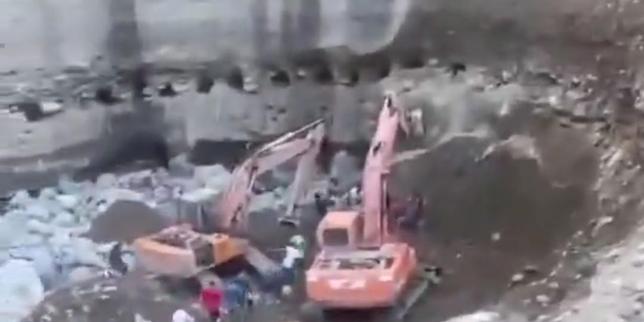
The recent collapse of an illegal gold mine in Nariño, Colombia, resulting in at least 13 fatalities and 7 injuries, is not a statistical outlier but a predictable outcome of unregulated extraction. When artisanal mining operates outside the reach of geological oversight and safety engineering, the resulting structural failure is mathematically inevitable. To understand why these events recur with grim regularity, one must analyze the interaction between subterranean pressure, inadequate ventilation, and the absence of standardized safety protocols.
The Physics Of Subsurface Failure
An illegal mining site, by definition, lacks the professional geotechnical surveys required to assess soil stability and seismic risk. The extraction process in artisanal gold mining often involves manual excavation or the use of heavy machinery in unreinforced tunnels. This creates a reliance on temporary, makeshift structural supports—or worse, none at all.
When workers excavate deep into the earth without adequate shoring, they disrupt the local stress balance of the rock mass. The weight of the overlying strata, originally distributed across a broad surface area, begins to concentrate on the weakened points created by the tunnels. Once the threshold of the rock's compressive strength is surpassed, a collapse—or, in this case, a landslide—becomes immediate.
The Gas Accumulation Variable
While the landslide was the proximate cause of the trauma, reports suggest a preceding explosion likely triggered the mass movement of earth. In clandestine mining environments, the accumulation of gases—specifically methane or volatile fumes from explosives used for excavation—is a persistent hazard.
- Ventilation Deficiency: Unregulated mines lack the forced-air circulation systems standard in industrial operations. This traps flammable gases in stagnant pockets.
- Ignition Potential: In the absence of explosion-proof electrical equipment, simple friction from a pickaxe or the heat of a crude lighting source can ignite these trapped pockets.
- Pressure Wave Effect: The resulting explosion exerts a sudden, violent pressure wave against the tunnel walls. In a compromised structure, this force is sufficient to shatter the minimal support systems, inducing a secondary collapse of the overburden.
Economic Drivers And The Safety Deficit
The persistence of illegal mining is fueled by a high-reward, low-entry-barrier economic model. Artisanal miners often operate under extreme poverty, where the immediate cash flow from gold extraction outweighs the long-term risk of structural failure. Because these operations are illicit, they remain invisible to institutional regulatory bodies.
This invisibility prevents the implementation of two essential safety metrics:
- Structural Monitoring: The absence of sensors to detect ground movement or gas buildup.
- Emergency Response Protocols: Without an established communication line or a pre-planned emergency exit route, the casualty rate in a collapse is compounded by the inability of rescue teams to navigate the debris safely.
The Institutional Bottleneck
When local authorities react to these tragedies, their efforts are typically limited to search-and-rescue operations. This is a reactive measure that fails to address the structural causes. Preventing future incidents requires moving beyond the management of consequences.
The strategy for long-term mitigation lies in the formalization of these mining communities. By transitioning artisanal miners into regulated frameworks, the state gains the ability to mandate basic safety engineering. This includes the implementation of standardized tunnel reinforcement techniques, the integration of gas monitoring technology, and the enforcement of occupational health and safety standards that treat worker lives as a fixed cost rather than an expendable variable.
Until the economic incentive to mine illegally is replaced by a formal, monitored, and supported framework, the geological and structural realities will continue to result in periodic, mass-casualty events. The priority for regional stabilization must shift from responding to accidents to the active regulation of the extraction environment.
13 dead and 7 injured following illegal mine collapse in the country
This video provides on-the-ground reporting of the recent incident in Nariño, confirming the casualty count and the context of the mining collapse.