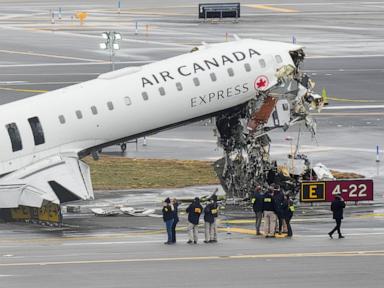
The fatal collision at New York’s JFK International Airport serves as a definitive failure point in ground-based situational awareness. While traditional aviation safety relies on the "See and Avoid" principle, the increasing complexity of airport surface movements renders human visual acuity insufficient. The Port Authority of New York and New Jersey’s mandate to install transponders on all airfield surface vehicles represents a shift from reactive oversight to a synchronized digital telemetry framework. To understand the impact of this transition, one must analyze the systemic breakdown of the current visual-only protocols and the technical constraints of the incoming hardware solution.
The Triad of Surface Risk Factors
Surface safety at high-capacity airports like JFK, LaGuardia, and Newark is governed by three intersecting variables. When these variables fall out of alignment, the probability of a "Category A" incursion—defined by the FAA as a serious incident where a collision is narrowly avoided or occurs—increases exponentially.
- Geometric Complexity: JFK operates with a non-linear runway configuration. Multiple intersecting taxiways create "hot spots" where vehicle drivers and pilots must negotiate complex right-of-way rules under high cognitive loads.
- Operational Density: The volume of support vehicles—ranging from fuel tankers to bird hazard patrols—creates a cluttered electromagnetic and visual environment. At any given moment, the ratio of ground vehicles to active aircraft can exceed 10:1.
- Visual Impairment Gradients: Rain, fog, and nighttime glare degrade the efficacy of standard reflective marking and strobe lights. Human error is rarely a product of negligence in these environments; it is a product of sensory saturation.
The recent tragedy involved a vehicle entering an active runway environment without sufficient digital visibility. The implementation of transponders addresses the "Visibility Gap" by converting a physical object into a data point on an Air Traffic Control (ATC) display.
Technical Architecture of the Vehicle Movement Area Transponder (VMAT)
The hardware mandated for these vehicles is not a standard aircraft transponder but a specialized Vehicle Movement Area Transponder (VMAT). These units operate on the Automatic Dependent Surveillance-Broadcast (ADS-B) frequency, specifically the 1090 MHz Extended Squitter (1090ES) or the 978 MHz Universal Access Transponder (UAT) bandwidth.
The Data Transmission Loop
The VMAT system functions through a four-stage telemetry cycle:
- Position Acquisition: The vehicle unit utilizes a High-Integrity Global Positioning System (GPS) receiver to determine its precise coordinates, ground speed, and heading.
- Message Squittering: The unit broadcasts this data automatically—without interrogation from a radar—at a rate typically between 1 Hz and 2 Hz (once or twice per second).
- Ground Station Reception: ADS-B ground stations around the airport perimeter receive the signal and relay it to the Advanced Surface Movement Guidance and Control System (A-SMGCS).
- Controller Visualization: The vehicle appears as a distinct icon on the controller's screen, tagged with a unique identifier (e.g., "Maintenance 04").
By integrating vehicles into the A-SMGCS, the airport moves from a bifurcated system—where aircraft are tracked digitally and vehicles are tracked visually—to a unified digital twin of the airfield.
The Economics of Preventative Hardware
Critics of the mandate often point to the capital expenditure required to outfit hundreds of vehicles. However, a rigorous cost-benefit analysis reveals that the "Cost of Failure" far outweighs the "Cost of Implementation."
The financial impact of a single runway collision includes:
- Hull Loss and Asset Depreciation: Commercial aircraft are valued in the hundreds of millions; ground vehicles are a total loss.
- Operational Stasis: A fatal collision triggers a National Transportation Safety Board (NTSB) investigation, which can close runways for 12–48 hours, causing a cascade of cancellations across the global network.
- Liability and Litigation: Legal settlements for wrongful death in aviation contexts frequently reach eight-figure sums per individual.
The cost of a VMAT unit ranges from $2,000 to $5,000 per vehicle. For a fleet of 500 vehicles, a $2.5 million investment serves as a perpetual insurance policy against a multi-billion dollar catastrophe. This is a classic risk-transfer strategy where the Port Authority assumes a small, known cost to eliminate a massive, unpredictable liability.
Structural Limitations and Systemic Friction
While transponders significantly increase safety, they are not a panacea. The deployment introduces new technical challenges that must be managed to avoid "Systemic Overload."
Signal Multipath and Interference
In high-density environments, "Signal Multipath" occurs when ADS-B signals bounce off metallic hangars or aircraft tails, creating "ghost" images on the controller's display. If 500 vehicles are broadcasting simultaneously, the frequency can become congested. This requires the use of Sectorized Receiving Antennas and sophisticated filtering algorithms to ensure the ATC interface remains clean and actionable.
The Human-Machine Interface (HMI) Paradox
The "Alert Fatigue" phenomenon is a significant risk for controllers. If the A-SMGCS triggers an audible alarm every time a vehicle gets within 100 feet of a taxiing aircraft (even if the movement is planned and safe), controllers may begin to desensitize to the warnings. The logic parameters for "Conflict Detection" must be tuned with extreme precision to distinguish between a standard intersection crossing and a high-velocity incursion.
Maintenance and Compliance Latency
A transponder is only effective if it is calibrated. Unlike aircraft, which undergo rigorous Part 121 or Part 135 maintenance checks, airport ground vehicles are often maintained by general automotive staff. A "Silent Failure"—where the GPS loses lock but the unit continues to broadcast stale data—could be more dangerous than having no transponder at all, as it provides a false sense of security to the controller.
Comparing Surveillance Technologies
The Port Authority’s choice of transponders over alternative technologies (like thermal cameras or ground-loop sensors) is driven by the need for Identification Data.
| Technology | Detection Capability | ID Attribution | Weather Resistance |
|---|---|---|---|
| Surface Movement Radar | High | None (Blip only) | Moderate (Rain clutter) |
| Inductive Loops | High (Fixed points) | None | High |
| ADS-B Transponders | High | Full (Callsign/VIN) | High |
| Computer Vision (AI) | Variable | High (OCR) | Low (Fog/Snow) |
The transponder is the only technology that provides the "Who" alongside the "Where." In an emergency, a controller does not just need to know that a vehicle is on Runway 4L; they need to know which vehicle it is to initiate direct radio contact.
Strategic Implementation Path
To successfully transition the New York airport cluster to a fully transponder-equipped environment, the Port Authority must execute a three-phase operational rollout.
Phase I: The Mandate and Hardware Standardization
The first step is the elimination of hardware variance. All vehicles entering the "Movement Area" (runways and taxiways) must utilize units that meet TSO-C199 (Traffic Awareness Beacon System) or better. Using a unified standard ensures that the A-SMGCS software can parse data packets without translation errors.
Phase II: Geofencing and Power Management
To prevent frequency congestion, VMAT units should be programmed with "Smart Power" logic. Using geofencing, the unit remains in a low-power "Standby" mode while the vehicle is in the ramp or terminal area (where aircraft are slow and under tug control). The transponder only switches to full "Active Squittering" once the vehicle crosses a pre-defined boundary into the high-risk movement area.
Phase III: The Integration of In-Vehicle Displays
The final evolution is not just telling the controller where the vehicle is, but telling the driver where the aircraft are. Equipping vehicle cockpits with a "Surface Situation Display" provides the driver with the same digital map the controller sees. This creates a "Dual-Redundancy" system where both parties are responsible for separation.
The move toward universal transponder installation at JFK, LGA, and EWR is a necessary admission that human-managed visual systems have reached their scaling limit. The complexity of modern aviation has outpaced the naked eye. By digitizing the airfield, the Port Authority is not merely adding a gadget to a truck; they are integrating the ground fleet into the broader "System of Systems" that defines modern aerospace safety.
The strategic priority now shifts from selection to enforcement. The Port Authority must establish a "No Transponder, No Access" policy, backed by automated gate sensors that scan for an active ADS-B signal before an airfield gate will cycle. Without this hard-gate enforcement, the system remains vulnerable to the same human oversight it seeks to correct.