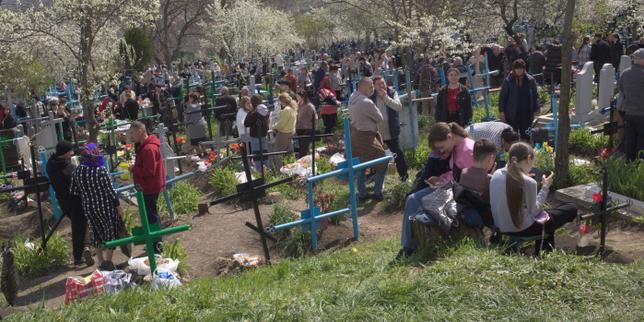
You won't find a more honest relationship with death than in Moldova. While Western cultures spend billions of dollars hiding the reality of the grave behind clinical walls and manicured lawns, Moldovans head straight for the cemetery with picnic baskets. They call it Paștele Blajinilor, or the Easter of the Departed. It’s not some somber, hushed ritual where you're afraid to breathe. It’s loud. It’s crowded. It’s actually pretty joyful.
If you walk into a cemetery in Chișinău or a small village like Butuceni during this time, you aren't seeing a funeral. You’re seeing a family reunion where half the guests happen to be underground. It’s a centuries-old tradition that blends Orthodox Christianity with deep-seated folk customs. For a few days after the traditional Easter, the living believe the gates of the "other side" swing open. The dead get a temporary pass to hang out with the living. For a more detailed analysis into similar topics, we recommend: this related article.
Moldovans don't just visit the graves. They sit on them. They eat on them. They pour wine into the soil so the ancestors can have a drink too.
The Logistics of a Cemetery Banquet
Don't expect a simple sandwich. We're talking about a full-scale culinary operation. Families spend days preparing traditional dishes that would look right at home at a wedding feast. You'll see piles of Sarmale (cabbage rolls stuffed with rice and meat), Pască (sweet cheese bread), and dyed red eggs. To get more information on this topic, detailed analysis can be read on Travel + Leisure.
The atmosphere is a chaotic mix of religious devotion and social networking. People dress in their Sunday best. They navigate narrow paths between iron crosses, carrying heavy bags of food and bottles of homemade wine. It’s a sensory overload. The smell of incense from the priest’s censer mixes with the aroma of roasted garlic and the sweet scent of blooming lilac trees.
One of the most striking parts of this tradition is the "Pomene." These are gifts given "for the soul" of the deceased. You might receive a towel, a mug, or a plate of food from a stranger. When you take it, you say "Bodaprosti," which basically means "May God accept it on their behalf." It’s a way of ensuring that the memory of the dead person keeps doing good in the world of the living.
It Is Not Just About Grief
I've seen people laugh until they cry sitting right next to a headstone. That’s because the Feast of the Living—another name for this holiday—isn't about mourning a loss. It’s about celebrating a continuing presence. In the Moldovan psyche, the line between life and death is thin and porous.
You see grandmothers telling their dead husbands about the new grandkids. You see cousins catching up on gossip while sitting on the edge of a great-uncle's tomb. It’s a massive community check-in. If you don't show up to your family plot, people notice. It’s considered a deep mark of disrespect, not just to the dead, but to the living relatives who expect to see you there.
Critics sometimes point to the excess. There’s a lot of drinking. Sometimes too much. You’ll see local news reports every year about the sheer volume of trash left behind or the "competitions" between families to see who can give away the most expensive Pomene. Some people treat it like a fashion show. But if you look past the occasional gaudiness, the core is still there. It’s a refusal to let the people who shaped you disappear into the void.
Why This Tradition Still Holds Strong in 2026
Modernity usually kills rituals like this. Usually, as people move to cities and get busy with digital lives, they stop caring about the village cemetery. But in Moldova, this tradition is actually getting stronger.
Migration plays a huge role. Millions of Moldovans work abroad in Italy, Russia, or Germany. For many, Paștele Blajinilor is the one time of year they actually come home. It’s a more important homecoming than Christmas or the New Year. The cemetery becomes the physical anchor for a diaspora that is scattered across the globe.
There's also a psychological benefit we often overlook. We live in a world that is terrified of aging and death. We sanitize everything. Moldovan culture does the opposite. By bringing kids to the cemetery to eat eggs and play among the graves, they're teaching them that death is just another part of the cycle. It isn't scary. It’s just where the party moves eventually.
Common Misconceptions About the Holiday
- It’s not a cult of the dead. People aren't worshipping their ancestors. They are praying for them and including them in the community.
- The Church has a complicated relationship with it. While Orthodox priests lead the prayers, they often grumble about the "pagan" elements, like leaving food on the graves or the heavy drinking.
- It isn't just for the elderly. You’ll see teenagers in trendy clothes helping their parents carry benches and tables into the cemetery.
The Social Hierarchy of the Grave
There is an undeniable social element to this. The size of the headstone and the quality of the food reflect the family's status. In some urban cemeteries, you'll see massive marble monuments that look like mini-palaces. In rural areas, it’s humbler—mostly blue-painted wooden crosses.
Regardless of the wealth, the ritual remains the same. You clean the grave weeks in advance. You plant fresh flowers. You make sure the metal fence is freshly painted. On the day of the feast, you pour a little wine on the ground in the shape of a cross. You eat. You remember.
It’s a gritty, beautiful, and deeply human spectacle. It reminds us that we aren't just isolated individuals drifting through time. We are part of a long, messy, wine-soaked chain of people.
If you ever find yourself in Moldova during this time, don't be a spectator. Don't just stand on the sidelines with a camera. If someone hands you a red egg or a glass of wine and says a name, take it. Eat the food. Say "Bodaprosti." That’s the only way to truly understand what’s happening. You aren't just watching a tradition; you’re participating in a collective refusal to forget.
Pack some comfortable shoes, prepare for crowds that rival a music festival, and be ready to hear more stories about the dead than you ever thought possible. If you're coming from Chișinău, take a minibus (rutiere) early in the morning—traffic near the Saint Lazarus Cemetery, one of the largest in Europe, becomes a total standstill by noon. Bring small bills for the beggars at the gates; it’s part of the tradition of giving. Most importantly, leave your judgments at the gate. This isn't your typical picnic, and that’s exactly why it matters.


.png?width=1200&auto=webp&trim=0%2C0%2C0%2C0)