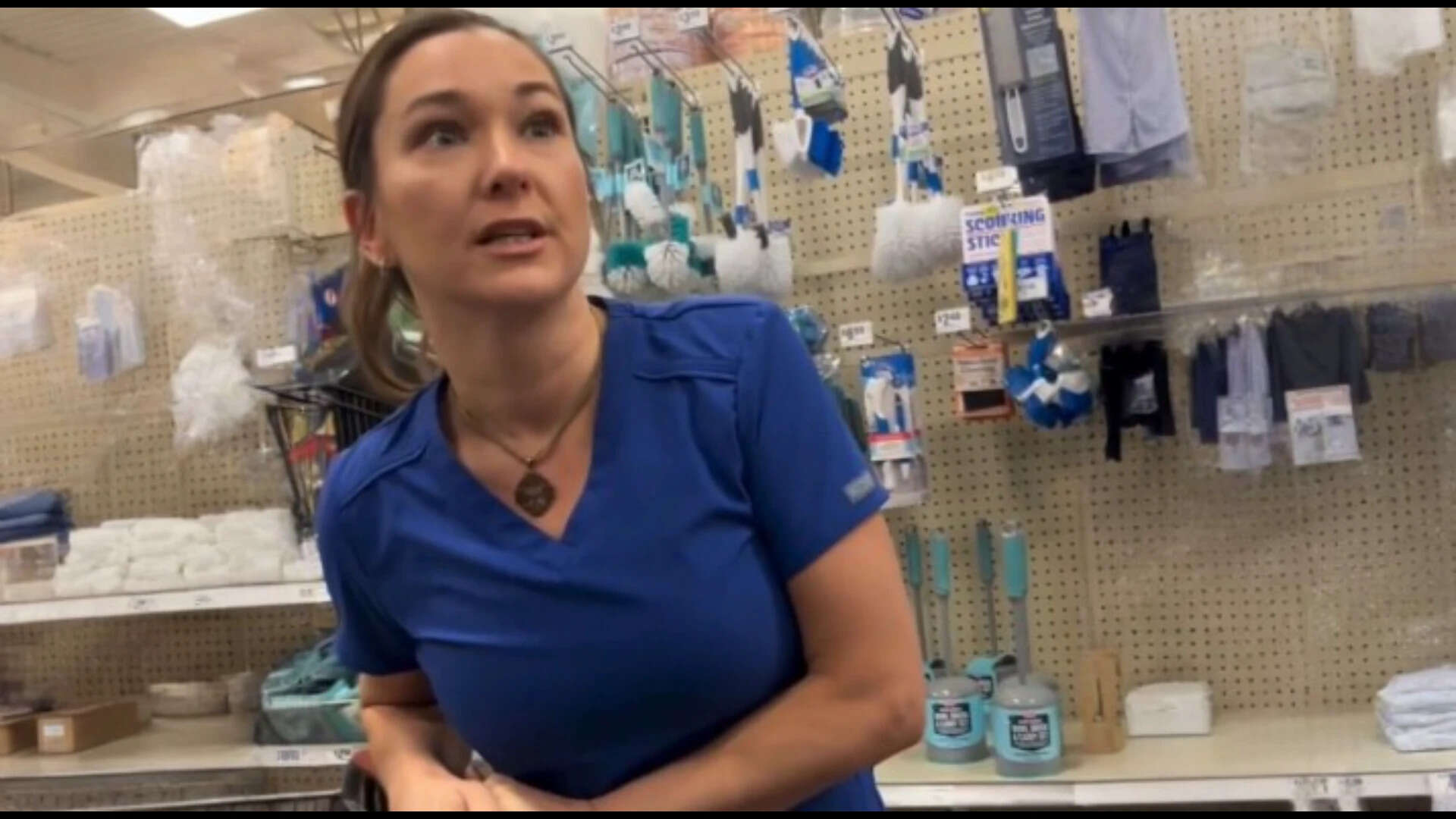
When a viral video caught a Texas nurse launching into a vitriolic supermarket tirade—calling Islam a "terrorist organization"—the predictable modern machinery of public outrage fired up instantly. The hospital fired her within twenty-four hours. Social media networks scrubbed her accounts. Yet, what happened next exposes a far more lucrative, dangerous ecosystem than a simple public relations crisis. Instead of facing financial ruin, the nurse became the beneficiary of an online crowdfunding campaign that hauled in over $85,000 from donors who openly celebrated her actions.
This is no longer a story about an isolated outburst in a grocery aisle. It is an economic reality where digital hate functions as a highly viable fundraising strategy, clashing directly with a healthcare system failing to protect patients from ideological bias.
The Crowdfunding Loophole That Rewards Radicalization
Public shaming used to carry severe financial consequences. Today, alternative crowdfunding platforms have commoditized the backlash, turning corporate terminations into highly profitable conservative martyrdom. When mainstream sites like GoFundMe reject campaigns that violate their hate speech policies, alternative platforms step in to fill the void, operating with almost zero oversight.
The mechanics of these campaigns rely on a specific narrative structure. The offender is reframed as a victim of a tyrannical corporate culture or political correctness run amok. Donors do not just give money to support a legal defense or cover living expenses; they buy into a culture war. An analysis of the donor comments on the nurse's campaign reveals a disturbing pattern. Hundreds of individuals explicitly stated they were donating because she "said what everyone else is thinking."
This creates a perverse incentive structure. For a certain segment of professionals, the financial safety net provided by right-wing grievance funding outweighs the risk of losing a job. If a professional can replace a year's salary in forty-eight hours by becoming a flashpoint for digital rage, corporate termination loses its power as a deterrent.
The Hidden Threat to Patient Care and Clinical Objectivity
While the financial mechanics of this phenomenon are troubling, the implications for patient safety are catastrophic. Healthcare relies on an implicit social contract: patients, regardless of their background, race, or religion, must receive identical standards of care. When a licensed nurse publicly declares an entire religious group to be terrorists, that contract shatters.
Bias in medicine is rarely explicit at the bedside. It manifests in subtle, deadly ways. A nurse holding deeply radicalized views against Muslim patients is unlikely to announce it on the hospital floor. Instead, that bias operates through under-medication, delayed response times to call lights, or a failure to properly advocate for a patient during a critical shift change.
Medical literature has documented for decades how implicit and explicit biases directly correlate with spiked mortality rates among minority populations. If a clinician views a patient population through the lens of national security threats, the diagnostic process becomes compromised. Symptoms are dismissed. Pain is ignored. The clinical environment transforms from a space of healing into a hostile territory.
The Failure of State Boards and Regulatory Inertia
Hospitals are quick to fire employees who spark public relations nightmares, but fireable offenses rarely result in the immediate revocation of a professional license. State nursing boards, tasked with protecting the public, move at a glacial pace. They are bound by bureaucratic processes, legal appeals, and a historical reluctance to police the off-duty speech of their members.
This regulatory gap allows disciplined workers to quietly jump borders. A nurse fired in Texas for a racist or Islamophobic tirade can frequently maintain an active license while the board investigates, a process that regularly takes eighteen to twenty-four months. During this window, the nurse can sign with a travel nursing agency, packing a suitcase and moving to a hospital in another state that is desperate for staff and cutting corners on background checks.
The nursing shortage has made hospitals desperate. Many facilities rely heavily on temporary contract workers to fill gaps, outsourcing the vetting process to third-party agencies. These agencies often check for active licenses and criminal convictions but rarely scour internet archives or review local news reports from another state. The result is a dangerous recycling system where compromised clinicians are passed from one short-staffed facility to the next.
Rebuilding the Firewall Against Professional Misconduct
The solution requires looking past the immediate corporate reaction of firing an employee to manage a news cycle. Hospitals and licensing boards must treat digital extremism with the same severity they reserve for clinical negligence or diverted narcotics.
Professional licenses are privileges, not rights. If a clinician exhibits behavior that demonstrates an inability to provide unbiased care, the license must be suspended pending an immediate psychological and ethical evaluation. Furthermore, healthcare networks must implement stricter contract clauses for travel agencies, mandating deep digital footprint audits before any clinician is granted floor access.
At the same time, the financial networks facilitating the monetization of hate require aggressive targeting. State attorneys general have the authority to investigate whether alternative crowdfunding platforms are violating consumer protection laws or misleading donors about how funds are utilized. When hate becomes a bankable asset, traditional institutional discipline becomes obsolete, leaving vulnerable patients to bear the ultimate cost of a broken system.