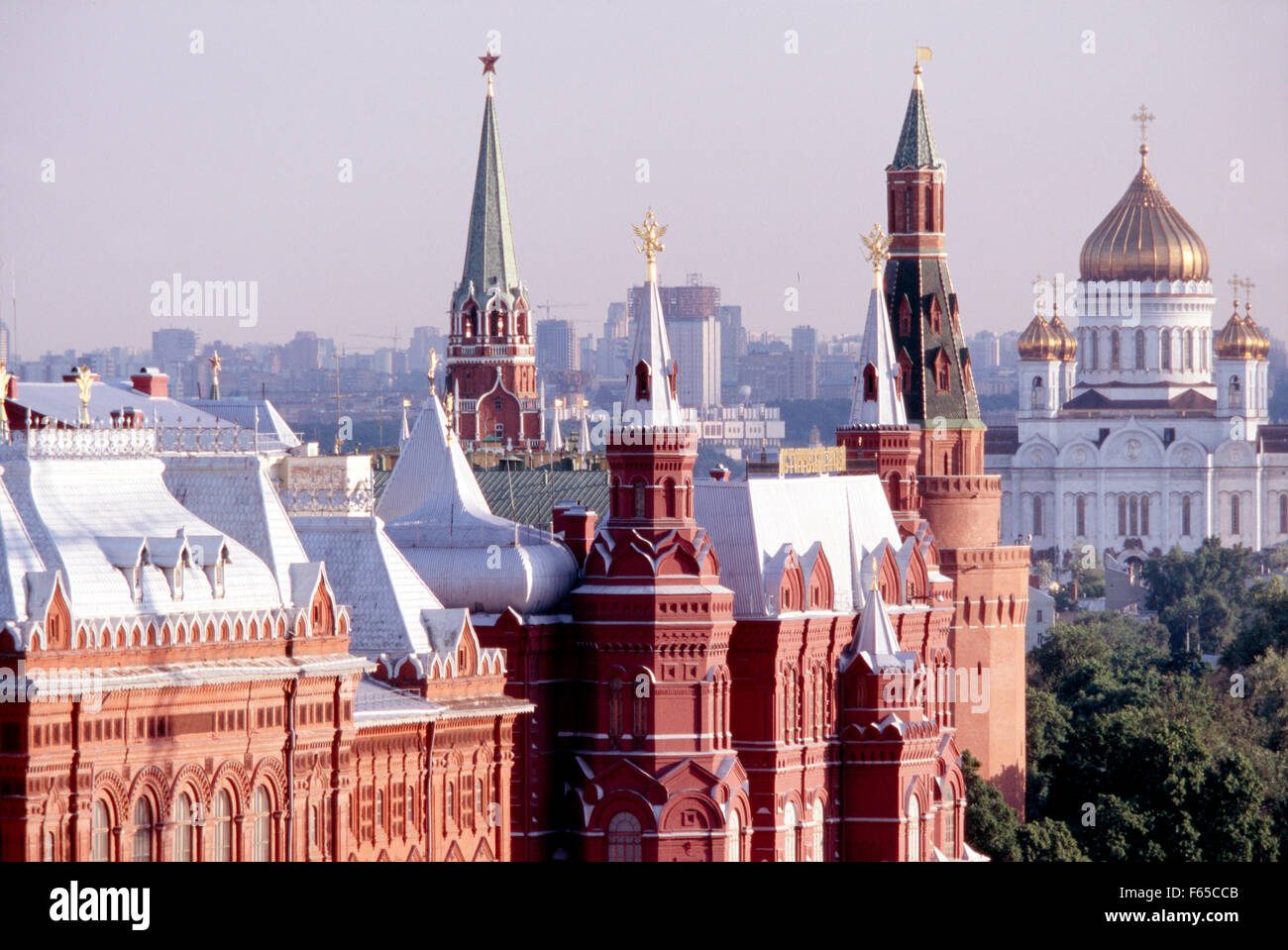
The rumors of a Kremlin lockdown and a brewing coup against Vladimir Putin represent a collision between frantic Western intelligence leaks and the reality of Russian internal security. While headlines suggest a government on the brink, the actual mechanics of power in Moscow tell a different story. Reports of elite dissatisfaction are not the same as a coordinated move to topple a leader who has spent twenty-four years proofing his regime against exactly this scenario. The "lockdown" often cited by observers is frequently the routine activation of the "Fortress" plan—a standard security protocol rather than a sign of a collapsing state.
To understand why a coup remains a statistical long shot despite the immense pressure of the Ukraine conflict, one must look at the architecture of the Russian security apparatus. Putin does not rely on a single military force. He has built a system of overlapping, competing agencies that spend as much time spying on each other as they do on the populace. This is intentional. It is the classic "dictator’s trap" in reverse; he ensures that no single general or intelligence director can move a battalion toward the Red Square without three other agencies raising the alarm.
The Triad of Internal Defense
The primary obstacle to any domestic insurrection is the Rosgvardia. This is the Russian National Guard, a massive force of roughly 340,000 personnel that answers directly to the President, bypassing the Ministry of Defense. When rumors of a coup circulate, it is the Rosgvardia that closes the streets. They are not frontline soldiers weary from the trenches in Donbas; they are a well-funded Praetorian Guard designed specifically for urban combat and regime preservation.
Supporting them is the FSO, the Federal Protective Service. If the Rosgvardia is the hammer, the FSO is the invisible shield. They control the physical access to the "Special Objects"—the bunkers, the Kremlin offices, and the dacha complexes. Intelligence suggesting a "lockdown" often misses the fact that the FSO maintains a permanent state of near-lockdown. The movement of high-ranking officials is tracked with a granularity that makes private plotting nearly impossible.
Finally, the FSB (Federal Security Service) maintains a Military Counter-Intelligence Department that is embedded within every level of the Russian Armed Forces. For a coup to succeed, military officers must trust one another. In the current Russian climate, that trust is a lethal liability. An army colonel thinking of moving against the Kremlin knows that his deputy, his radio operator, or his driver could be an FSB informant.
Disinformation as a Tool of Attrition
The sudden surge in reports regarding a "Putin under fire" narrative often originates from signals intelligence harvested by Western agencies. However, the distinction between a real threat and a psychological operation is thinning. By leaking stories of internal strife, Western intelligence aims to sow paranoia within the Russian high command. If Putin believes his generals are plotting, he may purge them. If the generals believe Putin is about to purge them, they may actually begin to plot.
This feedback loop creates a "phantom coup." It exists in the media and in the fever dreams of exiled oligarchs, but it lacks the physical kinetic energy required to breach the Kremlin walls. We have seen this play out before. During the Wagner Group mutiny led by Yevgeny Prigozhin, the world saw what a genuine threat looked like. It wasn't a quiet lockdown; it was an armored column moving at high speed toward the capital. The fact that Prigozhin’s march sputtered out before reaching Moscow serves as a grim reminder of how difficult it is to sustain an insurrection once the central government switches from politics to pure survival.
The Economic Buffer and Elite Compliance
Coups are rarely driven by moral outrage. They are driven by a calculation of interests. For the Russian elite—the so-called siloviki and the remaining billionaires—the cost of a failed coup is death. The cost of staying loyal, even under sanctions, is merely a reduced lifestyle. As long as Putin can guarantee their physical safety and a portion of the domestic market, the incentive to risk everything on a palace hit is remarkably low.
Russia’s economy has proven more resilient than many analysts predicted. By pivoting energy exports to the East and implementing strict capital controls, the Kremlin has maintained a veneer of stability. This stability is the oxygen of the regime. Without a total economic collapse that leaves the security forces unpaid, the rank-and-file soldiers of the Rosgvardia have no reason to turn their rifles toward the Kremlin.
The Intelligence Gap
We must acknowledge the limitations of our own perspective. Western intelligence has a checkered history of predicting regime change in Moscow. The tendency is to over-interpret signs of friction. A general missing from a public meeting is labeled a victim of a purge; a motorcade moving at high speed is labeled an escape. In reality, the Russian system is opaque by design.
The "lockdown" reported by various outlets often coincides with the "Krest" (Cross) exercises or routine security shifts that occur whenever the President moves between locations. Interpreting these as signs of an active coup is often a case of seeing what we want to see. The hard truth is that the Russian state is currently optimized for one thing above all else: the personal survival of its leader.
The structural barriers to an uprising are not just physical; they are psychological. Decades of propaganda and the systematic removal of any viable alternative leader have left a vacuum. If Putin were to fall, there is no "Shadow Cabinet" ready to take over. There is only a collection of warring factions, each more radical than the last. This creates a "stability of fear" where even those who loathe the current direction of the country prefer it to the chaos of a civil war in a nuclear-armed state.
Strategic Paranoia
Putin’s greatest strength is his own paranoia. He operates on the assumption that a coup is always five minutes away. This leads to the constant shuffling of personnel. By moving governors, ministers, and generals like chess pieces, he prevents any of them from building a local power base. This "permanent revolution" of the bureaucracy ensures that no one stays in one place long enough to organize a conspiracy.
When we hear reports of the Kremlin being under fire, we are likely hearing the echoes of this internal churn. It is a system that thrives on tension. The noise we hear from the outside isn't the sound of the engine breaking; it's the sound of the engine running exactly as it was built to run.
Any analyst claiming a coup is imminent is ignoring the last twenty years of institutional hardening. The walls of the Kremlin are thick, but the layers of surveillance and institutionalized distrust surrounding them are even thicker. To breach them requires more than a few disgruntled generals or a flurry of Western intelligence reports. It requires a systemic failure that, for now, remains over the horizon.
The focus should not be on whether a coup is happening tonight, but on how the regime manages the mounting pressure of a long-term war of attrition. The danger to the Kremlin is not a sudden strike, but a slow rot that eventually makes the cost of loyalty higher than the risk of treason. We are not there yet.
The security cordons in Moscow are staying in place because they are the only things that matter in a state where politics has been replaced by policing.