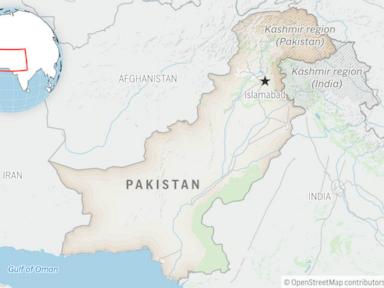
Eleven people are dead after a passenger van plunged into a river in northern Pakistan. The headlines call it a tragedy. They're right, of course, but calling it an "accident" misses the entire point.
When a passenger vehicle drops off a cliffside road in Gilgit-Baltistan or Khyber Pakhtunkhwa, almost nobody in the region is shocked. They're heartbroken, sure. They're furious, too. Because everyone who has ever ridden in a local HiAce van along the Indus River or the Karakoram Highway knows these crashes aren't random strokes of bad luck. They are the predictable outcome of broken infrastructure, overloaded vehicles, and nonexistent road enforcement. Learn more on a connected subject: this related article.
The competitor news wire reports give you the bare skeleton of the event—a van lost control, plunged into deep water, eleven lives lost, rescue teams deployed. That's standard wire copy. It tells you what happened in five sentences and moves on to the next news cycle. What it doesn't tell you is why northern Pakistan's mountain corridors remain some of the deadliest transit routes in South Asia, or why families keep boarding vans they know aren't safe.
The Reality of Northern Pakistan's River Valleys
If you haven't traveled through Kohistan, Diamer, or the upper valleys of Khyber Pakhtunkhwa, it's hard to picture the geometry of these roads. You aren't driving on a highway with shoulders and runoff areas. You're driving on a narrow shelf blasted out of vertical granite, often hundreds of feet above fast-moving glacial rivers like the Indus, Swat, or Kunhar. More reporting by The Washington Post delves into related views on this issue.
One mistake ends everything.
There is no margin for error when your left tires are six inches from an unguarded drop-off and your right mirror is scraping a rock face. In many stretches, two vehicles can't pass each other without one backing up to a wider turnout. Add monsoon rain, melting snow, or loose gravel from a minor landslide, and the road surface turns into grease.
Guardrails? Mostly missing. Where concrete barriers or steel rails do exist, they're often rusted, broken from previous impacts, or simply too low to stop a top-heavy passenger van carrying fifteen people and half a ton of luggage on the roof.
Why Rescue Operations Rarely Save Survivors
When a van goes into a northern Pakistani river, the survival rate is brutally low. It isn't just the fall itself that kills people. It's the water.
Rivers fed by the Karakoram and Hindu Kush glaciers are freezing cold, violently fast, and choked with silt. Even strong swimmers get pulled under within seconds by hydraulic currents and heavy clothing. By the time local volunteers or Rescue 1122 teams reach the gorge—often hiking down steep embankments with ropes because heavy cranes can't reach the water's edge—they're almost always conducting a recovery operation rather than a rescue.
In remote tehsils, the nearest trauma center can be three or four hours away over the exact same treacherous roads. Anyone who survives the initial impact faces a race against hypothermia and internal bleeding with almost zero emergency medical infrastructure nearby.
What Actually Causes These Passenger Van Crashes
Blaming "driver negligence" is the easiest excuse for local authorities after a fatal crash. It puts the fault on a single individual—who is usually dead—and lets everyone else off the hook. Honestly, that's lazy reporting and even lazier governance.
Driver error plays a role, yes, especially when drivers push through exhaustion on 14-hour overnight runs from Rawalpindi to Gilgit or Skardu. But look closer at the systemic failures happening before the van even leaves the terminal.
- Chronic Overloading: Standard 12-to-15-seater vans routinely carry 18 to 22 passengers, with children sitting on laps and heavy cargo strapped high onto roof racks. That extra weight raises the vehicle's center of gravity, making it dangerously unstable on hairpin turns.
- Worn Tires and Failing Brakes: Replacing brake pads and tires costs money that independent owner-operators struggle to spare. Descending long mountain grades rides the brakes continuously until brake fade sets in—and on a 10% grade, brake failure is a death sentence.
- Zero Mechanical Inspections: Fitness certificates in Pakistan are notoriously easy to obtain without anyone ever looking under the hood. Vehicles with compromised suspension or steering linkages stay on the road until something snaps mid-corner.
- Unforgiving Schedules: Drivers get paid by the trip, not by the hour. Speeding on blind curves isn't just recklessness; it's an economic incentive built into how regional transport operates.
The Illusion of Highway Modernization
Over the past decade, massive infrastructure projects—including upgrades along the Karakoram Highway under the China-Pakistan Economic Corridor—have improved major arteries. Smooth asphalt feels great. Ironically, better pavement sometimes makes things worse.
When you pave a winding mountain road without adding banked curves, proper drainage, or heavy-duty crash barriers, drivers go faster. A gravel track naturally forces a van down to 25 kilometers per hour. Fresh blacktop tempts drivers to hit 70 or 80 on stretches that still have blind corners and zero guardrails. Speed plus a high center of gravity equals a van going straight off the edge when a tire clips soft shoulder gravel.
Why People Still Board Unsafe Vans
Outsiders often ask why passengers don't just refuse to get into an overloaded vehicle or demand a safer alternative. That question comes from a place of having choices.
In northern Pakistan, there is no train network. Domestic flights to Gilgit and Skardu are expensive, limited in capacity, and frequently canceled due to cloud cover or high winds. For students, migrant workers, hospital patients, and families traveling between villages and major cities, private passenger vans and coasters are the only lifeline.
If you step off a van because the tires look bald or there are too many bags on the roof, you might wait two days for the next seat. You don't have the luxury of consumer choice when you have a medical appointment in Peshawar or a job waiting in Islamabad.
How Mountain Transit Safety Needs to Change
According to the World Health Organization, Pakistan suffers tens of thousands of road traffic fatalities every year, with commercial passenger vehicles accounting for a disproportionate share of multi-fatality crashes. Turning that around in the northern valleys doesn't require futuristic technology. It requires basic, stubborn enforcement of rules that already exist on paper.
First, mandatory weigh-in and passenger-count checkpoints at major choke points—like Besham, Chilas, and Dasu—need real teeth. If a van has more passengers than seatbelts or excessive roof cargo, it shouldn't get fined a few hundred rupees and waved through. It should be parked on the spot until the excess load is transferred.
Second, night travel on the most hazardous single-lane river gorges should be restricted for public passenger vans. Driving along unlit cliffs in the dark, blinded by the high beams of oncoming trucks, is an unnecessary gamble that claims dozens of lives every winter and monsoon season.
Third, infrastructure budgets must prioritize crash barriers on river-facing bends over purely cosmetic road widening. A reinforced concrete barrier costs a fraction of a major highway project, yet it is the single most effective physical intervention that keeps a skidding vehicle out of the water.
Practical Steps If You Must Travel Northern Pakistan's Roads
If you're planning a trip through Gilgit-Baltistan, Swat, or Kohistan—whether as a local commuter or a traveler—you can't fix the highway system yourself, but you can dramatically cut your personal risk before you buckle up.
- Never travel after dark. Book morning departures so your driver navigates narrow river gorges in full daylight, when visibility is clear and driver fatigue is lowest.
- Inspect the vehicle before paying. Look at the tire tread and check whether the roof rack is piled high with heavy freight. If the van looks visibly sagging or overloaded, walk away and wait for the next one.
- Choose larger buses over small vans on main routes. Full-sized coaches operated by established transport companies generally have better maintenance schedules, two drivers on long hauls, and heavier frames than independent HiAce vans.
- Sit behind the driver, never in the front passenger seat. The front-left seat (the "death seat" in left-hand-drive traffic, or front-left in Pakistan's right-hand-drive vehicles) takes the brunt of head-on collisions and cliff-edge slides. Middle-row seats offer far better protection.
- Check weather and landslide alerts. Avoid traveling during heavy monsoon downpours or rapid spring snowmelt, when rockfalls and mudslides spike across the Indus and Swat valleys.
Eleven people lost their lives in this latest river plunge, leaving eleven families shattered in communities that have already buried too many neighbors from identical crashes. Until transport authorities treat overloaded vans and unguarded cliff roads as preventable public safety failures rather than inevitable mountain tragedies, the river will keep claiming more.