People are driving three days straight across borders just to sit in a dark room in the Czech Republic.
Christopher Nolan’s latest epic, The Odyssey, isn't just drawing normal weekend crowds. It's triggering a massive wave of film tourism across the continent. Fans from about 15 different European countries—stretching from Spain up to Scandinavia—are packing their bags and heading straight for Prague.
Why? Because Prague houses one of the rarest movie projection setups left on Earth.
The Logistics of True IMAX
Digital projection is everywhere. You can see a movie on a bright, crisp laser screen in almost any major suburb on the planet. But physical film is dying out, and physical 70mm IMAX is practically an endangered species.
Globally, only 41 screens can handle this specific, massive physical format. Within the entire European Union, you can count the capable locations on one hand: Montpellier in France, Brussels in Belgium, and the Cinema City Flora theater in Prague. Britain holds a few more, but for mainland Europe, Prague is a primary anchor for analog purists.
The Odyssey is a technical milestone. It's the very first narrative feature film shot entirely using physical IMAX film cameras. It doesn't use digital conversions. It doesn't mix formats haphazardly. Every single frame relies on massive 15-perf 70mm film stock running horizontally through a projector.
When you project that physical print onto a towering, curved screen, the resolution and depth are staggering. Digital simply cannot replicate the organic grain and physical weight of the image. Nolan calls it the best possible experience. Thousands of European fans clearly agree, transforming a routine summer movie release into a massive pilgrimage.
Inside the Prague Screening Frenzy
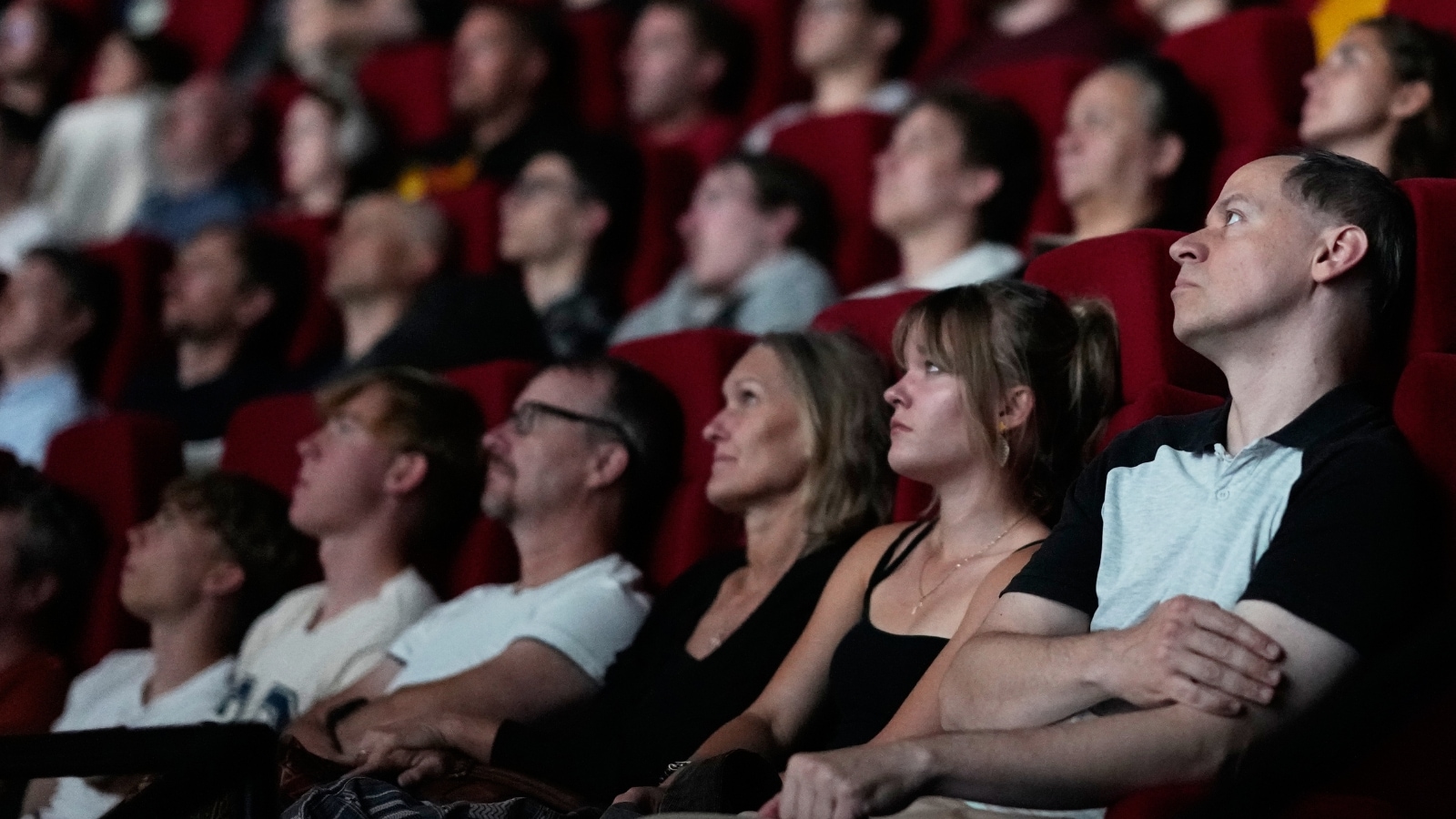
Getting a ticket hasn't been easy. Fans like Leo and Felix, who drove three days from Norway alongside their father Daniel Jung, tracked release dates months in advance. They set alerts, watched social media feeds, and secured center seats in the eleventh row the second sales opened.
Cinema City has adapted to the insane demand by scheduling four to five screenings every single day. They even added post-midnight slots to squeeze in more viewers. By late July, over 22,000 tickets had already been snapped up in Prague alone. Showtimes are booked out weeks ahead, forcing travelers to plan intricate itineraries just to catch a single screening before heading right back home.
Nicolas Walak, a viewer who traveled down from Poland, watched the movie on a standard screen first. Afterward, he felt compelled to make the trip to Prague to see it the way the director intended. He noted that it completely transformed his perception of the film.
Why Analog Formats Still Matter
We live in an age of instant streaming. You can pull up a blockbuster on a phone screen while sitting on a commuter train. So why are thousands of people spending hundreds of euros on gas, hotels, and tickets just to watch a strip of celluloid pass through a mechanical projector?
It comes down to scale and tangibility. A 70mm IMAX frame has a physical surface area that dwarfs standard digital sensors. When the projector fires up, you aren't looking at pixels. You are looking at light shining through a physical photograph that is nearly three inches wide. The sound rattles your ribs. The frame height fills your entire peripheral vision.
Cinemas used to look like this decades ago. Czechoslovakia actually had a thriving large-format culture back in the 1960s and 1980s, when theaters frequently showcased massive historical epics on giant screens. Prague's current status as a film destination taps right back into that historical appreciation for grand cinematic engineering.
If you want to catch The Odyssey in Prague, don't expect walk-up ticket availability. Check the Cinema City booking portal daily for dropped reservations, or look for late-night slots that locals skip. Book your transport early, keep your schedule flexible, and experience physical film before it becomes entirely a museum piece.