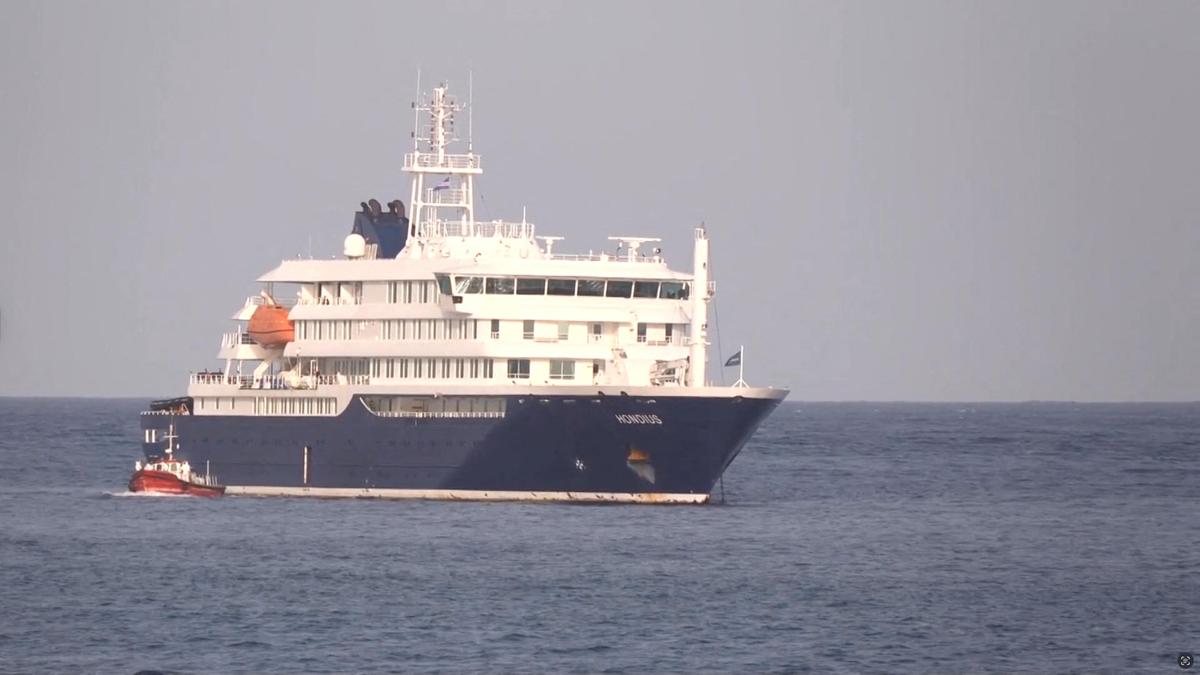
Spain just blinked. By slamming the door on the MV Hondius, the Canary Islands leadership didn't save lives; they performed a high-stakes piece of political theater that exposes a staggering ignorance of zoonotic pathology. The knee-jerk reaction to hantavirus on a cruise ship is the modern equivalent of burning a village to cure a cold. It’s loud, it’s dramatic, and it’s scientifically illiterate.
Politicians love a "hardline" stance because it plays well on the evening news. It suggests a perimeter is being guarded. But when you look at the mechanics of hantavirus transmission versus the reality of maritime quarantine, the decision to reject docking is less about safety and more about avoiding a PR headache at the expense of human logic.
The Hantavirus Myth of the Floating Plague
The mainstream narrative is predictable: A "deadly virus" is on a ship, therefore the ship must stay away. This assumes hantavirus behaves like a respiratory wildfire such as influenza or a coronavirus. It doesn't.
Hantavirus Pulmonary Syndrome (HPS) or Hemorrhagic Fever with Renal Syndrome (HFRS) is not a person-to-person sport. In almost every documented strain—save for the rare Andes virus cases in South America—transmission requires direct contact with rodent excreta or the inhalation of aerosolized droppings.
Unless the President of the Canary Islands expects the passengers to start exhaling dried mouse urine onto the locals at the pier, the risk of a "community outbreak" from a docked vessel is statistically near zero. By treating the MV Hondius like a leper colony, officials are ignoring the basic biology of the pathogen to feed a frenzy of fear.
The Real Risks vs. The Perceived Risks
| Factor | Public Perception | Biological Reality |
|---|---|---|
| Transmission | Highly contagious through air | Primarily zoonotic (rodent-to-human) |
| Spread Speed | Rapid urban explosion | Isolated, cluster-based incidents |
| Quarantine Utility | Essential to "stop the spread" | Redundant if the source (rodents) is contained |
| Fatality Context | Guaranteed death | Highly variable based on strain and care access |
The Logistics of a Self-Inflicted Wound
When you deny a ship entry, you don't make the virus disappear. You concentrate it. You turn a manageable medical situation into a pressure cooker.
I’ve spent years watching maritime authorities faff about with "port of refuge" protocols. The moment a captain declares a medical emergency, the clock starts ticking. By forcing the MV Hondius to remain at sea, Spain is forcing a vessel to act as a floating hospital without the staff, the equipment, or the stability of a land-based facility.
If the goal is truly to minimize the impact of the virus, the move is to dock, isolate the infected in a controlled negative-pressure environment on land, and sanitize the vessel. Keeping them offshore is a gamble with lives that serves no one but the pollsters.
The Economic Hypocrisy of "Safety First"
The Canary Islands rely on the cruise industry. It is the lifeblood of the local economy. Yet, the moment a technical health challenge arises, the government bites the hand that feeds it.
This isn't just about one ship. It’s about the precedent. If every vessel with a localized health issue is turned into a pariah, the entire maritime insurance and logistics framework starts to buckle.
- Insurance Premiums: They will spike for any route touching "unreliable" ports.
- Logistics: Supply chains for specialized expedition vessels (like the Hondius) are disrupted, costing millions in lost revenue and fuel.
- Brand Damage: The Canary Islands just advertised themselves as a fair-weather friend.
Imagine a scenario where a container ship with a sick crew member is treated with the same "reject at all costs" mentality. The global supply chain would grind to a halt because a regional governor wanted to look tough for a week.
The Ghost of 2020 is Ghosting the Science
The "reject the ship" reflex is a hangover from the early days of the COVID-19 pandemic. We saw the Diamond Princess disaster and we learned the wrong lessons. The lesson shouldn't have been "keep the ships away." The lesson should have been "get the people off the ship as fast as possible into controlled environments."
Ships are terrible places to contain an outbreak because they are closed-loop systems. By keeping the MV Hondius at sea, the Spanish authorities are effectively ensuring that anyone on the fence of infection gets exposed. It is a cruel, bureaucratic sentence handed down by people who likely couldn't tell you the difference between a virus and a bacterium if their re-election didn't depend on it.
Reframing the "Danger"
Why aren't we talking about the rodents? Hantavirus is a rodent-borne issue. The focus shouldn't be on the passengers; it should be on the cargo and the sanitation history of the vessel.
If the ship is "hit" by hantavirus, it means there was a breach in pest control, likely at a previous port or through contaminated supplies. Rejecting the ship doesn't solve the pest problem. It just moves the problem to the next jurisdiction. It is the height of NIMBY (Not In My Backyard) epidemiology.
- Identify the Source: Trace the supply chain that brought the vectors on board.
- Professional Remediation: You can't deep-clean a ship effectively while it's tossing in the Atlantic.
- Controlled Debarkation: Use the port's existing medical infrastructure to filter and treat.
Anything else is just cowardice disguised as "precaution."
The Cowardice of the "Precautionary Principle"
The Precautionary Principle is the last refuge of a leader who lacks a plan. It suggests that if an action has a suspected risk of causing harm, in the absence of scientific consensus, the burden of proof falls on those taking the action.
In this case, the "harm" is a localized virus with almost zero chance of jumping into the general Spanish population through a pier. The "action" is docking a ship to provide medical care. The Canary Islands leader has inverted the principle to protect his own reputation, rather than the health of the maritime community.
We are watching a slow-motion car crash of policy. The MV Hondius is a modern, high-tech expedition vessel, not a derelict ghost ship. Treating it like a biohazard threat on the level of Ebola is a massive overreach that screams "I don't know how to manage a dock."
Stop Asking if it's Safe and Start Asking if it's Just
The people on that ship are being used as political props. Every hour they spend being shuffled from one maritime border to another is an hour they aren't receiving specialized care.
Is it "safe" to dock? Yes. With standard bio-containment protocols used in every major hospital, it is perfectly safe.
Is it "just" to leave them in limbo? Absolutely not.
The Canary Islands had an opportunity to lead, to show that a modern tourism hub can handle a medical curveball with sophistication. Instead, they chose the path of the panicked provincial, slamming the gates and hoping the problem floats to someone else's shoreline.
This isn't leadership. It's a surrender to the loudest, least-informed voices in the room. If this is how Spain handles a well-understood, non-communicable virus, heaven help us when something truly dangerous shows up at their door.
The MV Hondius isn't the threat. The precedent of abandonment is.
Get them off the ship. Sanitize the hull. Fire the advisors who suggested a blockade was a viable public health strategy in 2026.
The ocean is not a trash can for inconvenient medical realities.