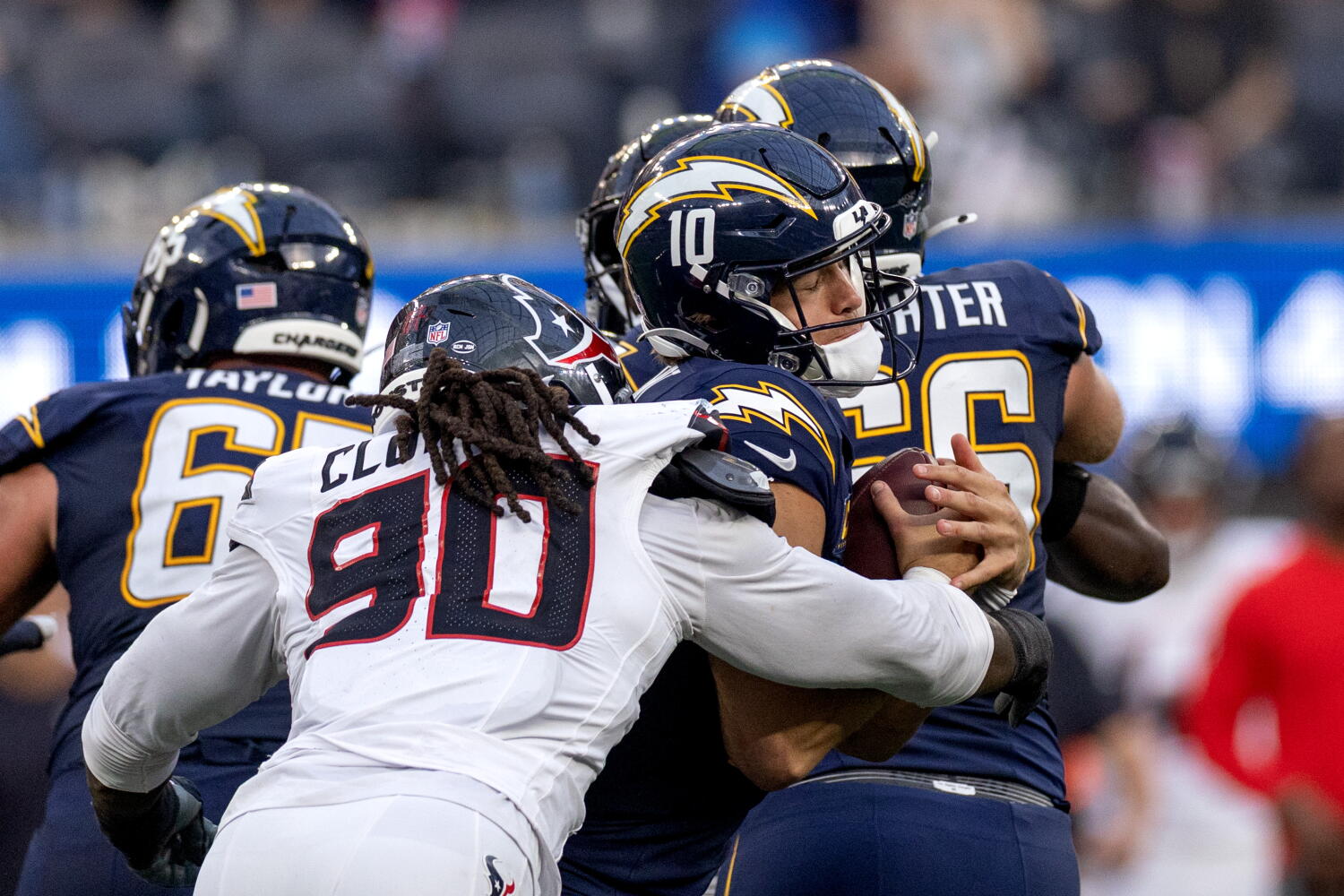
Three sacks. One chest-thumping postgame quote. A thousand victory laps from front-office apologists.
That is all it took for the football media complex to declare the Los Angeles Rams' blockbuster trade for Myles Garrett an unqualified triumph. The narrative wrote itself before the turf pellets even settled: Los Angeles needed a closer, they mortgaged their future to acquire the best pure edge rusher of his generation, and he delivered on cue. Case closed. Hang the banner.
Except that story is completely backward.
When you strip away the highlight-reel dopamine and look at the structural reality of modern NFL roster construction, a three-sack performance from a superstar acquisition does not validate an all-in trade. It highlights the exact fragility that sinks top-heavy contenders in January. Celebrating individual box-score dominance in a vacuum is how front offices talk themselves into cap purgatory while convincing fans they are witnessing genius.
The Illusion of the "Closer"
Football is not baseball. You cannot hand the ball to Mariano Rivera in the ninth inning, let him throw twelve cutters, and walk off the mound with a save.
Yet NFL pundits desperately cling to the "closer" myth because it simplifies a chaotic, twenty-two-man sport into a neat superhero arc. When a pass rusher logs three sacks—especially late in a tight game—the lazy consensus immediately credits his individual will, his alpha mentality, and the general manager's brilliance for acquiring him.
Here is what the box score hides: sacks are a lagging indicator, heavily dependent on coverage integrity, offensive line health, game script, and pure variance.
Think about how a pass rush actually functions. An elite edge defender does not teleport through a three-hundred-pound left tackle in 1.8 seconds on every snap. Even at his absolute peak, a Hall of Fame caliber rusher wins his pass-rush rep roughly twenty-five to thirty percent of the time. The other seventy percent of the night, he is being chipped by tight ends, double-teamed by guards sliding protection, or neutralized by quick-game three-step drops.
When those three sacks happen, they are rarely the product of one man simply deciding to end the game. They are the byproduct of a secondary holding sticky coverage for 3.2 seconds, an interior defensive tackle collapsing the pocket vertically so the quarterback cannot step up, or an opposing offense falling behind by two scores and abandoning the run entirely.
Calling Myles Garrett "that closer" ignores the ecosystem required for him to breathe. Worse, it masks the terrifying cost the Rams paid to put him in that uniform—a cost that actively cannibalizes the exact supporting cast he needs to function in the postseason.
What the Rams Actually Traded Away
I have watched enough NFL front offices light their long-term sustainability on fire to recognize the pattern immediately. It always starts with the same seduction: We are just one blue-chip piece away.
To land a generational talent like Garrett, you do not just hand over a couple of late-round picks and a backup linebacker. You surrender premium first-round draft capital—the cheap, cost-controlled, four-year rookie contracts that allow a contending roster to survive the salary cap—while simultaneously absorbing a massive veteran cap hit.
Let's do the basic math that gets ignored during parade-planning season.
Every dollar and draft pick funneled into acquiring a single superstar edge rusher is a dollar and draft pick ripped away from:
- Cornerback depth, which dictates whether a quarterback holds the ball long enough for the pass rush to get home.
- Offensive line rotation, which keeps your own franchise quarterback upright when an opposing defensive coordinator brings zero blitzes.
- Special teams and rotational linebackers, the unglamorous middle class of a football roster that prevents fourth-quarter collapses against physical, run-heavy teams.
Imagine a scenario where the Rams enter a divisional-round playoff game in January against an offense built on outside zone runs, heavy personnel, and play-action bootlegs. That opponent will not drop back forty-five times and let Garrett tee off from a wide-nine alignment. They will run directly at the lighter defensive fronts Los Angeles was forced to field because they couldn't afford high-end run-stuffing interior linemen. They will chip Garrett with a tight end on every third-and-long, forcing the Rams' depleted cornerback room to cover elite receivers one-on-one without safety help.
In that environment, Garrett's individual brilliance becomes a luxury item parked in the garage during a snowstorm. You paid Ferrari prices for a vehicle that cannot handle the terrain of playoff football.
Sacks Are the Most Overrated Metric in Football
If you want to understand why general managers keep making catastrophic trades for pass rushers, look at what gets rewarded in contract negotiations and media awards: raw sack totals.
Analytics departments across the league—from the research teams at Pro Football Focus to the data scientists inside sharp front offices like Baltimore and Philadelphia—have spent a decade proving that pressure rate and pass-rush win rate are far more stable, predictive metrics than sacks. Sacks are noisy. A defender can generate ten pressures in a game and walk away with zero sacks because the quarterback threw the ball into the dirt at his feet. The following week, that same defender can generate four pressures and stumble into three cleanup sacks because the quarterback tripped over his own guard's ankle.
The public reacts to the three-sack box score as if the player suddenly unlocked a higher plane of existence. Sharp evaluators look at the film and ask a very different set of questions:
- Were those sacks generated against an elite offensive tackle, or a backup swing tackle playing on a sprained ankle?
- Did the sacks occur on early downs to kill drives before they started, or on desperate third-and-fifteen heaves where the defense was playing prevent coverage anyway?
- How many times did the offense gash that exact edge in the run game because the rusher was selling out upfield to hunt sack numbers?
When a player declares "I am that closer" after a three-sack night, he is feeding the exact media narrative that inflates his market value and justifies the front office's gamble. He is doing his job. The problem is when analysts and executives confuse a high-variance stat spike with a sustainable championship blueprint.
The "Stars and Scrubs" Trap Never Dies
The Rams have built an entire organizational brand around rejecting the NFL draft in favor of proven star power. Because it worked once—culminating in a Super Bowl victory built around Aaron Donald, Jalen Ramsey, and Matthew Stafford—the football world treats their aggressive trade philosophy as a repeatable formula.
That is classic survivorship bias.
When the Rams won that title, they had something no trade can ever replicate: Aaron Donald in his absolute prime. Donald was not a traditional edge rusher; he was an interior wrecking ball who commanded triple-teams on every snap from the defensive tackle spot, fundamentally breaking offensive protection rules before the ball was even snapped. Because Donald ruined plays from the inside out, average edge rushers next to him looked like Pro Bowlers, and average cornerbacks behind him looked like All-Pros.
Myles Garrett is an extraordinary football player—arguably the most physically gifted edge defender to enter the league since Julius Peppers. His combination of bend, first-step explosion, and raw power is terrifying.
However, an edge rusher cannot warp the geometry of a football field the way an elite interior lineman does.
Offenses have spent fifty years perfecting ways to neutralize dominant edge players. You slide the line toward him. You leave a running back in to chip his outside shoulder. You run screens directly into the vacated space behind him when he rushes upfield. You get the ball out in 2.1 seconds on slants and flat routes. You cannot easily slide an entire protection scheme away from a three-technique defensive tackle without opening up a massive highway right up the A-gap.
By treating Garrett as the centerpiece of a "stars and scrubs" roster build, the Rams are asking an edge rusher to carry the structural weight of an interior fortress. When injuries inevitably hit the secondary or the linebacker corps in November and December—as they hit every single NFL team—the structural cracks in a top-heavy roster widen into chasms. You cannot hide weak coverage on the perimeter when your entire defensive identity relies on one man winning a one-on-one race around the arc.
Why Fans Are Asking the Wrong Question
Right now, the dominant conversation surrounding this trade revolves around a single, surface-level question: Did Myles Garrett make the Rams' defense better?
Of course he did. Adding an All-Pro talent to any unit improves its ceiling on paper. Asking whether Myles Garrett makes a defense better is like asking whether adding a Michelin-star pastry chef improves a restaurant's dessert menu. The answer is obviously yes, and it completely misses the point.
The real question—the only question that actually matters for a franchise with Super Bowl ambitions—is this: Does the marginal gain from upgrading your edge rush outweigh the cumulative loss across the four starting spots you could no longer afford to fill?
Let's examine the hidden questions fans and analysts routinely get wrong when evaluating blockbuster NFL trades:
"Don't you have to pay elite prices for elite pass rushers?"
Yes, in free agency or via draft extensions. No, when you are paying both the acquisition cost (multiple premium draft picks) and the contract cost (top-of-market veteran money). When you draft and develop a pass rusher, you get four to five years of surplus value before paying market rate. When you trade for a veteran superstar, you bypass the cheap years entirely and absorb all the financial risk at the exact moment his physical mileage starts accumulating.
"Didn't his three sacks directly win them the game?"
Even if we grant that those three plays swung win probability by forty percent in a single afternoon, NFL seasons are not decided by single-game variance. Championships are won by surviving a seventeen-game meat grinder and winning three or four consecutive coin-flip games against elite coaching staffs. A strategy that maximizes your peak performance in October while hollowing out your depth for January is a bad bet, no matter how electric the highlights look on Sunday night.
"Isn't playing it safe how franchises stay mediocre forever?"
There is a massive difference between calculated aggression and reckless concentration of risk. Smart front offices—like the Eagles, Ravens, and Chiefs—are relentlessly aggressive, but they hoard draft picks and spread their investments across the trenches and the secondary rather than pushing every single chip onto one square. They understand that football is a game of attrition.
The Honest Downside of the Contrarian View
To be completely transparent, building through depth, draft capital, and positional balance has its own painful flaw: sometimes you get to the fourth quarter of a playoff game, need one stop against Patrick Mahomes or Josh Allen, and watch your disciplined, well-balanced defense fail to get home because nobody on your roster can win a one-on-one matchup in 2.3 seconds.
That is the nightmare scenario that haunts every general manager in the league. It is the exact fear that drives executives to pick up the phone, offer up two first-round picks, and pray that a single superhero can rescue them from the agony of incremental team-building.
When Garrett bends the corner, strips the ball, and celebrates under the stadium lights, that fear temporarily vanishes. The crowd roars. The trade looks brilliant. The skeptics look like joyless accountants staring at spreadsheets while missing the magic of the sport.
What Smart Front Offices Actually Do Instead
If you want to build a pass rush that actually holds up under playoff pressure without mortgaging your franchise's future, you stop hunting for single-player saviors and start investing in pass-rush volume and coverage synergy.
- Draft waves of rotational linemen on Day 2. Instead of trading two first-rounders for one superstar, use second- and third-round picks to keep a constant rotation of fresh, explosive edge rushers rolling in every four plays. A good pass rusher with fresh legs in the fourth quarter is infinitely more dangerous than an exhausted superstar playing eighty-five percent of the snaps.
- Over-invest in press-man cornerbacks and versatile safeties. A great secondary buys the defensive line an extra half-second on every dropback. That extra half-second turns ordinary defensive linemen into eight-sack producers without a single blockbuster trade.
- Prioritize interior disruption over pure edge speed. Push up the middle ruins a quarterback's mechanics and prevents him from stepping into throws, making every edge rusher on the roster twice as effective.
The Rams chose the opposite path. They bought the marquee name, soaked up the headlines, and celebrated a three-sack night as proof of concept.
Enjoy the highlights while the weather is still warm, because when January arrives and playoff offenses start attacking the empty spaces where those traded draft picks used to be, three sacks in November will not save them.