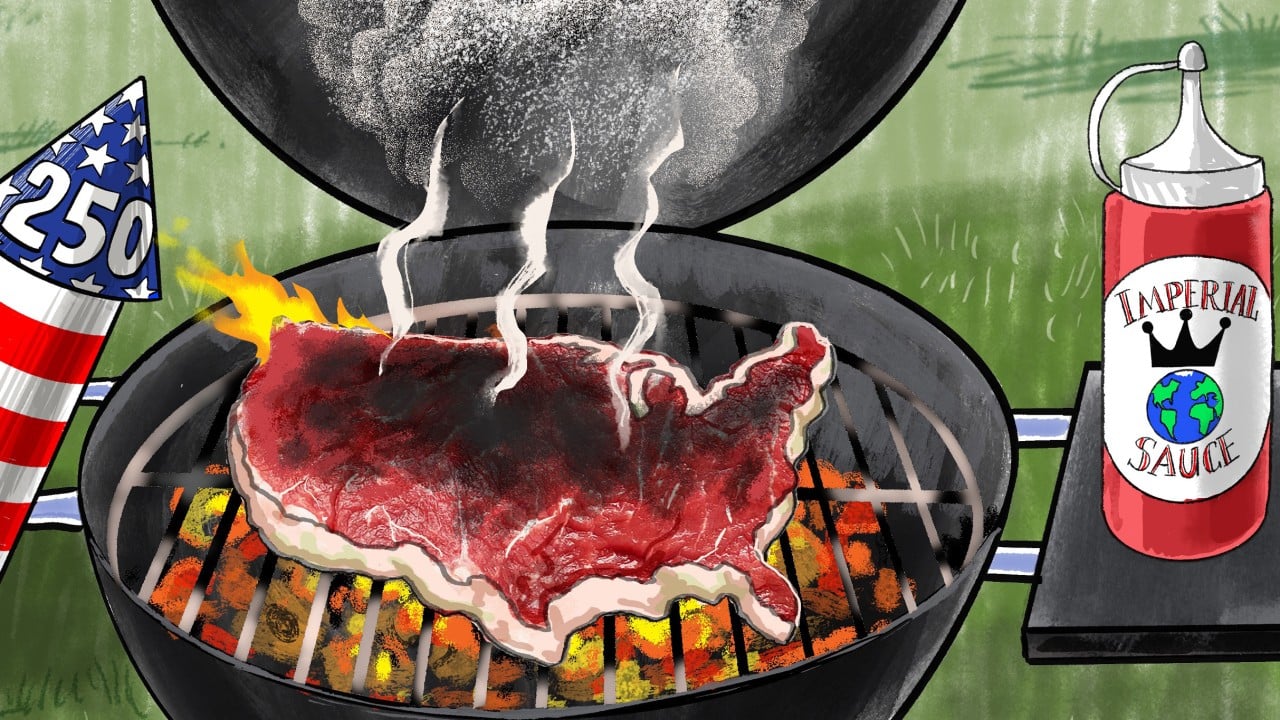
The lazy consensus loves the word empire. As the United States hits its 250th anniversary, commentators are rushing to publish the same recycled thesis they have been peddling since the dawn of the Cold War. They point to military bases in Europe, naval fleets in the Pacific, and the global dominance of the dollar. They call it an empire in all but name.
They are completely wrong.
Calling the United States an empire misdiagnoses how global power works. It insults the memory of actual empires. Rome, Britain, and Spain operated on a simple, brutal economic equation: extract wealth from the periphery to enrich the core. They seized land, taxed subjects, and monopolized trade routes to fill the home treasury.
The American model does the exact opposite. It bleeds the core to subsidize the periphery.
If Washington is running an empire, it is the worst-managed empire in human history. True empires do not run trillion-dollar trade deficits with their subjects. They do not watch their own domestic manufacturing base hollow out while funding the defense of wealthy allies who refuse to pay for their own militaries.
We are not looking at an imperial conqueror. We are looking at a giant, over-extended security guarantor trapped in a bad contract.
The Broken Economics of Reverse Imperialism
Let us look at the actual numbers, not the emotional rhetoric of geopolitical pundits.
Classic imperialism is a profit-driven enterprise. The British East India Company did not conquer Bengal out of a sense of global charity; they did it to control the textile trade and extract tax revenue. The Spanish Crown did not ship silver from Potosí to fund public housing in Bolivia; they used it to finance wars in Europe and build palaces in Madrid.
Now look at the American balance sheet.
The United States regularly runs massive, compounding trade deficits. In recent years, the annual trade deficit in goods and services has routinely cleared $800 billion. Capital flows out of the American domestic economy and into the manufacturing centers of Asia and Europe.
Classic Empire:  Periphery ──[Wealth Extraction]──> Imperial Core
American Model:  US Taxpayer ──[Defense Subsidy]──> Global Allies ──[Trade Deficit]──> US Economy
This is not extraction. It is a massive wealth transfer from the American consumer and taxpayer to the rest of the world.
The mechanism that allows this is the global reserve currency status of the US dollar. Pundits point to the dollar as a tool of financial imperialism. They overlook the devastating cost of maintaining that status. To supply the world with liquidity, the United States must run perpetual deficits. This is known as the Triffin Dilemma.
By keeping the dollar artificially strong to maintain global purchasing power, the US system penalizes its own domestic exporters. It makes American factories uncompetitive. It hollows out towns in Ohio and Pennsylvania to ensure that global trade moves smoothly in Dubai and Singapore.
An empire enriches its capital at the expense of its provinces. The current international system enriches foreign manufacturing hubs at the expense of the American working class.
The Sovereignty Illusion
The empire narrative falls apart the moment you examine how Washington interacts with its supposed vassals.
When Britain ruled India, London dictated policy. When Rome controlled Egypt, Rome set the grain prices. When the Soviet Union dominated Eastern Europe, dissent was met with tanks in Budapest and Prague.
Compare that to the modern North Atlantic Treaty Organization (NATO) or bilateral alliances in Asia.
For decades, American presidents have begged, pleaded, and cajoled European nations to meet their basic commitment of spending 2% of their Gross Domestic Product (GDP) on defense. For a long time, the wealthiest nation in Europe, Germany, treated this target as a polite suggestion while outsourcing its security to Washington and its energy needs to Moscow.
Imagine the Roman Emperor pleading with the governors of Gaul to please consider contributing a few coins to the legions protecting their borders. It is absurd.
- The South China Sea Dilemma: Washington maintains naval supremacy in the Pacific, keeping trade lanes open for Japan, South Korea, and Taiwan. Yet, these nations routinely implement protectionist trade policies that target American companies.
- The Middle Eastern Quagmire: The US military spent trillions securing energy infrastructure in the Middle East over the last thirty years. The primary beneficiaries of that stability were not American consumers, but energy-dependent economies in Europe and East Asia.
The United States absorbs the geopolitical risk, pays the insurance premium, and sends its citizens to die in foreign deserts. The rest of the world collects the dividend.
Dismantling the Base Count Deception
The favorite data point of the "American Empire" crowd is the map of overseas military installations. They claim the US operates roughly 750 bases in more than 80 countries.
This number is tossed around without any context regarding operational realities.
I have spent years analyzing defense procurement and logistics pipelines. Most of these installations are not sovereign fortresses designed for conquest. They are logistical outposts, fueling stations, and radar hubs maintained with the explicit, revocable consent of the host nations.
Look at what happened in the Philippines in the early 1990s. The Philippine government told the US military to leave Subic Bay and Clark Air Base. If the US were a true empire, it would have sent in the Marines to secure the assets. Instead, Washington packed its bags, loaded its ships, and left.
Look at Africa and the Middle East today. When host nations experience coups or shifts in alignment, American forces leave. An empire does not ask for permission to stay. It does not pay rent to local governments. It does not sign Status of Forces Agreements (SOFAs) that subject its personnel to complex diplomatic negotiations.
These bases exist because foreign governments want an American security blanket. It allows them to divert their own national budgets away from defense and toward generous social safety nets, high-speed rail networks, and state-subsidized industries.
The American taxpayer funds the global police force so that European and Asian citizens can enjoy early retirement and universal healthcare.
The True Cost of Global Commons Protection
Who keeps the oceans safe for trade?
When Houthi rebels began firing anti-ship missiles into the Red Sea, endangering global shipping lines, it was not the European Union or China that sent carrier strike groups to intercept the threats. It was the United States Navy.
The global economy relies entirely on the security of maritime choke points:
- The Strait of Malacca
- The Bab-el-Mandeb
- The Strait of Hormuz
- The Suez Canal
If these lanes close, global supply chains collapse overnight. Microchips stop shipping from Taiwan. Oil stops flowing from the Gulf. Grain stops moving from the Americas.
The United States bears the disproportionate financial and material cost of maintaining these global commons. The benefits are entirely non-excludable. A Chinese container ship carrying manufactured goods to Rotterdam receives the exact same protection from the US Navy as an American vessel.
This is not imperial dominion. This is the ultimate public good, provided at the expense of one nation's balance sheet for the benefit of global capitalism.
The Flawed Questions of Contemporary Geopolitics
When analysts ask "How long can the American empire last?", they are fundamentally misunderstanding the crisis. The question assumes that the threat to the current system comes from an anti-imperial uprising or the rise of a rival conqueror.
The real threat is domestic insolvency and strategic fatigue.
The American public is growing tired of funding a global apparatus that yields negative financial returns for the average citizen. The rise of political populism on both the left and the right in the United States is directly tied to this exhaustion. The working class has figured out the math of this arrangement. They see their tax dollars building infrastructure abroad while their own bridges crumble.
If you want to understand the next fifty years of global history, stop looking for signs of American expansion. Look for signs of American retreat.
When the United States decides it is no longer willing to underwrite the security of the world's oceans, the result will not be a liberation from imperial tyranny. It will be a rapid descent into regional conflict, protectionism, and systemic economic instability. The nations currently complaining about the heavy hand of American hegemony will find out very quickly what the world looks like when the police officer goes off duty permanently.
The true historical anomaly of the last 75 years is not that a superpower became an empire. It is that a superpower built a system that allowed its allies to get rich at its own long-term expense.
The 250th anniversary of the United States should not be marked as a celebration of global dominance. It should be viewed as a warning about the unsustainability of global altruism disguised as hegemony. Turn off the television, ignore the academic theorists, and look at the ledger. The numbers do not lie. The empire is a myth, and the bill is coming due.