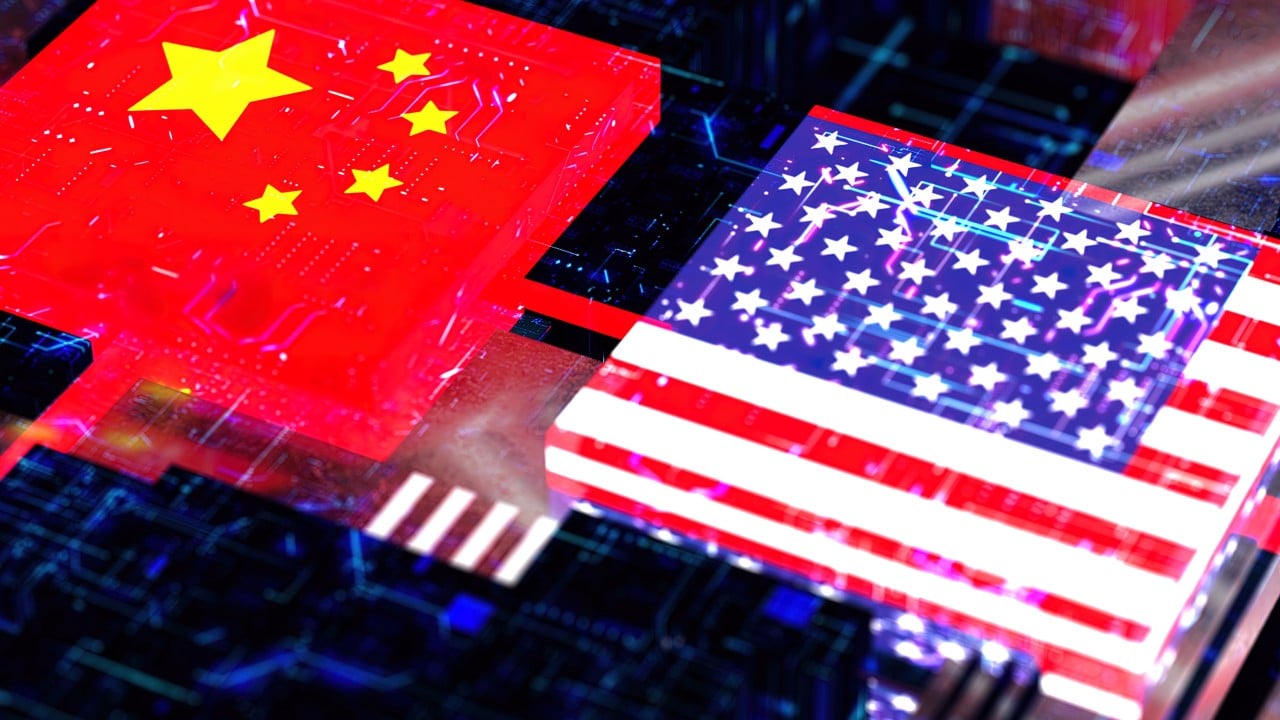
Open-source repositories do not broker world peace.
Every year, a predictable wave of industry commentary romanticizes the notion of a unified global scientific community. You have read the narrative a hundred times: as nation-states withdraw behind geopolitical barriers, draw up sanctions, and hoard hardware, the scientists themselves remain pure. They supposedly chat on Discord, co-author papers on arXiv, and quietly maintain an intellectual brotherhood that transcends Washington or Beijing. You might also find this similar coverage insightful: Global AI Governance Is Actually Keeping Developing Nations Poor.
It is a beautiful, comforting fantasy. It is also completely wrong.
The belief that artificial intelligence research can remain decoupled from the cold realities of state power is worse than naive; it actively misunderstands how modern computing works. The romanticized image of the lone academic collaborating across borders ignores a fundamental shift: AI is no longer just mathematics. It is capital, raw materials, and infrastructure. And that infrastructure has a zip code. As reported in recent reports by MIT Technology Review, the effects are widespread.
The Chemistry Set Fallacy
Historically, theoretical physics or pure mathematics could exist in the ether. A researcher in Moscow and a researcher in Boston could exchange equations via mail during the height of the Cold War. The barrier to entry was a pencil, a chalkboard, and an intellect.
Many veteran AI researchers still act as if we are living in that era. They grew up in the 2010s during the golden age of open-source framework sharing, when a student on a laptop could replicate state-of-the-art results.
But the era of the scrappy, borderless algorithm is dead. We have entered the era of heavy industrial compute.
Training a frontier model does not happen in a vacuum. It requires hundreds of megawatts of power, hyperscale data centers, and tens of thousands of specialized accelerators. These things are physical. They are anchored to specific power grids, funded by domestic corporate giants, and subject to national export controls.
When a research lab relies on millions of dollars of subsidized compute from a specific government-aligned tech monopoly, that lab is an instrument of national capability. I have sat in boardrooms where executives talk publicly about "global scientific collaboration" while privately signing exclusivity agreements that lock out foreign nationals due to compliance fears.
The idea that two scientists can simply "unite" over shared code ignores who owns the servers running the code. The moment your research requires an infrastructure footprint larger than a small city, you are no longer a rogue intellectual. You are part of a national supply chain.
Why Open Source Is a Geopolitical Weapon, Not a Bridge
The conventional wisdom insists that open-source AI is the ultimate equalizer. If code is public on GitHub, the argument goes, it belongs to the world, rendering geopolitical squabbles irrelevant.
This completely misinterprets how open source is used by dominant tech powers.
Open-sourcing a model isn't always an act of altruistic global sharing; it is frequently a calculated business and political maneuver. When Western companies open-source weights, they often do so to commoditize the complementary products of their rivals or to establish their specific architecture as the global standard. They dictate the architecture, the alignment guardrails, and the optimization protocols.
Furthermore, open-sourcing a model does not grant an adversary equality. It hands them a snapshot of yesterday's capabilities.
The Asymmetry of Open Source
- The Lag: The models released to the public are, by definition, the ones the creators feel safe enough to part with. The true frontier—the training pipelines, the data curation algorithms, the RLHF methodologies, and the hardware configurations—remains strictly proprietary.
- The Dependency: By adopting these open models, foreign scientific communities often build their ecosystems on top of foundations engineered elsewhere. They become dependent on upstream updates, effectively cementing the technical hegemony of the originating nation.
- The Compliance Layer: Modern open-source releases are increasingly wrapped in restrictive licensing agreements that forbid specific use cases, weaponizing terms of service to enforce national values abroad.
To call this a "bridge" between fractured nations is a profound misreading of the mechanics. It is soft power disguised as academic charity.
Dismantling the Common Defenses
People who cling to the idea of a borderless scientific community usually point to a few specific metrics to prove their point. Let's look at why those arguments crumble under scrutiny.
"But Look at the Co-Authorship Data!"
Optimists love to cite the high volume of papers at major conferences like NeurIPS or ICML that feature co-authors from both Western and Asian institutions. They claim this proves collaboration is thriving despite trade wars.
This is a trailing indicator. A paper published today is the result of work initiated two or three years ago. More importantly, look at the nature of those co-authored papers. They are overwhelmingly concentrated in theoretical optimizations, benchmark critiques, or abstract safety frameworks.
When it comes to the real prize—frontier capabilities, custom architecture design, and hardware-software co-optimization—the walls are up. The high-impact, heavily funded projects are increasingly restricted to internal teams who have passed rigorous security clearances. The global co-authored papers are the crumbs left on the table for the academic community to fight over.
"Talent is Fluid and Can't Be Standardized"
The second argument is that talent moves freely. A brilliant researcher born in one country can study in another and work in a third. Therefore, national boundaries do not matter.
This argument forgets that talent goes where the compute is. A brilliant mind without access to a massive cluster is just a person thinking deeply in an empty room. Governments have realized this. They are no longer just controlling the export of physical microchips; they are implementing strict immigration and cloud-access policies designed to ring-fence the talent capable of orchestrating these massive clusters.
If a researcher must change their citizenship, submit to intrusive background checks, and limit their communication with family back home just to access a state-of-the-art cluster, that isn't a borderless community. That is a brain drain serving a specific state apparatus.
The Dark Side of Forced Neutrality
There is a distinct danger to this forced narrative of scientific unity. When researchers pretend they are part of a global, neutral tribe that exists above politics, they become incredibly easy to manipulate.
I have seen academic departments accept massive grants from foreign entities with explicit geopolitical agendas, under the guise of "advancing human knowledge." The researchers genuinely believed they were doing objective science. They failed to realize their work was being used to validate surveillance apparatuses, optimize state-sponsored cyber operations, or provide academic cover for authoritarian regimes.
By refusing to acknowledge that AI is a dual-use technology with massive geopolitical implications, the scientific community abdicates its moral responsibility. Pretending the divide doesn't exist doesn't bridge it; it just makes you blind to where the cracks are.
The Reality of the New Era
The sooner we accept that the AI research community is fractured along geopolitical lines, the better off we will be.
This realization comes with obvious downsides. Progress may slow down in certain specialized subfields because teams are duplicating effort rather than sharing breakthroughs. We will see an increase in tribalism, where different regions develop entirely separate software stacks and validation benchmarks. It will become harder to establish global safety standards because there is no fundamental trust between the parties negotiating them.
But the upside of accepting this reality is clarity.
Instead of wasting time organizing international committees that issue toothless, feel-good manifestos about the "shared future of intelligence," we can focus on building realistic, verifiable frameworks for coexistence. We can design technical protocols that allow for verification of model safety without requiring the exchange of proprietary weights or underlying data. We can stop pretending we are friends and start working on how to survive as adversaries.
The romantic notion of the global AI scientist is a relic of a simpler time when models were small, compute was cheap, and the stakes were low. That world is gone. The sooner researchers realize they are wearing uniforms, the sooner they can start navigating the actual world they inhabit, rather than the utopia they wish existed.
Stop looking at GitHub stars as a metric of international harmony. The servers are humming, the perimeters are secured, and the lines have already been drawn.