The Death of a Journalist is Not the Death of the Press
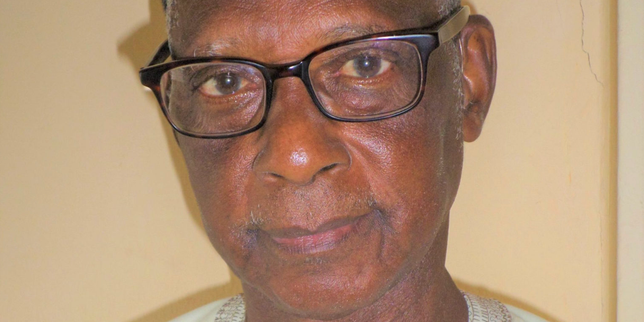
The international media is mourning Souleymane Diallo. They call him the founder of the "last bastion of the free press" in Guinea. They paint a picture of a solitary hero holding back the tides of military censorship with nothing but a printing press and sheer will.
It makes for a great eulogy. It makes for terrible media analysis.
Losing a pioneering journalist like Diallo is a tragedy for West African media, but treating his passing as the functional end of Guinean press freedom is lazy journalism. It buys into a flawed premise: that media freedom depends on heroic individuals rather than structural economic reality.
The mainstream narrative wants you to believe that Guinea’s media crisis is strictly a battle between brave journalists and a brutal military junta. That is a comforting, binary fairytale. The brutal truth is that the Guinean press was suffocating long before the recent crackdowns, starved by a broken business model and international neglect disguised as moral support.
The Romanticized Fallacy of the Last Bastion
When foreign correspondents write about African press freedom, they rely on a predictable template. They find an elder statesman of the local press, crown them the "last shield of democracy," and write an obituary for the entire country's media landscape when that person passes away or gets shut down.
This framework does a massive disservice to the dozens of young, independent Guinean reporters still dodging tear gas in Conakry to report the truth.
- The Myth: One outlet or one individual represents the entire ecosystem of free expression.
- The Reality: True media resilience is decentralized. If an entire nation's press freedom can die with one man, it was never actually free to begin with.
I have watched international donors pour millions into "capacity building workshops" in West Africa. They teach journalists how to write investigative hooks. They teach them ethics. They completely ignore how to build a media company that can survive a state-sponsored advertising boycott.
When the ruling military authorities cut off internet access, block news sites like Guineematin, or jam the frequencies of private radio stations like FIM FM and Radio Espace, they are using brute-force censorship. But they are only able to do this because these outlets are financially vulnerable.
Dismantling the "People Also Ask" Falsehoods
When readers look into West African press freedom, the questions asked online reveal how deeply the public misunderstands the mechanics of censorship.
Can international pressure force a junta to respect journalists?
No. The short answer is an absolute no. Western embassies issuing sternly worded press releases changes nothing for a military government that has already survived regional sanctions and political isolation. The junta knows that foreign governments care far more about access to Guinea’s massive bauxite reserves than they do about the editorial independence of local radio stations. Relying on external moral outrage is a failed strategy.
Is digital media the solution to state censorship in Guinea?
The internet is supposed to be the ultimate bypass, right? Wrong. The transition to digital-only media has actually made the Guinean press more vulnerable, not less. When your entire distribution network relies on state-regulated telecom infrastructure, the government can silence you with a single flip of a switch in Conakry. Physical newspapers were harder to distribute, but you couldn't turn them off with an internet blackout.
The Economic Suffocation Nobody Talks About
Let's look at the actual mechanics of running a media outlet in Guinea. It is a lesson in economic survival against rigged odds.
The state controls the primary levers of financial survival. Government advertising contracts are weaponized, handed out exclusively to sycophantic state media or private outlets that agree to tone down their criticism. Major private corporations—telecom giants, mining conglomerates, banks—are terrified of angering the tax authorities or losing their operating licenses. As a result, they voluntarily pull their advertising budgets from any outlet that gets too critical of the leadership.
Imagine a scenario where your operating costs are skyrocketing due to fuel prices for generators—because the power grid in Conakry is notoriously unreliable—while your revenue streams are actively strangled by state intimidation.
[State Intimidation] ➔ [Corporate Ad Boycott] ➔ [Financial Starvation] ➔ [Editorial Collapse]
This is not a failure of journalistic courage. It is an engineered financial starvation plan. Souleymane Diallo’s true genius wasn't just his editorial bravery; it was his ability to navigate this economic minefield for decades.
The Danger of the Martyr Industrial Complex
Turning dead journalists into symbols of a dead free press creates a dangerous complacency. It allows international media freedom organizations to hand out posthumous awards, pat themselves on the back, and move on to the next crisis zone without addressing the root cause of the problem.
If you want to honor the legacy of pioneers like Diallo, stop treating their deaths as the final chapter.
The contrarian approach to saving independent media in authoritarian regimes requires shifting away from the traditional, ad-supported, state-vulnerable model entirely. It requires building cross-border, decentralized media consortiums that hold funds outside the reach of local dictators and distribute content through alternative, censorship-resistant protocols.
Stop looking for the next single hero to save the Guinean press. Invest in the structural infrastructure that allows hundreds of anonymous reporters to survive the state's economic chokehold. The era of the lone media titan is over. The fight for survival must be systemic, aggressive, and entirely unsentimental.