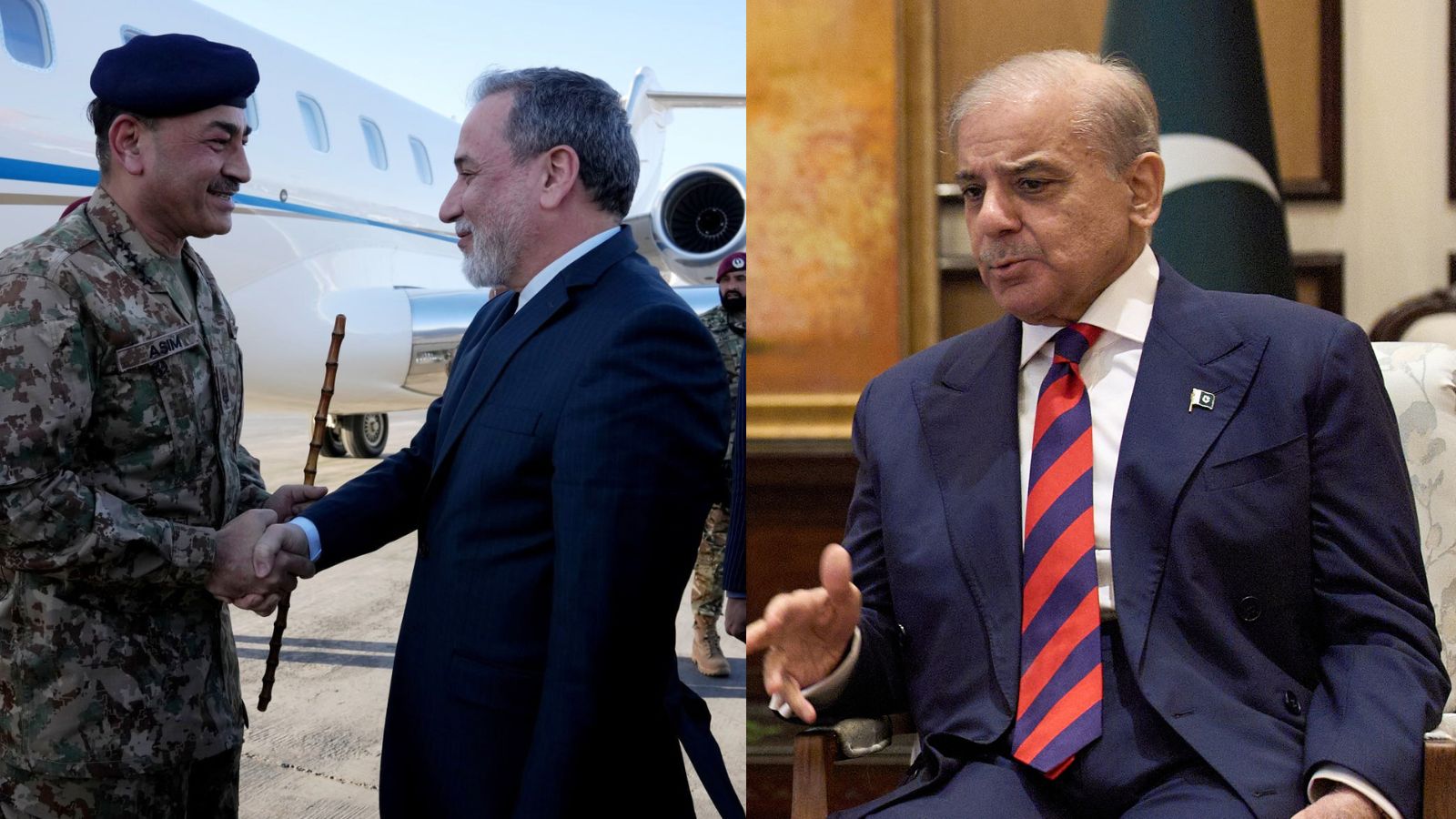
The mainstream media is currently obsessed with a fairytale. They see Pakistan’s Army Chief, General Asim Munir, landing in Tehran and Prime Minister Shehbaz Sharif touching down in Riyadh, and they scream "diplomatic masterstroke." They want you to believe that Islamabad is the glue holding together a fragile regional ceasefire.
They are wrong.
Pakistan isn’t acting as a regional mediator out of strength. It is acting out of desperation. This isn’t a "double push" for peace; it’s a frantic scramble for relevance by a nuclear-armed state whose economy is on life support and whose internal security is fraying at the seams. To view this as a genuine stabilization effort is to fundamentally misunderstand the cold, hard mechanics of Middle Eastern power dynamics.
The Proxy Broker Fallacy
The lazy consensus suggests that Pakistan is uniquely positioned to bridge the gap between the House of Saud and the Islamic Republic. This ignores a basic geopolitical reality: Saudi Arabia and Iran do not need a middleman. When these two giants want to talk, they do it through Beijing, or they do it directly in Baghdad.
Islamabad is not the architect of the current thaw. It is a beneficiary trying to claim credit for a weather pattern it didn't create.
I have watched regional players operate for decades. In the Middle East, "mediation" is often a polite word for "seeking a bailout." Pakistan’s involvement is less about regional harmony and more about ensuring that the next shipment of oil comes on deferred payment and that the next IMF tranche isn't sabotaged by regional blowback.
The Military-Diplomatic Complex
Let’s talk about the optics. Sending the Army Chief to Tehran while the Prime Minister goes to Riyadh is a glaring admission of Pakistan’s fractured power structure. It signals to the world that the civilian government cannot handle the "hard" security side of the Iranian relationship, while the military cannot—or will not—handle the "soft" financial begging in Saudi Arabia.
This isn't a coordinated pincer movement. It’s a survival tactic.
The military-intelligence establishment in Rawalpindi knows that a hot conflict between Iran and the GCC would be catastrophic for Pakistan’s internal security. Why? Because Pakistan’s own sectarian fault lines are a dry forest waiting for a spark. If Munir is in Tehran, he isn't there to bring peace to the world; he’s there to plead with the Iranians to keep their proxies from lighting a fire inside Pakistan's borders.
The Economic Mirage
The competitor articles love to highlight "investment opportunities" and "bilateral trade" as the drivers of these visits.
It is time for a reality check.
The total trade volume between Pakistan and Iran is a rounding error in the global economy. The long-delayed gas pipeline is a pipe dream—literally—so long as US sanctions remain the primary obstacle. No amount of "productive talks" in Tehran changes the fact that Pakistan cannot risk a "secondary sanction" death blow from Washington.
As for Riyadh, the "special relationship" has shifted from brotherhood to a strict employer-employee dynamic. The Saudis are tired of being Pakistan's ATM. Crown Prince Mohammed bin Salman (MBS) is interested in ROI (Return on Investment), not charity. If Sharif is in Riyadh, he is being told, not asked, to privatize state assets and align Pakistan’s foreign policy with the Saudi Vision 2030.
The Afghan Variable Everyone Ignored
The real "elephant in the room" is the deteriorating situation in Kabul. The TTP (Tehrik-i-Taliban Pakistan) is using Afghan soil to bleed the Pakistani state. Both Iran and Saudi Arabia have their own, very different, stakes in the Afghan chaos.
- Iran wants a buffer against Sunni extremism but fears a total Pakistani collapse that would send millions of refugees across its border.
- Saudi Arabia wants to ensure that Afghanistan doesn't become a launchpad for Iranian influence or a hub for groups that threaten the Kingdom's internal stability.
Pakistan is trying to play these two against each other to secure its western flank. It’s a dangerous game of three-dimensional chess played by a country that can barely afford the board.
The Cost of the "Neutrality" Charade
The biggest lie being sold is that Pakistan can remain "neutral."
In the modern Middle East, neutrality is a luxury for the wealthy. Countries like Qatar can afford to host everyone and fund everyone. Pakistan, with its debt-to-GDP ratio spiraling and its currency in the basement, cannot afford to be neutral. It must be bought.
By pretending to be a mediator, Islamabad is trying to drive up its price. But the buyers—Riyadh and Tehran—are smarter than the pundits give them credit for. They know Pakistan’s "mediation" is a performance. They know that if push comes to shove, Pakistan will go where the dollars are. That has always been, and remains, Saudi Arabia.
Why the "Ceasefire" is Actually a Trap
Mainstream analysts argue that a stable Iran-Saudi relationship is a win for Pakistan.
Is it?
Consider this: A genuine, long-term rapprochement between Tehran and Riyadh makes Pakistan’s "security services" redundant. For decades, Pakistan leveraged its military might as a protector of the "Sunni Wall." If the wall isn't needed, the rent stops coming in.
If Munir and Sharif are successful in "holding up" this ceasefire, they are effectively negotiating themselves out of a job. The irony is delicious, and the desperation is palpable. They are supporting a peace that, if it actually takes hold, will diminish their strategic value to both sides.
The Intelligence Gap
We need to address the "People Also Ask" nonsense about whether this signifies a "new era of regional cooperation."
It doesn't.
It signifies a "temporary suspension of hostilities" based on mutual exhaustion. Saudi Arabia is focused on domestic transformation; Iran is focused on regime survival amid internal dissent and external pressure. Pakistan is merely the messenger delivering a memo that both sides have already read.
To call this a "push for peace" is like calling a janitor a "structural engineer" because he’s mopping up the floor after a pipe burst. The janitor didn't fix the plumbing; he’s just trying to keep the hallway from becoming a swamp.
Stop Looking at the Handshakes
When you see photos of these meetings, look past the forced smiles and the opulent carpets.
Look at the balance sheets.
Look at the border skirmishes in Sistan-Baluchestan.
Look at the electricity shortages in Karachi.
Pakistan is a country with its hair on fire trying to sell fire insurance to its neighbors. The "double push" isn't an act of statesmanship. It is an act of exhaustion.
The real story isn't that Pakistan is bringing the Middle East together. The story is that Pakistan is so terrified of a regional conflict it can't control that it is willing to play the role of the humble servant to two masters who, frankly, view Islamabad as a headache they have to manage rather than a partner they can trust.
The ceasefire will hold as long as it suits the domestic interests of Riyadh and Tehran. Not a second longer. And certainly not because a General and a Prime Minister from a bankrupt nation asked nicely.
Stop buying the PR. The "fragile ceasefire" isn't being held up by Pakistan; it’s being held up by the sheer weight of its own necessity. Pakistan is just trying to make sure it doesn't get crushed when the balance inevitably shifts again.