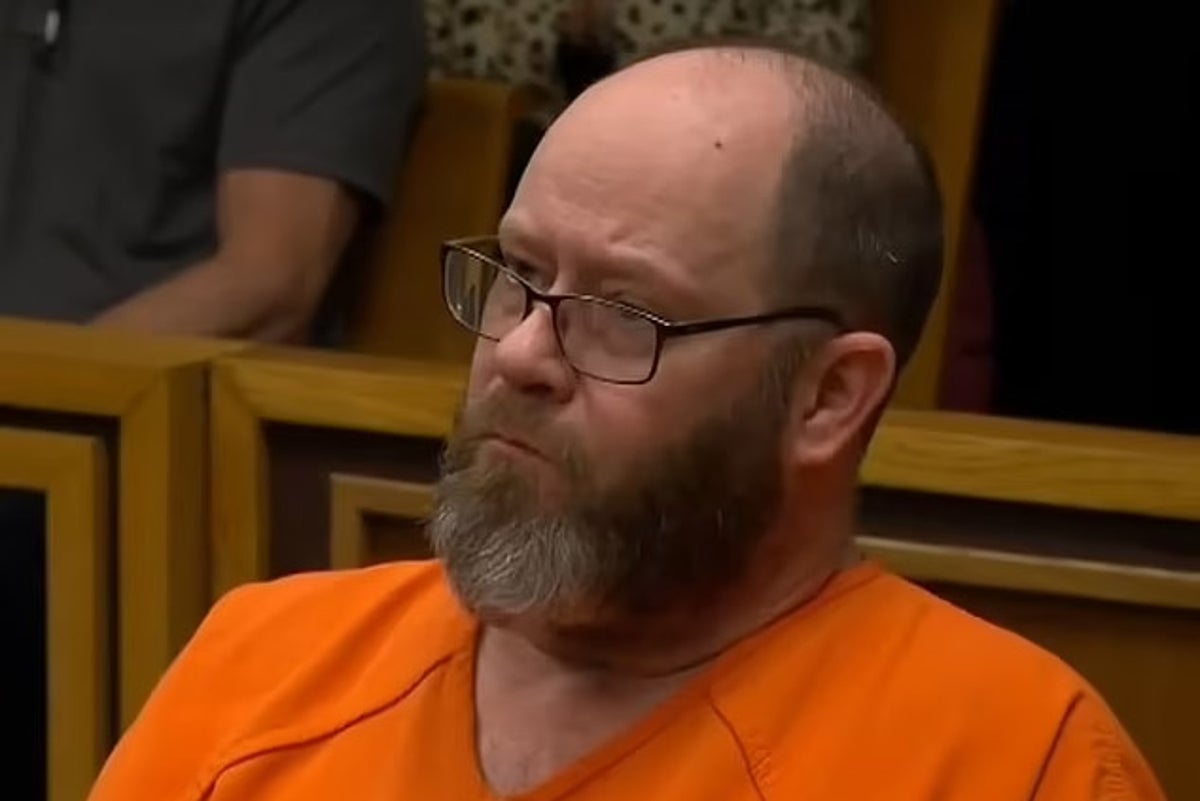
The media loves a clean narrative. A Michigan man is convicted of killing his wife and hiding her body in a farm tank, and the public leans back, satisfied that the "system works." They see a monster caught and a case closed.
They are wrong.
The conviction of Jason Harris isn't a triumph of modern policing; it is a glaring indictment of how easily the justice system almost let a homicide slide into the "natural causes" bin. If you think forensic science is a high-tech net that catches every killer, you’ve been blinded by procedural dramas. In reality, the line between a life sentence and a free man often comes down to a single, overworked local medical examiner and the sheer luck of a family that refuses to shut up.
The Toxicological Black Hole
In the Harris case, the victim, Christina Harris, was found in a water tank. The initial assumption? Accidental drowning or a tragic health event. This is the "lazy consensus" of rural death investigations. In many jurisdictions, if there isn't a smoking gun or a literal knife in the back, the default setting is "Natural Causes."
Why? Because autopsies are expensive. Specialized toxicology is even more expensive.
The standard tox screen isn't a magical wand. It looks for the usual suspects: opioids, alcohol, common antidepressants. If a killer uses something outside that narrow window—something like a heavy sedative mixed into cereal, as was alleged here—it requires a level of forensic "hunting" that most counties simply cannot afford.
We see this across the country. In states with "Coroner" systems instead of "Medical Examiner" systems, the person declaring the cause of death might be a funeral director or a local politician with zero medical training. They aren't looking for a sophisticated poisoning. They are looking for the path of least resistance. The Harris conviction didn't happen because the science was infallible; it happened because the family pushed for testing that the state originally didn't think was necessary.
The False Security of Digital Breadcrumbs
The prosecutor’s office will point to the digital evidence—the texts, the GPS pings, the search history. They call it a "digital footprint." I call it a lucky break.
We are currently living in a brief, historical window where criminals are still stupid enough to carry a tracking device in their pockets while committing a felony. But that window is closing. Encryption is becoming the baseline. Privacy-focused operating systems are moving from the fringe to the mainstream.
If you think law enforcement is "winning" the tech war, you haven't been paying attention to the "Going Dark" debate in Washington. For every Jason Harris caught by a poorly timed text message, there are ten others who have learned to leave the phone at home. Reliance on digital evidence has made investigators soft. They've traded boots-on-the-ground interrogation and deep forensic chemistry for the easy win of a Google location history.
What happens when the next killer uses a Faraday bag? The "system" breaks.
The Rural Justice Tax
There is a brutal, unspoken truth in the legal world: your chance of getting away with murder is significantly higher if you live 50 miles from a major city.
Urban centers have dedicated homicide squads, high-volume forensic labs, and prosecutors who have seen every trick in the book. Rural areas have a sheriff, a few deputies, and a budget that gets evaporated by a single high-profile trial.
I’ve seen cases where prosecutors literally don't bring charges because the cost of the expert witnesses and the multi-week trial would bankrupt the county. They wait for a "slam dunk" that never comes. In the Harris case, the years it took to get a conviction weren't just about "building a solid case." They were about the friction of a system that wasn't designed to handle a calculated domestic homicide.
The Problem With "Beyond a Reasonable Doubt"
People ask: "If the evidence was there, why did it take so long?"
The premise of the question is flawed. It assumes that "evidence" is a static thing you just pick up off the floor. Evidence is a story you tell. In a poisoning case involving a farm tank, the defense's job is to create "alternative narratives."
- "She was depressed."
- "It was an accidental overdose."
- "She tripped."
In a world where everyone has a platform and "alternative facts" are a currency, "reasonable doubt" is becoming an ocean that any semi-competent defense attorney can sail a ship through. The status quo says we should protect the innocent at all costs. The contrarian reality is that we’ve created a system where the burden of proof is so high that it encourages the most sociopathic among us to take the gamble.
The Forensic Science Reality Check
Let's talk about the "CSI Effect." It has ruined juries. They expect DNA results in an hour and a 3D reconstruction of the crime scene that looks like a Pixar movie.
When a real forensic scientist gets on the stand and says, "The results were inconclusive but suggestive of X," the jury tunes out. They want certainty. But science, by its very nature, is rarely certain.
The Harris case relied on a "confluence of factors." That’s fancy talk for "we don't have a single piece of definitive proof, but it looks really bad." This is the most dangerous type of conviction to secure because it’s the easiest to overturn on appeal. One bad ruling on a piece of hearsay, one mishandled piece of digital storage, and the whole house of cards collapses.
Stop Looking for "Closure"
The media uses the word "closure" like a sedative for the public. There is no closure in a case like this. There is only a temporary cessation of the legal process.
The victim is still dead. The family is still shattered. And the perpetrator—even behind bars—is a constant drain on the state's resources through the inevitable decades of appeals.
The real lesson of the Michigan farm tank killing isn't that justice was served. It’s that justice is fragile, expensive, and incredibly easy to evade. We need to stop congratulating the system for finally doing its job five years late. We need to start asking why the system is so easily blinded by the mundane.
Invest in better toxicology. Mandate medical examiners over elected coroners. Accept that digital evidence is a temporary crutch.
Stop assuming the "good guys" are winning just because they caught one man who wasn't smart enough to ditch his phone.
Build a system that doesn't require a victim's family to act as private investigators just to get an autopsy that matters.