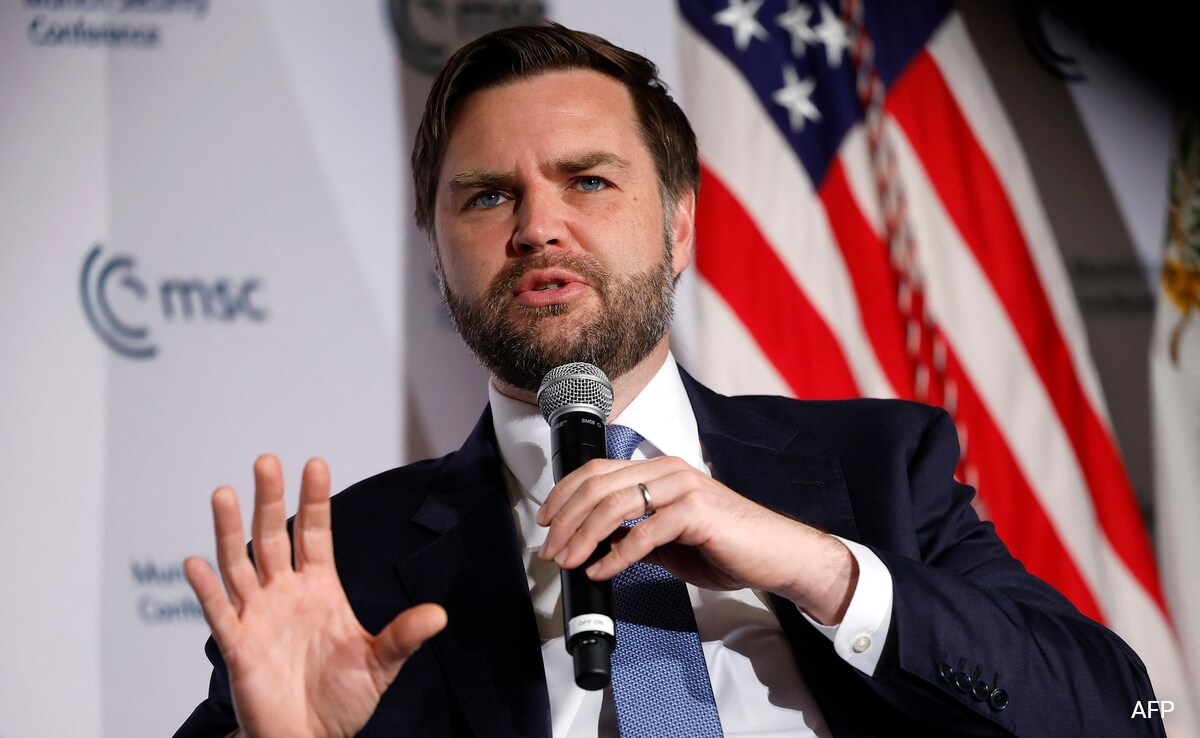
The media remains obsessed with the "impatient" Donald Trump. JD Vance whispers to reporters about a candidate who wants a deal yesterday, and the punditry laps it up like a cat with a bowl of cream. They frame the 45th (and perhaps 47th) president’s approach to Tehran as a frantic sprint for a legacy-defining handshake. They are wrong.
What they mistake for impatience is actually the calculated application of velocity as a weapon.
The mainstream narrative suggests that Trump’s desire for a quick resolution is a weakness Iranians can exploit. They think a ticking clock forces the U.S. to settle for a flimsy "JCPOA Lite." This view is not just lazy; it ignores the fundamental mechanics of geopolitical leverage. In the high-stakes bazaar of Middle Eastern diplomacy, the person who moves fastest isn't the most desperate—they are the one most willing to walk away while the other side is still checking their watch.
The Velocity Trap
Let’s dismantle the "impatient" label. In private equity, if you move slowly on a distressed asset, the interest eats your alpha. In international relations, slow-walking a negotiation allows your opponent to build "facts on the ground." For Iran, those facts are centrifuges and enriched uranium.
The "patient" diplomacy of the Obama and Biden eras wasn't a virtue; it was a subsidy for Iranian nuclear progress. By dragging out talks in Vienna or Geneva, the U.S. provided the diplomatic cover Tehran needed to advance its breakout capacity.
Trump’s purported impatience is a disruption of that cycle. It is an intentional effort to outpace the adversary’s ability to adapt. When you move at a speed that exceeds the opponent's decision-making loop—a concept known in military strategy as the OODA loop (Observe, Orient, Decide, Act)—you force them into errors.
The Sanctions Illusion
Every "expert" on cable news will tell you that maximum pressure failed because Iran didn't collapse. That’s a fundamental misunderstanding of what sanctions do. Sanctions are not a light switch that turns off a regime; they are a tourniquet.
The goal of the Trump-Vance strategy isn't necessarily to trigger a revolution in the streets of Tehran. It is to make the cost of regional hegemony higher than the regime's available capital.
I’ve seen billion-dollar firms go under not because they ran out of ideas, but because they ran out of cash at the exact moment they needed to pivot. Iran is a nation-state version of a zombie company. It has plenty of ideological fervor but a shrinking balance sheet.
By demanding a deal "now," Trump isn't showing his hand; he is demanding a price check. He is saying, "I know what your reserves look like. You can't afford to wait four years. I can."
The Myth of the "Bad Deal"
The critic’s favorite line is that Trump destroyed a "working" deal (the JCPOA) without a replacement. This assumes the JCPOA was a floor. It wasn't. It was a ceiling on American influence.
The JCPOA functioned as a bribe. We paid for a temporary pause in a specific activity while ignoring the systemic threat of ballistic missiles and regional proxies. If you’re a CEO and your CFO tells you they’ve balanced the books by ignoring the $500 million in off-balance-sheet debt, you don't praise their "diplomacy." You fire them.
Trump’s rejection of the status quo isn't about being a "deal-maker" in the sense of a used-car salesman. It’s about a refusal to accept a net-negative asset.
The Vance Factor: Populism Meets Realpolitik
JD Vance isn't just a messenger; he represents a shift in the Republican base toward an "America First" realism that the old guard doesn't understand. The old guard wanted perpetual "containment"—a fancy word for spending trillions of taxpayer dollars to maintain a stalemate.
Vance’s comments about Trump’s impatience reflect a broader disgust with the "Forever War" mentality. The "impatient" stance is a demand for a Return on Investment (ROI). If the U.S. is going to engage, it must produce a result that benefits the American worker, not just the regional security architecture that benefits globalist trade routes.
This is where the contrarian truth hurts: The U.S. actually has the luxury of being impatient because we are increasingly energy-independent. The Middle East matters less to the American gas station than it did in 1979 or 2003. Trump knows this. He’s using that indifference as a cudgel.
Strategic Volatility is an Asset
Traditional diplomacy prizes "predictability." Experts want to know exactly what the U.S. will do next.
Predictability is a gift to your enemies.
If the Ayatollah knows exactly how many months of "de-escalation" talks he can get away with, he wins. If he doesn't know if Trump will send a tweet, a check, or a drone at 3:00 AM, he has to hold back. Volatility creates a "risk premium" that Iran has to pay every single day.
Imagine a scenario where a U.S. President walks into a room, demands three major concessions in thirty minutes, and then leaves for a golf game when they aren't met. To the State Department, that’s a disaster. To a negotiator, that’s a "Hard Anchor." It shifts the entire range of possible outcomes in your favor.
The Reality of the "Breakout"
The "experts" warn that Iran is closer to a bomb than ever because of Trump’s exit from the deal.
Let’s look at the data. Iran’s nuclear ambitions didn't start in 2018. They didn't start in 2015. They have been a constant for thirty years. The only difference is the transparency of the aggression. Under the JCPOA, the aggression was funded by unfrozen assets and hidden behind sunset clauses.
Without the deal, the aggression is out in the open, and the Iranian economy is a shell.
If you are an investor, would you rather your competitor be "contained" while they grow their cash reserves, or would you rather they be "unbound" but broke? The answer is obvious to anyone who has ever managed a P&L.
The Advice Nobody Wants to Hear
If you are a business leader or a policy maker trying to navigate the "Trump 2.0" approach to Iran, stop looking for a policy white paper. You won't find one.
Instead, look at the incentives.
- Stop valuing process over outcomes. The fact that "talks are happening" is meaningless. Only the terms matter.
- Accept that "Stability" is often a code word for "Declining Influence." Sometimes you have to break the regional order to build one that actually serves your interests.
- Understand that the clock is the most powerful tool in the shed. Use it.
The media will keep talking about Trump’s "impatience" as if it’s a personality flaw. They’ll compare him to a toddler who wants his toys. In reality, he’s a liquidator. He’s looking at a failing regional strategy and deciding whether to restructure or shut it down.
Tehran knows this. That’s why they are terrified. Not of his anger, but of his speed.
The most dangerous thing in the world is a man with a massive military who is in a hurry to stop caring about you.
Stop asking when the deal will happen. Start asking why we need one at all if the price isn't right.


