The moral outrage machine is broken. Every time a disgraced political heavyweight manages to trade a prison cell for the comfort of air-conditioned domestic confinement, the commentariat loses its collective mind. Headlines scream about the death of justice. Editorials lament the untouchable elite writing their own rules while ordinary citizens rot in overcrowded lockups for minor infractions. It makes for fantastic outrage bait, burning up social media feeds with righteous indignation.
It is also completely naive.
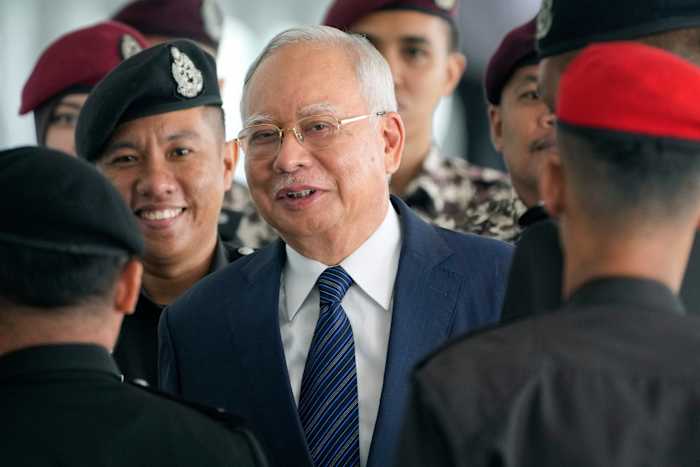
Focusing on the perceived unfairness of Najib Razak slipping out of Kajang Prison misses the entire architecture of power in transitional democracies. This was never a simple legal failure or a blatant miscarriage of justice bought off by royal decree. It was a calculated, transactional necessity driven by the cold calculus of coalition survival. If you think the Malaysian political apparatus operates according to textbook Western jurisprudence, you are playing a game with rules that do not exist.
Let us strip away the moralizing and look at the raw mechanics.
The Illusion Of The Independent Judiciary
Western observers love to view developing democracies through a lens of absolute purity. The script is simple: a corrupt leader loots the state, an independent judiciary catches them, a righteous public cheers, and the rule of law reigns supreme. When reality deviates from this script, the system is declared broken.
That perspective ignores how power actually consolidates and fractures in Southeast Asia.
Najib Razak was not just any politician. He was the apex predator of the United Malays National Organisation for a decade, the party that ran the country uninterrupted for over sixty years. Even from behind bars, his network of patronage, debt, and loyalty remained terrifyingly intact. When he was convicted over the 1MDB scandal, the naive assumption was that UMNO would wither away and a new era of clean governance would take root.
Instead, the political map fractured beyond recognition. No single coalition could secure a stable majority. Anwar Ibrahim, the eternal reformer who spent decades fighting the very machine Najib built, found himself in an impossible bind: he needed UMNO to form a unity government, yet he needed to appease an anti-corruption electorate that wanted every tainted official locked away forever.
You cannot govern a fractured nation with pure idealism. You govern by managing opposing factions.
When the Pardons Board halved Najib's prison sentence and slashed his fine, it was the first flashing neon sign that the system was hedging its bets. The subsequent legal battles over an alleged royal addendum permitting house arrest were not rogue operations defying the state. They were pressure-relief valves designed to prevent a total rupture within the fragile ruling coalition.
The Cost Of Total Destruction
Let us run a thought experiment. Imagine Anwar Ibrahim and his administration held firm to absolute legal purity. Imagine they slammed every door, ignored every royal nudge, and kept Najib locked away for the full twelve years without compromise.
What happens to UMNO?
The grassroots base inside UMNO—still deeply loyal to Najib despite the monumental financial wreckage he left behind—would have imploded. The party leadership, currently serving as junior partners in the unity government, would face an existential revolt. Pull out of the coalition, bring down the government, trigger snap elections, and watch the political landscape shatter into sectarian chaos.
Pragmatism always defeats purity when survival is on the line.
Anwar knows this better than anyone. He spent years in prison himself on politically motivated charges. He understands that political stability in Malaysia is an illusion maintained by delicate balances among royalty, Malay nationalism, and economic pragmatism. Pushing an elite figure too far into a corner does not destroy the elite class; it hardens their resistance and destabilizes the entire macroeconomic environment. Foreign investors hate political instability far more than they hate selective justice.
House arrest for Najib is not a sign of weakness from the Madani government. It is a containment strategy. It keeps the UMNO base quiet, placates the royal palace which holds constitutional sway over pardons, and prevents a government collapse that would throw the national economy into a tailspin.
Dismantling The Corruption Narrative
To understand why this move shocked so many, you have to dismantle how people talk about corruption in emerging markets.
The standard narrative frames corruption as an aberration—a disease that infects a clean system. Once you excise the tumor, health returns. This is completely false. In many post-colonial patronage democracies, corruption is not a bug in the software; it is the operating system itself.
Najib did not invent the system of political patronage that facilitated 1MDB. He inherited it, supercharged it, and weaponized global financial channels to hide the loot. When he fell, the system did not reform itself; it merely recalibrated. The individuals who helped facilitate the flows, the banking channels that looked the other way, and the bureaucratic cogs that kept the machine running are still sitting at their desks.
Expecting a clean break from this history via a single court verdict is like expecting a house built on a swamp to stand straight without sinking just because you painted the front door.
When people demand absolute retribution, they ignore the trade-offs of statecraft. If the price of maintaining a fragile secular-moderate coalition that keeps religious extremists out of absolute power is letting a former prime minister serve his time in a guarded bungalow rather than a concrete cell, realpolitik dictates you pay that price every single day of the week.
The Royal Factor
You cannot analyze Malaysian politics without acknowledging the unique role of the Malay rulers. The monarchy is not a decorative relic. It is a powerful constitutional and cultural arbiter that steps in precisely when the political class reaches an impasse.
The royal pardons power is absolute. It is designed to transcend normal judicial constraints precisely for this reason—to heal national fractures when rigid legalism threatens social cohesion.
When critics frame the house arrest debate as a battle between the courts and a corrupt executive, they conveniently erase the constitutional authority of the King. The Malay rulers understand stability through consensus. They do not want total political annihilation of traditional power structures because those structures validate their own constitutional standing.
Allowing Najib to transition to house arrest satisfies the palace desire for a face-saving compromise without a total erosion of legal authority. He is still convicted. He is still disgraced. He is still politically sidelined. But he is not rotting away in a manner that triggers a permanent civil war among the Malay elite.
What The Critics Miss About Power
The fundamental flaw in the outcry against Najib's house arrest is the belief that public opinion rules supreme in transitional democracies.
It does not. Patronage, ethnic balance, institutional continuity, and elite consensus carry far more weight than Twitter outrage or urban progressive sentiment. When urban elites scream about double standards, they reveal their profound detachment from rural constituencies who still view Najib as a benefactor who built roads, subsidized rubber tappers, and protected Malay economic standing.
If you ignore the rural Malay perspective, you lose elections. If you lose elections, you open the door to conservative religious populism that makes Najib-era financial scandals look like petty cash.
That is the bitter pill that no reformer wants to swallow. The alternative to a compromised, transactional democracy is not a clean, Scandinavian-style utopia. The alternative is total political fragmentation and reactionary extremism.
The Real Legacy
History will not judge Najib Razak by where he spent his final years of punishment. It will judge him by how his downfall permanently altered the psychology of Malaysian governance.
For decades, the idea that a sitting prime minister could be charged, convicted, and imprisoned was considered an absolute impossibility. Najib shattered that taboo. By taking the fall, he proved that the untouchable status of the executive office has permanent cracks in it. No future leader can assume absolute immunity simply because they hold the keys to Putrajaya.
That is the true watershed moment. The venue of his detention is merely administrative noise designed to keep the coalition intact while the country moves forward.
Stop looking at politics through the lens of a courtroom drama where good triumphs over evil in the final reel. Real governance is messy, cynical, and soaked in compromise. The house arrest of Najib Razak is not the death of justice. It is the price of keeping the lights on in a country too complex for simple answers.